Are you trying to figure out how to design a high-end front boundary wall that radiates sleek, international luxury without looking like a cold, uninviting concrete fortress? Wondering how to balance the bright, reflective minimalism of smooth white stucco with the organic, deeply textured warmth of exotic dark wood framing? In this premium architectural hardscape guide, we will explore the engineering and visual dynamics of Modern White Stucco Walls Accented with Dark Wood Insets. We will break down how geometric recesses, hidden subgrade foundations, advanced elastomeric coatings, and weather-resistant timber choices work together to turn a basic property perimeter into a stunning, resort-style architectural arrival experience.
High-Contrast Geometry & Recessed Slat Layouts
The spatial relationship between your smooth white masonry surfaces and the dark wood panels dictates the overall architectural rhythm of your home’s facade. Precision milling and crisp geometric depths ensure the transitions feel incredibly premium and high-end.
Modern White Stucco Architecture. Source: Susan Vineyard / Getty Images
Idea #1 The Flush horizontal Slat Ribbon Inset
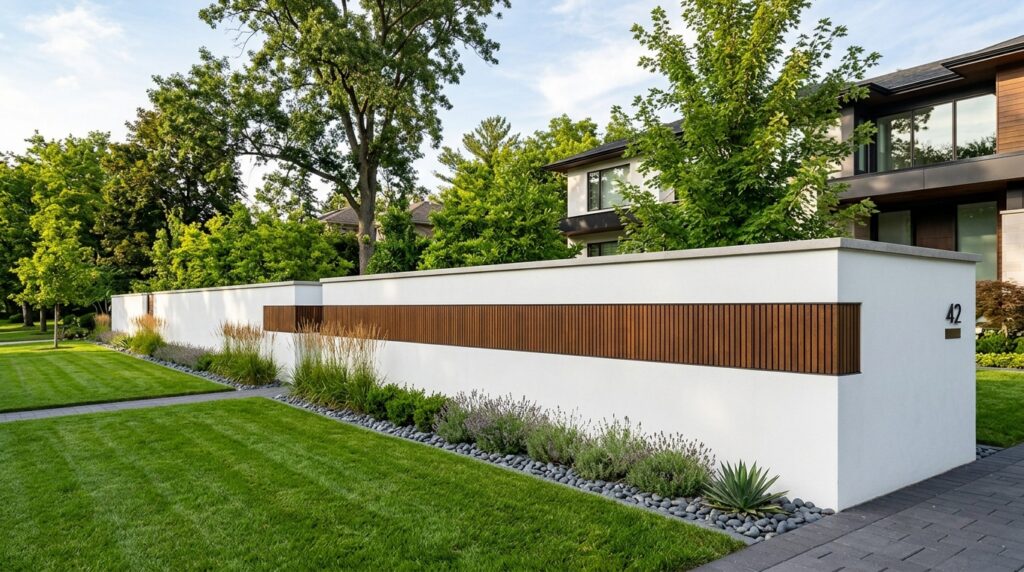
- My Opinion: Personally, I believe the continuous horizontal wood ribbon is the ultimate design strategy for making a long property line feel expansive, grounded, and thoroughly modern. The deep, dark chocolate wood grains slice through the white mass, eliminating visual monotony and guiding the eye naturally toward your main entrance gate.
- What I would add here: A hidden 0.5-inch aluminum Z-flashing reveal track directly above the wood ribbon to forcefully shed rainwater forward, completely preventing dirty water-drip lines from staining the white stucco below.
Idea #2 The Deeply Recessed Vertical Slat Shadow Box
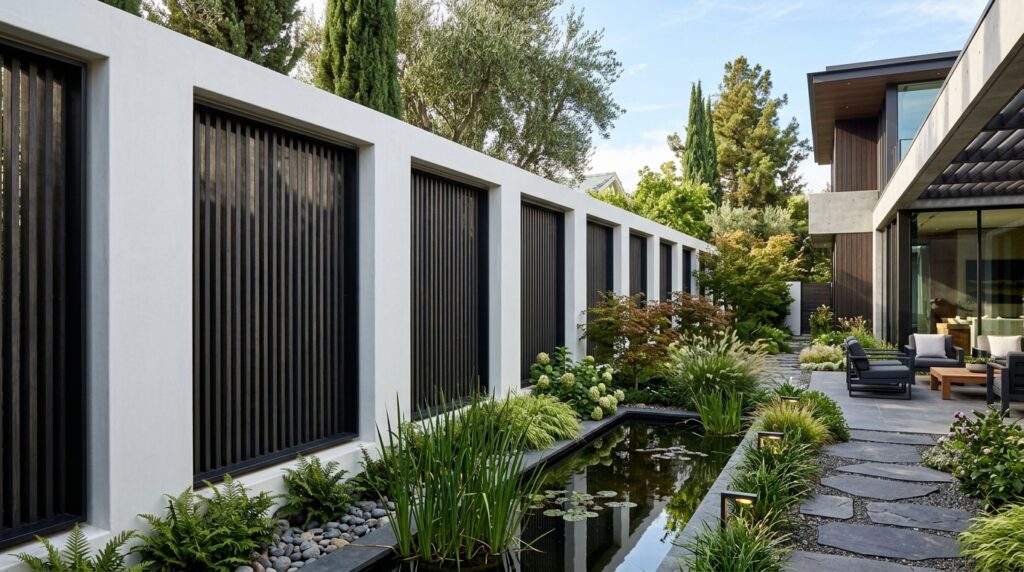
- From my perspective: Squeezing the wood inserts into deep, 4-inch recesses creates an incredible architectural play of light and shadow throughout the day. This high-relief layout adds massive structural depth to your perimeter, shifting it from a basic boundary wall into a dynamic piece of outdoor dimensional artwork.
- What I would add here: Utilizing a hidden rear-mounted blind-fastening clip system inside the shadow box to anchor the teak slats, ensuring the front face of your wood panels remains completely free of ugly exposed screw heads.
Idea #3 Alternating White Stucco Blocks and Floating Timber Screens
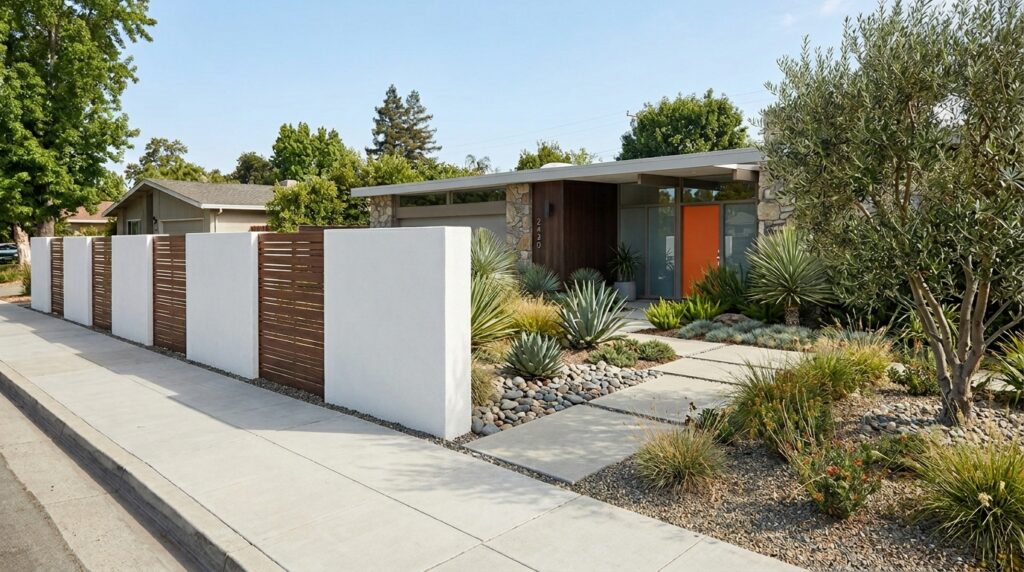
- In my experience: If you live in an area prone to intense summer windstorms, building a massive, unbroken solid masonry wall can trap high wind loads and feel claustrophobic. Alternating solid stucco blocks with open-air floating timber screens provides excellent wind relief while maintaining total eye-level privacy and a breezy, open-resort ambiance.
- What I would add here: Anchoring the floating timber frames into the stucco masonry flanks using heavy-duty, internal stainless steel expansion sleeve anchors to guarantee lifetime structural rigidity.
Subsurface Structural Engineering & Moisture Control Matrices
The number-one reason stucco-over-masonry projects fail prematurely is water intrusion cracking the surface finish or rotting the wood framing joints. Implementing bulletproof subgrade footings and advanced drainage loops keeps your walls flawless for decades.
Idea #4 Deep-Set Frost-Line Continuous Concrete Footing Grade Beams
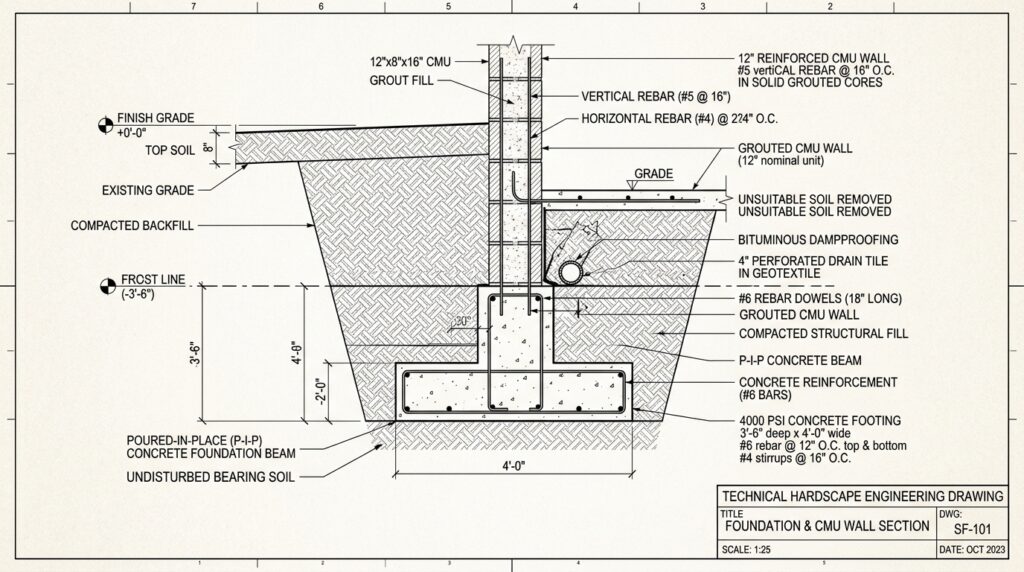
- What I would add here: Dropping a thick 6-inch bed of highly compacted crushed drainage road-base gravel directly beneath the concrete footing to provide groundwater an immediate escape path away from the foundation base.
Idea #5 Internal Core-Filled CMU Backbones with Structural Rebar Cages
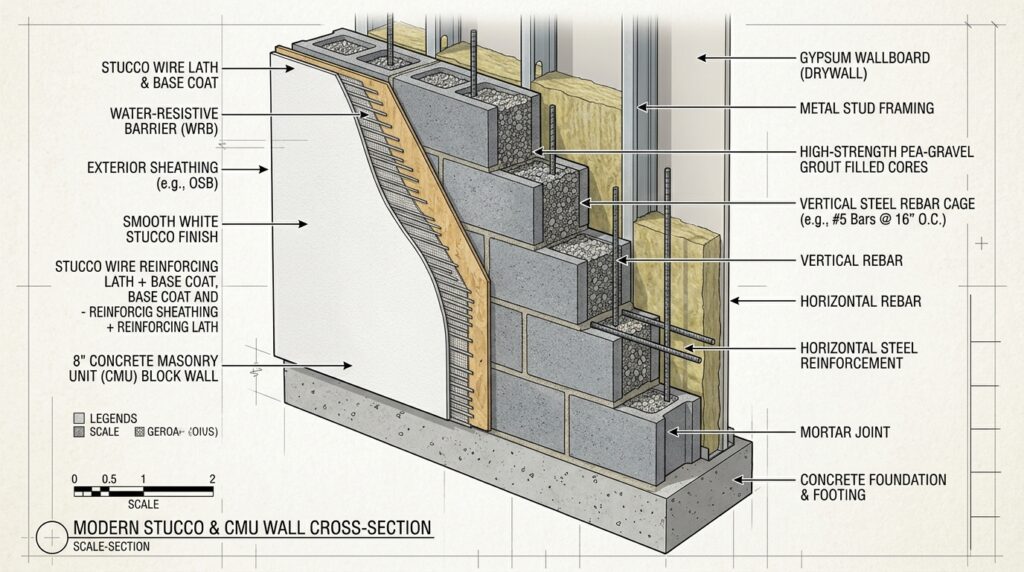
- From my perspective: True luxury architecture must be built with brute-force structural longevity. Utilizing core-filled CMU blocks ensures your boundary wall can easily handle the extreme weight of heavy stone or wood inserts, while acting as an immovable anti-collision shield protecting your private lawns.
- What I would add here: Wrapping the exterior of the un-rendered CMU block core in a heavy coat of self-adhering, elastomeric crystalline waterproofing mesh before applying the scratch coat of stucco to permanently block subgrade moisture from leaching out.
Idea #6 Ventilated Rain-Screen Backing Cavities for Wood Insets
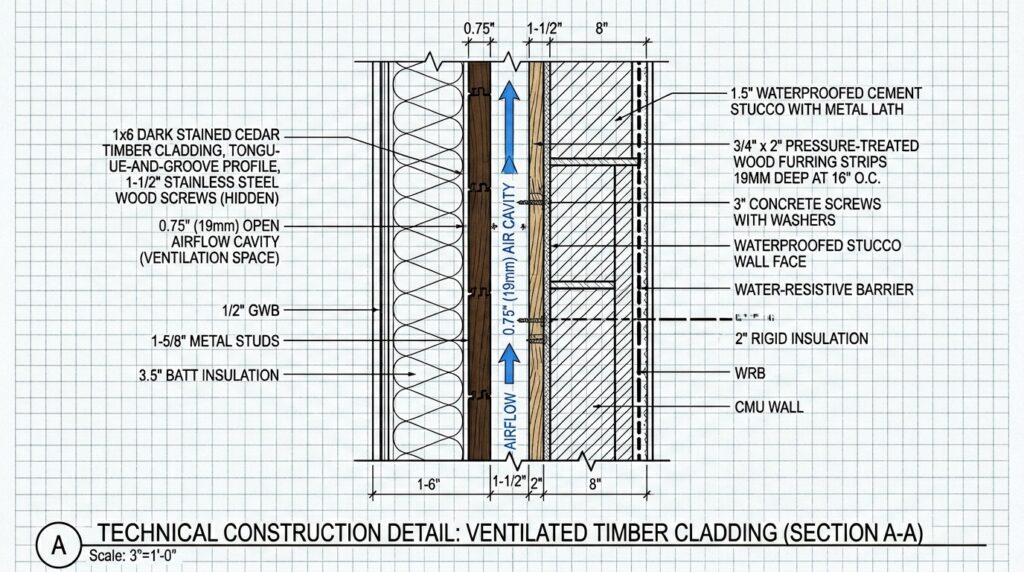
- In my experience: Screwing wood slats directly flush against a masonry wall traps wind-driven rain moisture behind the timber, leading to quick wood rot, bowing, and black mold growth. Creating a ventilated rain-screen cavity allows air to circulate constantly behind the wood, keeping both the timber and your stucco bone-dry.
- What I would add here: Installing a fine stainless steel insect mesh screen along the top and bottom entry paths of the ventilation cavity to completely block wasps or spiders from nesting behind the wood work.
Advanced Chemistry: Exterior Coatings & Timber Species
Matching the chemical durability of high-end exterior finishes to ultra-stable wood species ensures your stark white and deep dark wood contrast lines remain sharp, vibrant, and clean without yellowing or bleeding over time.
Idea #7 Self-Cleaning Acrylic Elastomeric Stucco Coatings
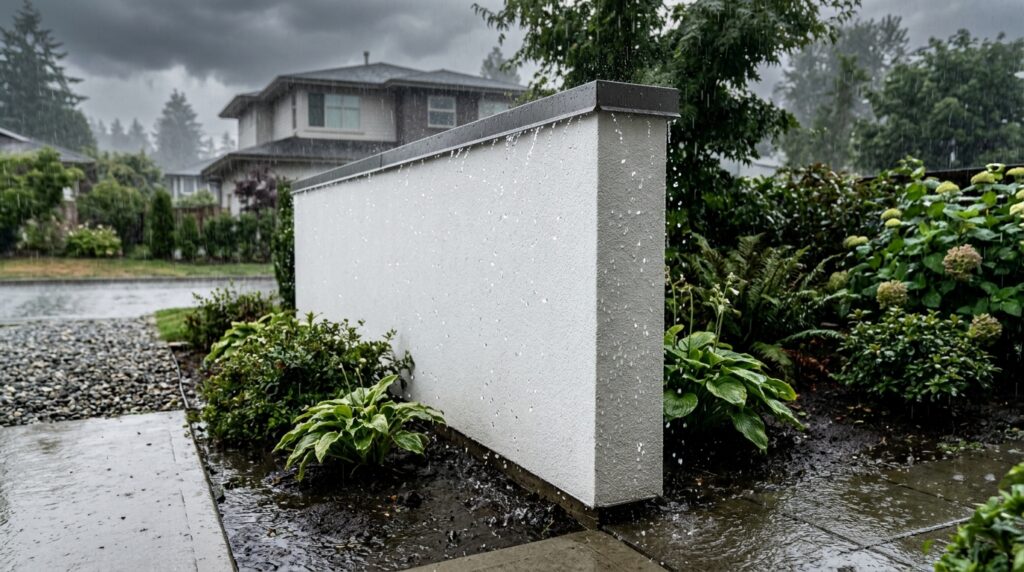
- In my opinion: Standard cementitious stucco stains incredibly easily from airborne dust, lawn sprinklers, and organic bird droppings. Specifying a premium self-cleaning acrylic elastomeric finish ensures the coating stretches over micro-fissures without cracking, while utilizing hydrophobic technology that lets rain wash away dirt automatically.
- What I would add here: Incorporating a heavy dose of premium titanium-dioxide UV-blocking pigments into the white mix to guarantee the stucco maintains its bright, crisp gallery-white tone without yellowing under intense summer sun exposure.
Idea #8 Thermally Modified Dark Ash Timber Insets
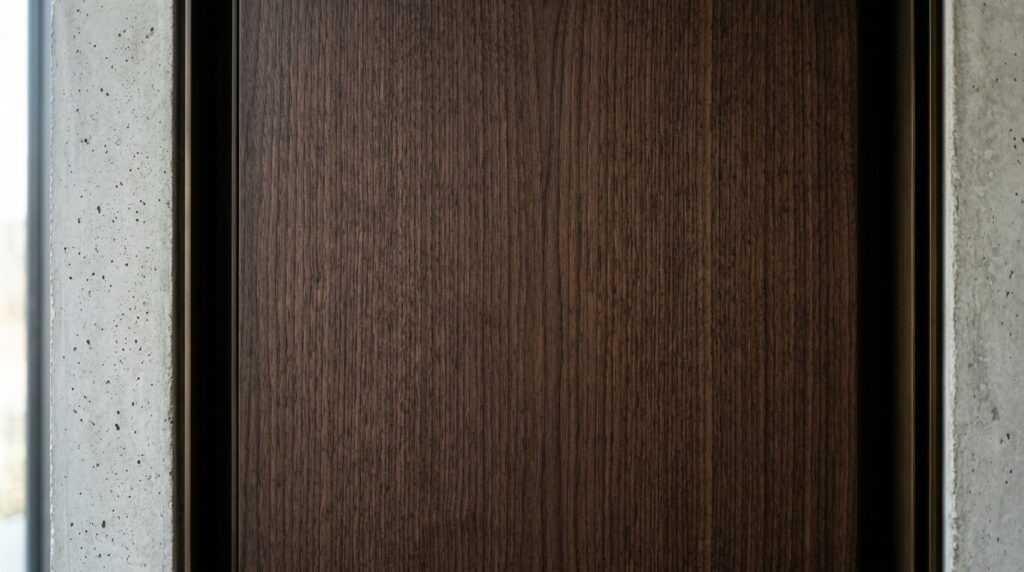
- Personally, I find that: While natural tropical hardwoods are beautiful, they can occasionally bleed heavy brown tannins that can run down and permanently ruin your bright white stucco walls. Shifting to thermally modified ash timber resolves this entirely—the extreme heat-treating process bakes out all natural sugars and sap, making the wood completely stable, rot-proof, and immune to tannin bleeding.
- What I would add here: Applying a premium, deep-penetrating water-based wood sealer infused with micronized trans-oxide pigments to preserve the rich dark color without creating an artificial, glossy film sheen.
Low-Voltage Ambience & Integrated Night Lighting
An elite stucco and wood boundary feature wall should transform into a spectacular, living gallery installation after dark. Integrating hidden smart lighting networks highlights the sharp architectural planes and deep material contrasts.
Idea #9 Flush-Mounted Top-Rail LED Lip Grazers
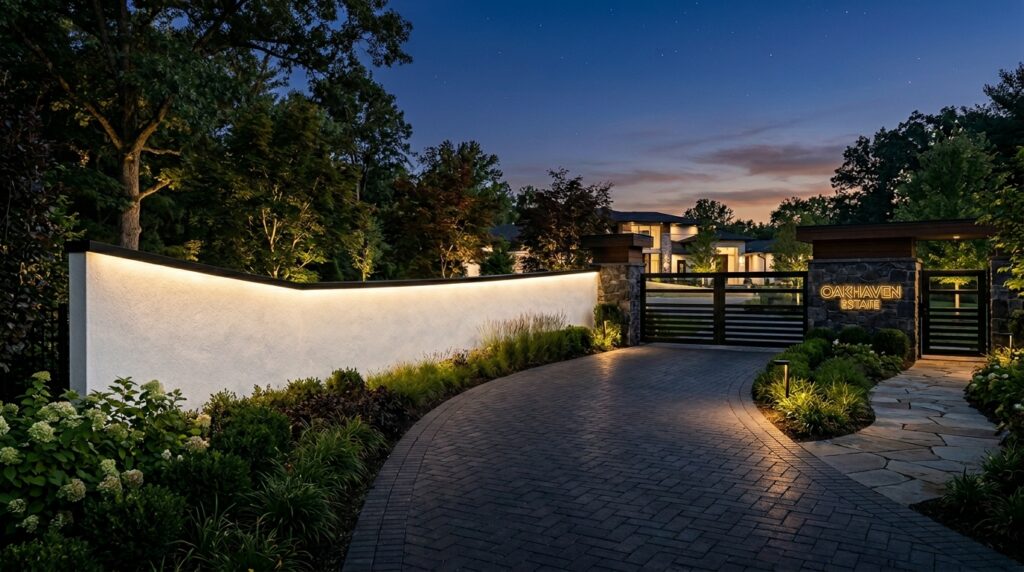
- My Opinion: In my opinion, high-angle downward grazing looks absolutely spectacular on clean modern stucco. The linear light highlights the subtle, hand-troweled texture of the wall while throwing the dark wood inset slots into high-contrast relief, creating a stunning evening landmark that safely guides arriving guests.
- What I would add here: Utilizing a low-voltage 24-volt DC driver system rather than a standard 12-volt line to completely eliminate any annoying light dimming (voltage drop) across long property runs.
Idea #10 Low-Profile Recessed In-Ground Well Spotlights
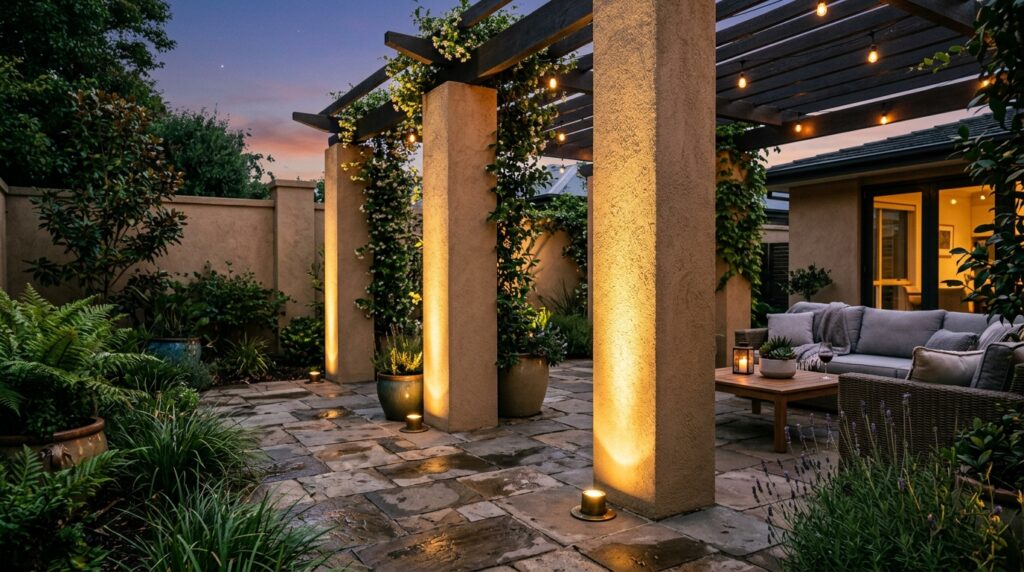
- From my perspective: Upward well lighting delivers an undeniably dramatic, resort-style ambiance that expands the perceived evening space of your entrance area. It transforms a basic boundary fence into a grand, glowing perimeter wall that makes arriving home feel incredibly exclusive and premium.
- What I would add here: Honeycomb louver grids snapped over the spotlight lenses to completely eliminate side-glare for lounging guests or passing vehicles, keeping the light tightly focused on the architectural masonry textures.