Are you looking for a fast, budget-friendly way to block out nosy neighbors or cover up an ugly, weathered chain-link fence without spending thousands of dollars on expensive masonry or custom hardwood carpentering? Wondering how to turn a basic, thin roll of natural bamboo reed into a highly stable, upscale exterior accent wall that feels like a tropical luxury resort? In this practical outdoor styling guide, we will explore the styling and structure of Bamboo Reed Screening Fences for Quick, Cost-Effective Privacy. We will break down how proper structural backbones, high-performance fastening wire, and smart preservation coatings work together to transform a lightweight screening material into a long-lasting, high-impact backyard sanctuary.
Organic Textures & Structural Backing Frameworks
Because bamboo reed screening rolls are flexible and semi-translucent, they require a rigid structural framework to achieve absolute privacy. Pairing these organic textures with solid backing systems creates a high-contrast architectural statement.
Idea #1 Full-Height Reed Screens Mounted Over Matte-Black Plywood Backers
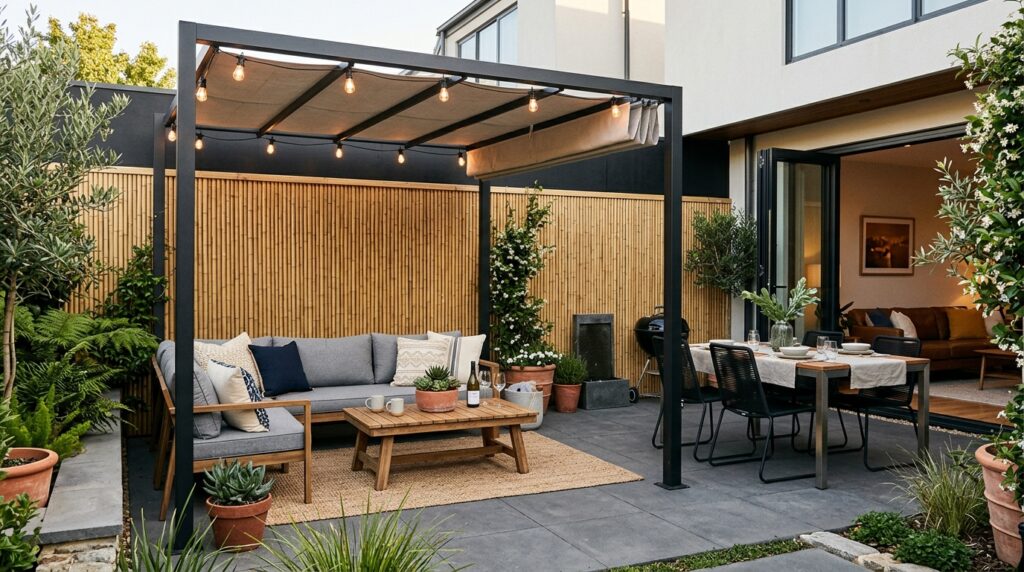
- My Opinion: Personally, I believe mounting lightweight reed screening over a solid black backer sheet is a stroke of design genius. The black background completely blocks the eyes of neighbors through the tiny natural gaps between the reeds, while creating a deep, dramatic shadow line that makes the organic blonde bamboo texture look incredibly sharp and high-end.
- What I would add here: A matching 2-inch black stained wood border frame around the perimeter of the panel to cleanly lock down the loose reed edges and present a highly tailored, custom-built look.
Idea #2 The Double-Sided Overlapped Split-Bamboo Matrix
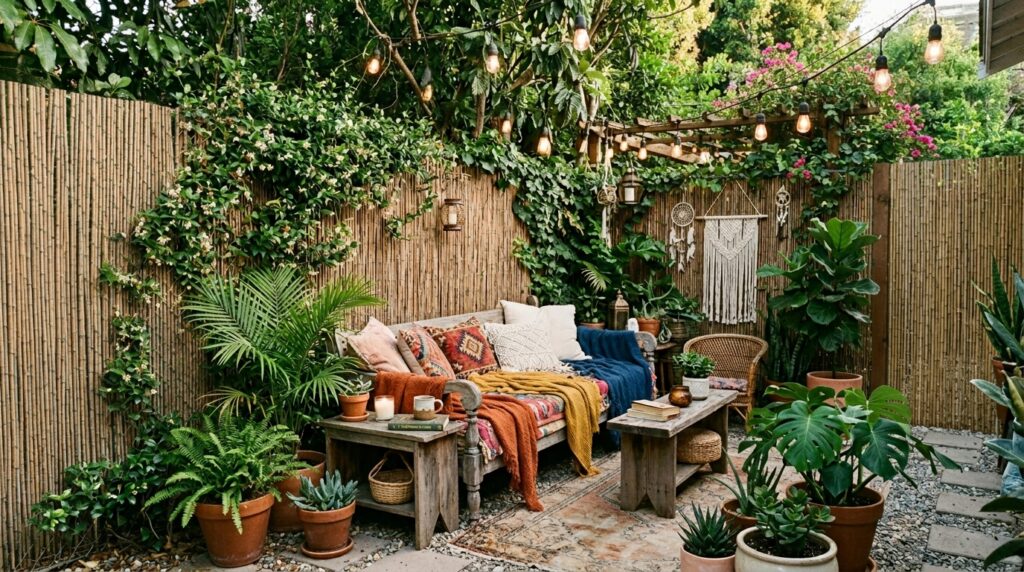
- From my perspective: If you are dealing with an ugly chain-link or wire fence, single-sided rolls can still leave the metallic structure partially visible under direct sunlight. Double-cladding the fence line completely sandwiching the wire matrix inside provides total 100% visual privacy while creating a gorgeous, organic view from both your yard and your neighbor’s property.
- What I would add here: Heavy-duty, UV-stabilized black nylon zip ties or thick copper twisting wires spaced every 12 inches along the top and bottom rails to ensure the screen remains completely flat and smooth against wind gusts.
Idea #3 Alternating Vertical Reed Panels with Horizontal Cedar Dividers
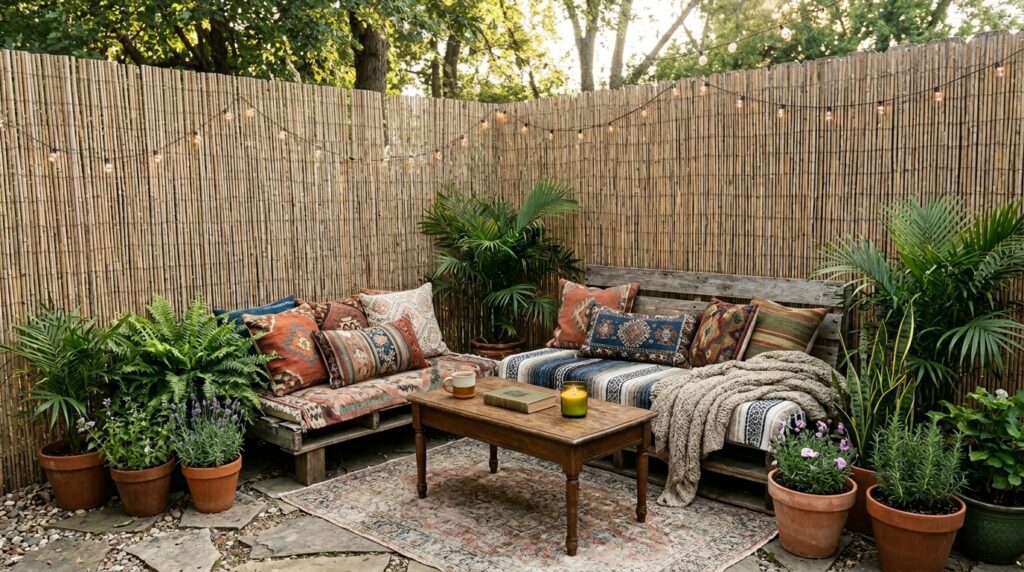
- In my experience: Running a single roll of bamboo reed continuously over a massive 50-foot property line can sometimes look a bit monotonous or overly casual. Breaking up the natural straw texture with clean, rigid horizontal wood dividers introduces a sophisticated, rhythmic architectural cadence that elevates the material’s perceived luxury.
- What I would add here: Ensuring the horizontal timber dividers are deeply chamfered (beveled) along their upper edges to forcefully shed rainwater away from the bamboo joints.
Material Contrasts & Hardscape Aesthetics
Juxtaposing raw, earthy bamboo screening with clean, industrial materials like metal posts or architectural stone bases anchors the fence into your landscape while upgrading its durability.
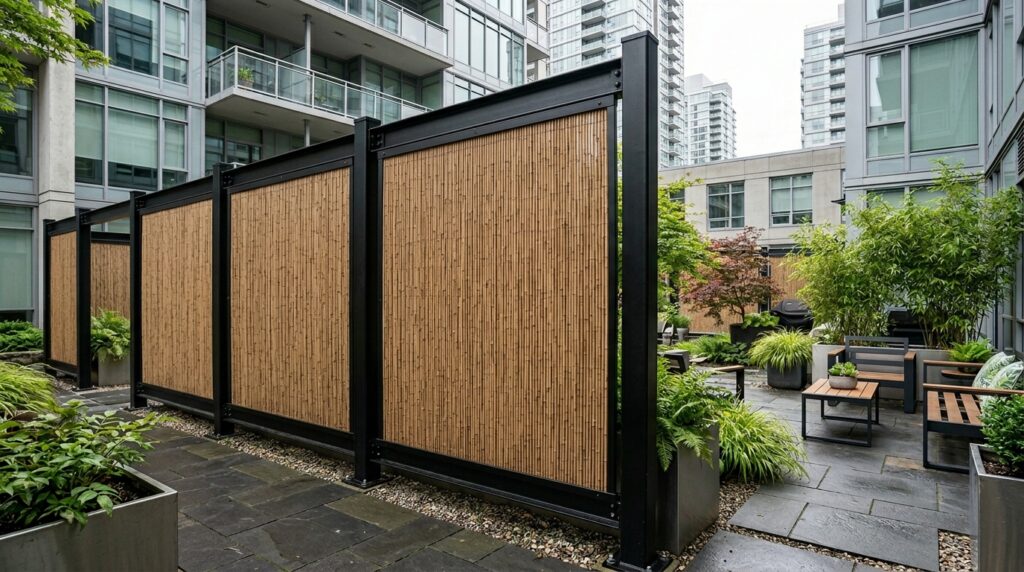
Idea #4 Woven Reed Infills Set Inside Heavy Black Powder-Coated Steel Channels
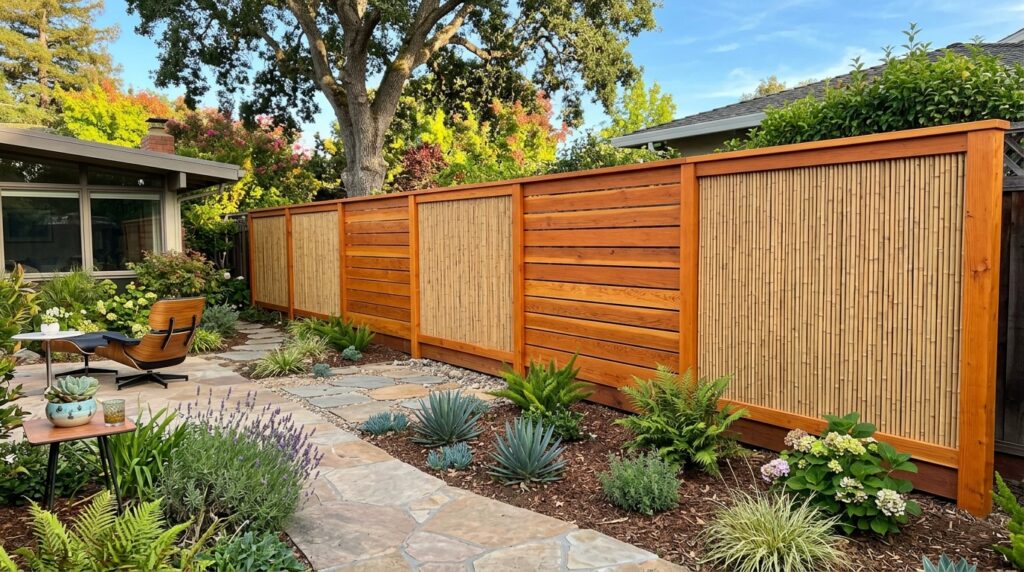
- In my opinion: Inserting a budget-friendly organic screening roll inside a commercial-grade black steel framework creates an incredible luxury-industrial aesthetic. The rigid metal frame provides massive structural strength against heavy spring winds, completely removing the flimsy, temporary look often associated with rolled fences.
- What I would add here: A hidden internal row of non-corrosive stainless steel staples along the interior lip of the metal U-channel track to permanently anchor the woven reed wires out of sight.
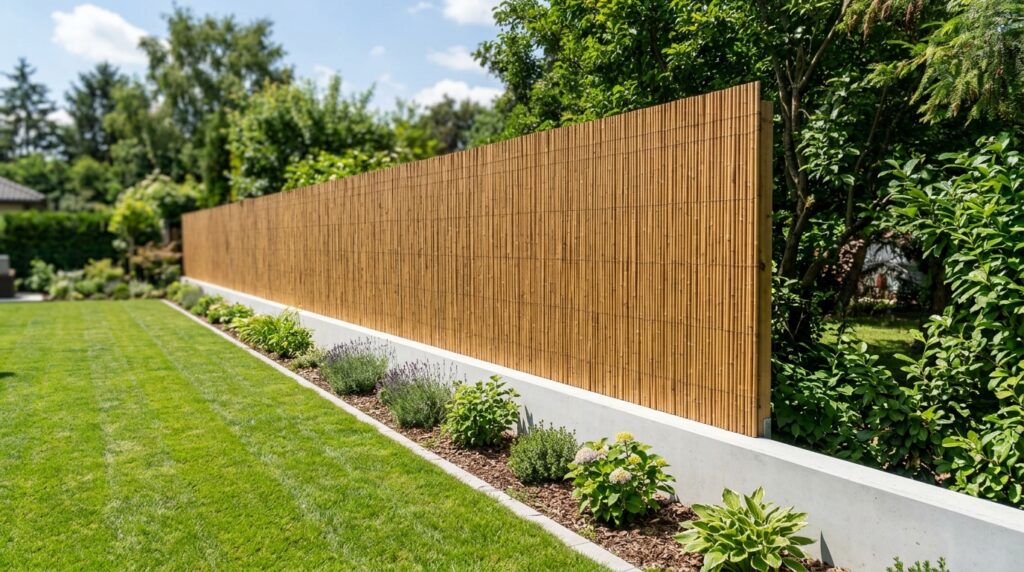
Idea #5 Reed Screen Toppers Over Cast Concrete Plinth Basements
- Personally, I find that: Elevating an organic, lightweight reed screen onto a low concrete masonry plinth adds an undeniable sense of upscale permanence. It protects the delicate base of the bamboo from making direct contact with wet lawn soil, extending its operational lifespan significantly.
- What I would add here: A hidden channel groove cast straight into the top surface of the concrete plinth to capture the bottom of the bamboo panel, creating a flawless, hardware-free transition line.
Hidden Engineering & Weatherproof Longevity Tips
Because natural bamboo reed is a lightweight organic fiber, it is highly susceptible to ground-line moisture rot and wind damage. Deploying smart subsurface protection keeps your cost-effective installation looking fresh for years.
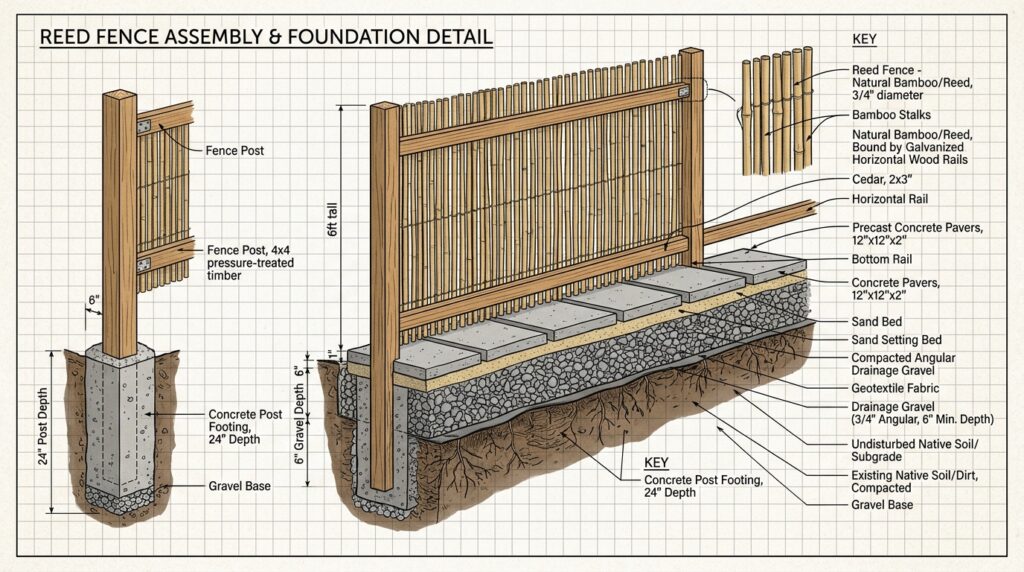
Idea #6 Subgrade Concrete Isolation Bricks with Gravel Weep Basements
- In my experience: The absolute number-one reason cheap rolled fences rot out prematurely is ground-line moisture wicking. Letting your bamboo reeds sit directly in wet lawn mud will cause them to turn black and moldy within a single winter season; resting the screen on concrete blocks with an underlying gravel weep path keeps your fibers perfectly dry.
- What I would add here: Spraying the bottom 6 inches of the bamboo screen with a heavy-duty, marine-grade clear liquid rubber sealant before installation to completely block moisture absorption from lawn splashes.
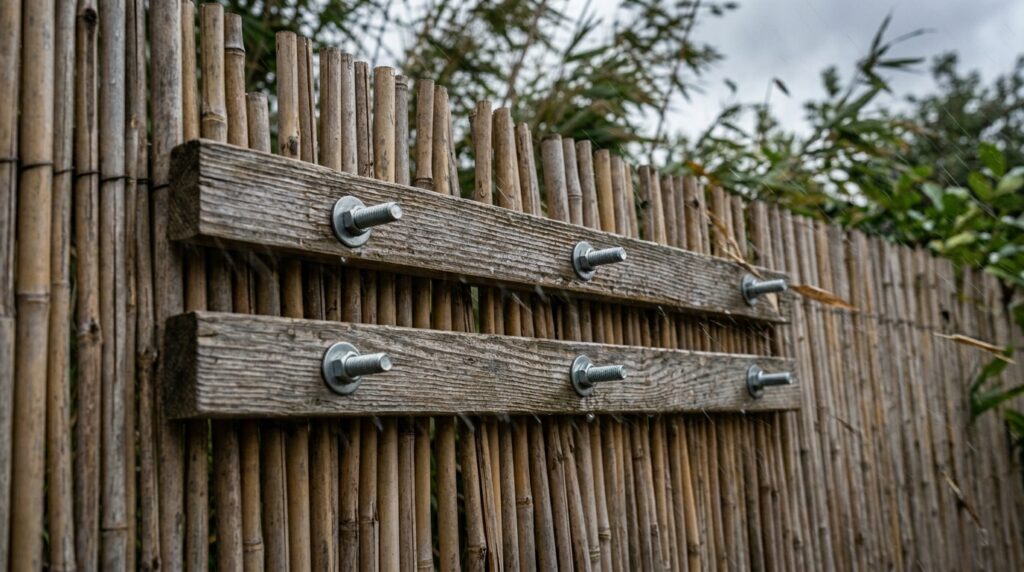
Idea #7 Dual-Sided Horizontal Timber Wind-Stiffener Batten Networks
- From my perspective: Because rolled reed screening acts exactly like a giant sail during a severe storm, relying solely on thin wire ties can cause the screen to rip or flap violently. Clamping the rolls between a dual-sided sandwich network of horizontal wood battens provides massive structural rigidity, keeping your perimeter dead-straight and quiet.
- What I would add here: Using premium, non-rusting solid brass or marine-grade stainless steel carriage bolts to lock the battens together, avoiding ugly rust-bleeding stains down the face of your blonde bamboo.
Low-Voltage Ambience & Cozy Outdoor Lighting
Transforming your budget-friendly bamboo screening into an elegant evening destination means integrating warm, low-voltage lighting arrays that catch the rich vertical textures of the natural reeds.
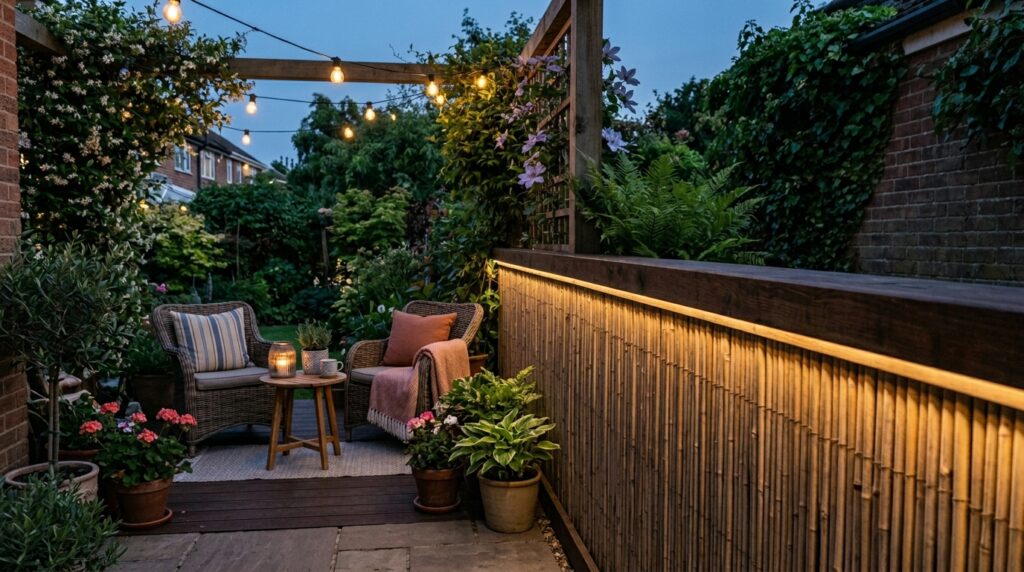
Idea #8 Flush-Mounted Top-Cap LED Downlight Channels
- My Opinion: In my opinion, high-angle downward grazing looks absolutely spectacular on textured bamboo. The linear light highlights the subtle, organic variations of every single vertical reed stick, creating a stunning, high-contrast play of light and shadow that makes your garden feel like a high-end island resort at dusk.
- What I would add here: Utilizing an ultra-warm 2400K or 2700K color temperature LED module to perfectly capture the romantic, candle-lit mood of an upscale outdoor lounge.
Idea #9 Low-Profile Brass In-Ground Uplight Well Spotlights
- From my perspective: Upward well lighting delivers an undeniably dramatic, resort-style ambiance that expands the perceived evening space of your patio area. It transforms a basic, low-cost boundary screen into a grand, glowing feature wall that makes open-air dining feel incredibly exclusive.
- What I would add here: Honeycomb louver grids snapped over the spotlight lenses to completely eliminate side-glare for lounging guests, keeping the light tightly focused on the architectural wood textures.
Idea #10 Woven Festoon Accent Lighting Loops for a Festive Vibe
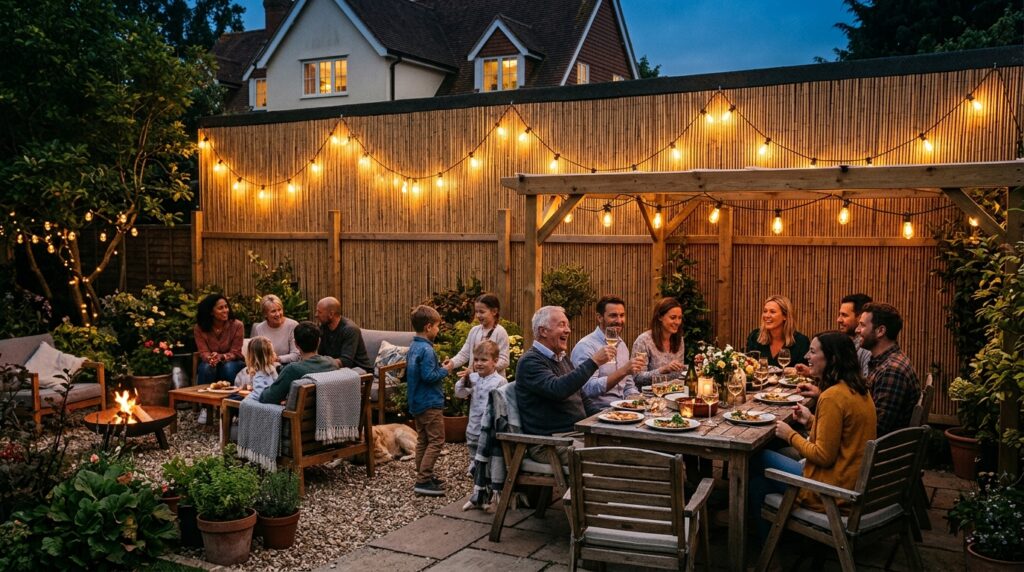
- Personally, I believe that: Leaning into a relaxed, bohemian look with classic festoon lighting looks incredible against the natural texture of bamboo. It reinforces the casual, cozy outdoor entertainment vibe of your patio while providing plenty of ambient light for backyard barbecues and night relaxation.
- What I would add here: Heavy-duty insulated black powder-coated steel guide wires running behind the light strings to take the weight off the sockets, preventing the lines from sagging unevenly over time.