Are you trying to figure out how to design a commanding front entrance that gives your estate an undeniable sense of permanence, security, and high-end luxury? Wondering how to engineer a structural masonry pillar that can effortlessly support the massive, swinging weight of a heavy-gauge iron or architectural timber driveway gate without leaning or cracking over time? In this comprehensive hardscape architecture guide, we will explore the visual and structural impact of Stacked Flagstone Entry Pillars to Anchor Your Front Driveway Gate. We will break down how internal structural steel cores, deep-set frost-line concrete footings, and advanced stone masonry techniques work together to turn your property boundary into a breathtaking, resort-style architectural arrival experience.
Monolithic Stone Textures & Deep-Shadow Coursing
The method used to lay and chip your flagstone completely dictates the architectural style of your entrance. Selecting the perfect horizontal profile ensures your driveway pillars feel like an organic extension of your landscape.
Idea #1 The Ultra-Thin Horizontal Dry-Stack Linear Matrix
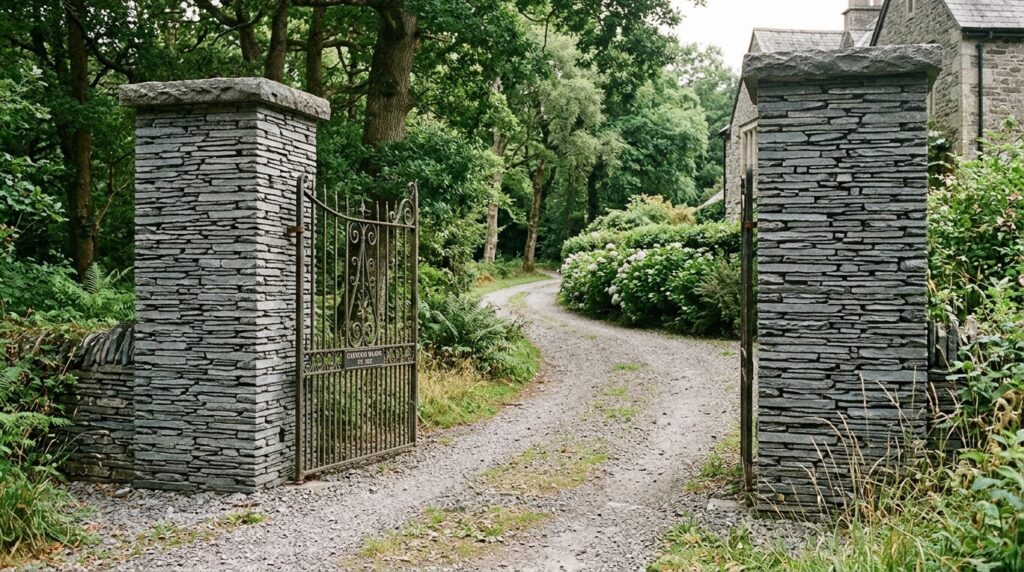
- My Opinion: Personally, I believe the ultra-thin linear dry-stack technique is the absolute pinnacle of luxury stone masonry. By hiding the mortar deep inside the joints, you create a hyper-textured surface that catches changing sunlight beautifully throughout the day, casting deep, dramatic horizontal shadow lines that look incredibly high-end.
- What I would add here: A premium, penetrating color-enhancing sealer applied over the cured stone to enrich the deep charcoal and blue-grey tones without adding an artificial, tacky high-gloss shine.
Idea #2 Irregular Mosaic Ashlar Blends with Crisp Tooled Joints
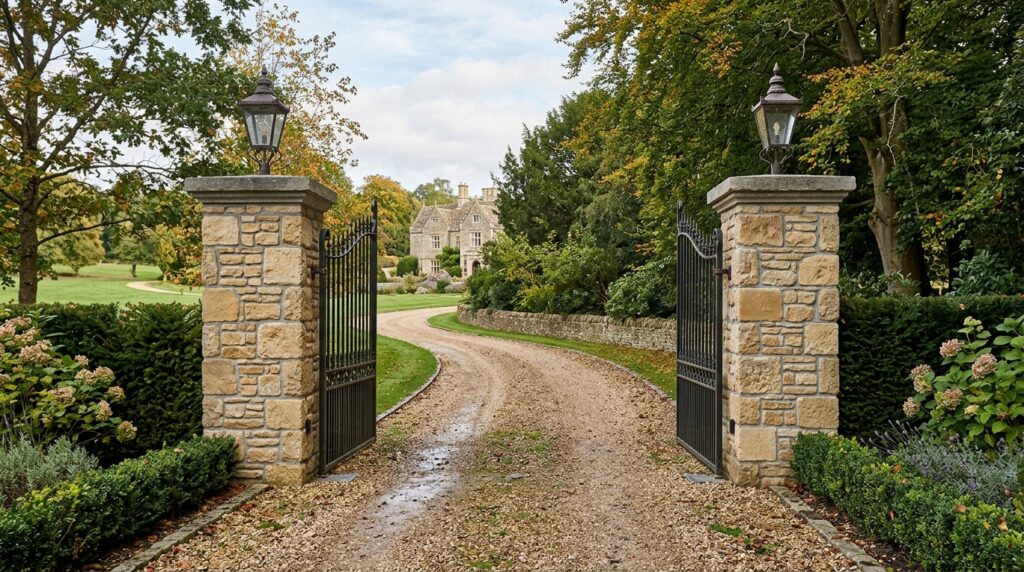
- My Opinion: From my perspective, an irregular mosaic ashlar pattern is the perfect choice for traditional, European-style estates or modern farmhouses. It delivers a highly organic, timeless warmth that feels like it has been anchoring the property for generations, softening the clean, rigid lines of a long perimeter fence.
- What I would add here: Mixing in a small 10% ratio of deep copper-veined quartz stones to add subtle, unexpected flecks of metallic color that tie into surrounding warm timber fencing.
Idea #3 Oversized Jumbo Ledge-Stone Stack Formations
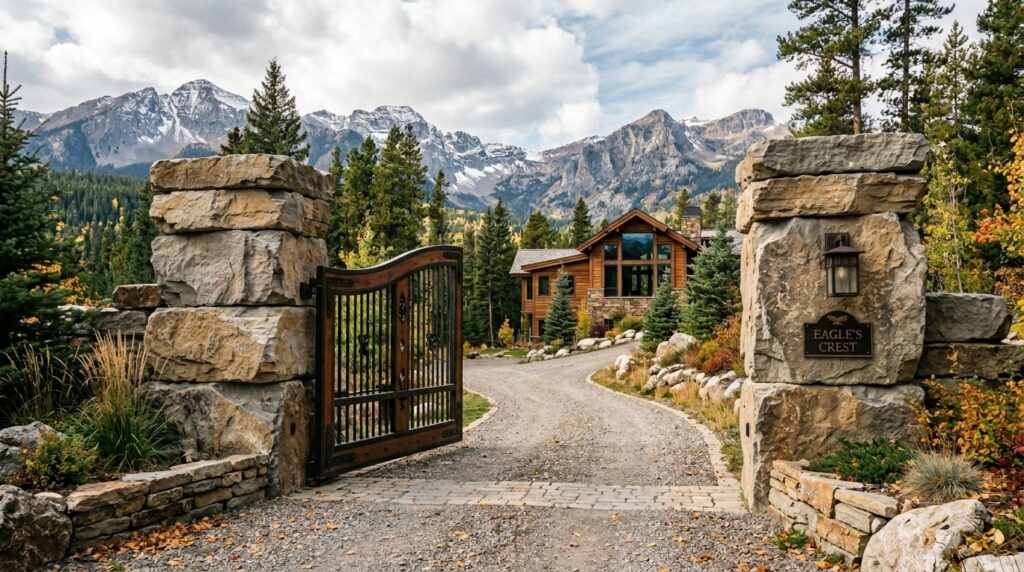
- In my experience: When dealing with wide driveways or exceptionally tall gates, small stones can look busy and disproportionate. Utilizing oversized jumbo ledge-stone completely scales up the pillars, giving them the raw physical presence needed to balance a heavy 14-foot wrought iron gate.
- What I would add here: Ensuring the stonemason hand-dresses each stone edge with a pitching chisel to maintain a rugged, high-relief rock-face texture along the corners.
Subsurface Structural Engineering & Gate Core Dynamics
A beautiful stone pillar is only as good as the hidden engineering supporting it. Because automatic driveway gates exert massive rotational torque, heavy-duty subsurface concrete and steel grids are mandatory to prevent catastrophic leaning.
Idea #4 The Core-Filled Concrete Block Core with Heavy Rebar Grids
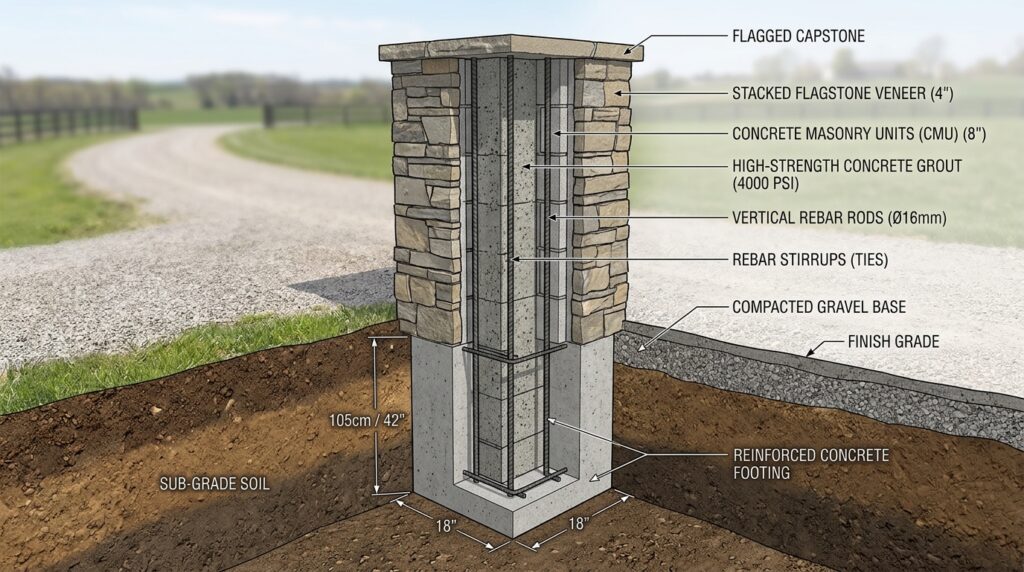
- My Opinion: In my opinion, attempting to build a stone pillar out of raw stacked rocks with no internal core is a critical failure waiting to happen. Building over a core-filled CMU backbone ensures the pillar acts as a single, solid monolithic structural column that can handle decades of vibrations from automated gate closures.
- What I would add here: Wrapping the exterior of the CMU block core with a heavy-duty self-adhering waterproofing membrane to prevent moisture from leaching out and causing white, chalky efflorescence stains on your flagstone.
Idea #5 Deep-Set Frost-Line Monolithic Concrete Footing Slabs
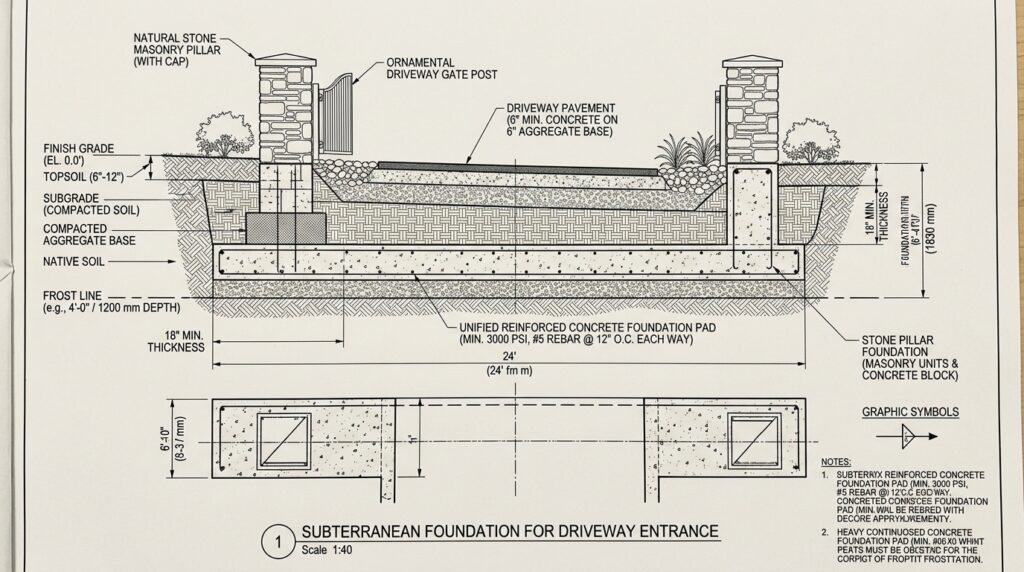
- From my perspective: Ground shifting due to winter freeze-thaw cycles is the number-one killer of beautiful masonry gates. Pouring a single, massive monolithic concrete footing ensures the pillar remains perfectly level for life, preventing the gate latches from falling out of alignment over time.
- What I would add here: Dropping a 6-inch bed of compacted crushed drainage gravel directly beneath the concrete footing to give subgrade groundwater an instant escape path away from the foundation base.
Idea #6 Integrated Steel H-Beam Torque Plates for Heavy Cantilever Gates
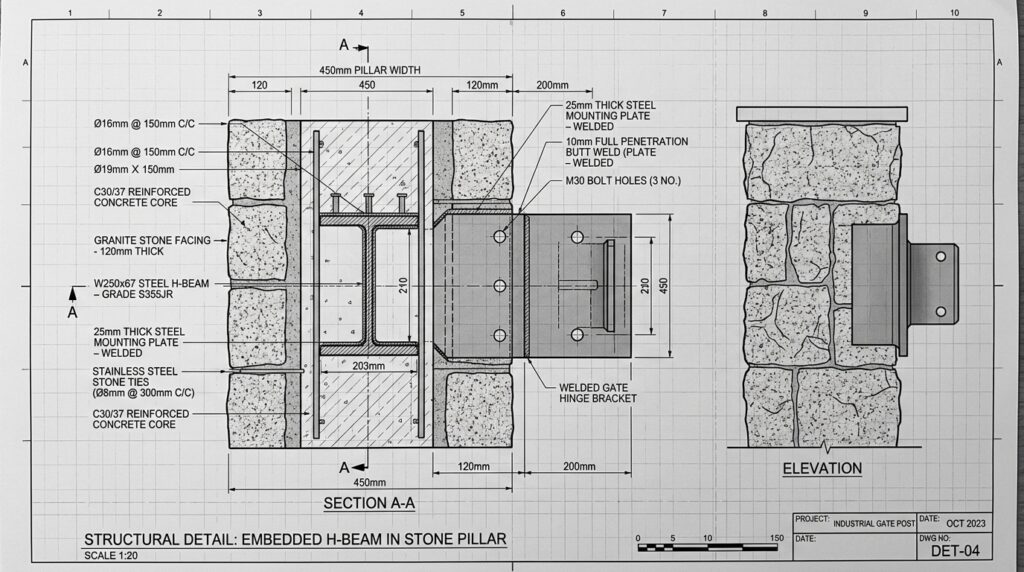
- In my opinion: If you are installing a modern cantilevered slide gate or a heavy wood swing gate, standard masonry anchors will eventually pull loose from the stone joints. Welding your gate hinges directly to an internal structural steel H-beam transfers all the gate’s heavy weight and torque straight into the ground footing, completely protecting the decorative flagstone from stress cracking.
- What I would add here: Coating the exposed steel hinge plates in a premium marine-grade textured matte-black powder finish to eliminate any future rust scaling or dripping.
Architectural Finishing Caps & Low-Voltage Ambience
Crowning your pillars with custom top-cap stonework protects your structure from water damage, while integrated low-voltage lighting grids transform your entrance into a spectacular evening landmark.
Idea #7 Hand-Chiseled Overhanging Natural Bluestone Coping Caps
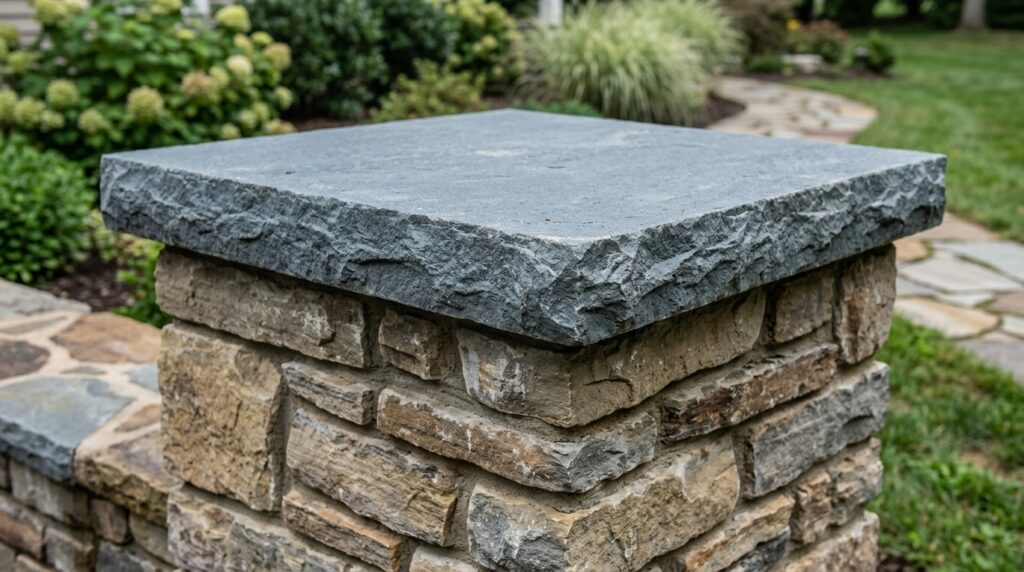
- Personally, I find that: Leaving the top of a flagstone pillar open with exposed mortar joints is a recipe for quick water intrusion and cracking. Installing a solid, overhanging stone coping cap acts like an umbrella for your pillar—forcefully shedding rainwater away from the stone veneer below while providing a beautiful architectural finish.
- What I would add here: Cutting a shallow, continuous 0.25-inch “drip notch” grove along the entire underside perimeter of the stone cap overhang to stop rainwater from clinging and tracking backward onto the pillar face.
Idea #8 Flush-Mounted Under-Cap LED Coping Grazers
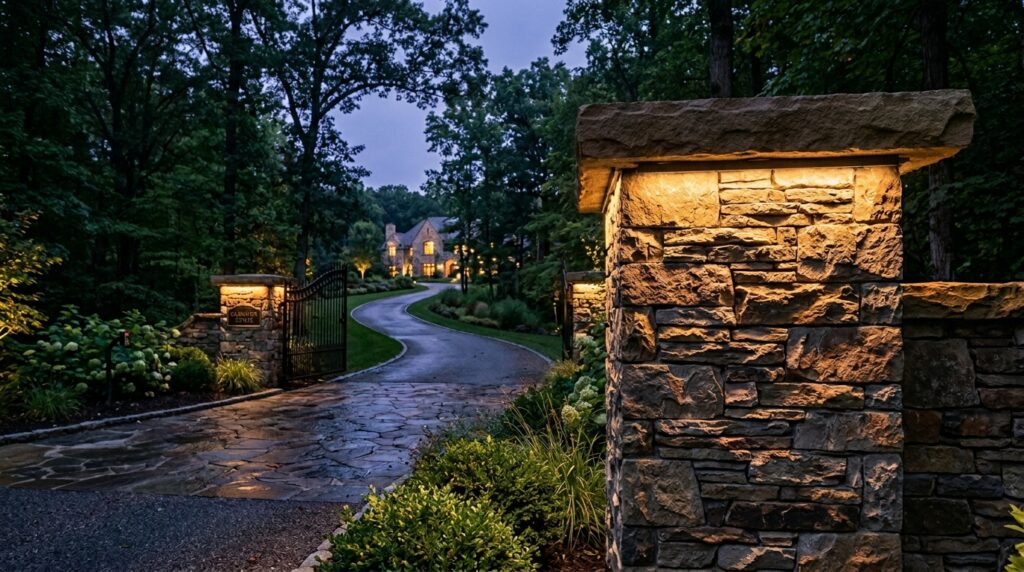
- My Opinion: In my opinion, adding downward-facing linear lip lighting looks absolutely spectacular on stacked stone. It completely hides the physical lighting fixture during the day, revealing a stunning, neon-like ribbon of light at dusk that accentuates every single stone layer without casting annoying glare into arriving drivers’ eyes.
- What I would add here: Utilizing a low-voltage 24-volt DC driver system rather than a standard 12-volt loop to ensure perfectly consistent light brightness across your entire entry perimeter.
Low-Voltage Automation & Intelligent Security Loops
An elite entrance pillar should work effortlessly behind the scenes. Integrating low-voltage intercom enclosures, smart keypads, and automatic safety sensors straight into the stonework maintains a clean, clutter-free luxury profile.
Idea #9 Recessed Solid Brass Intercom and Keypad Faceplates
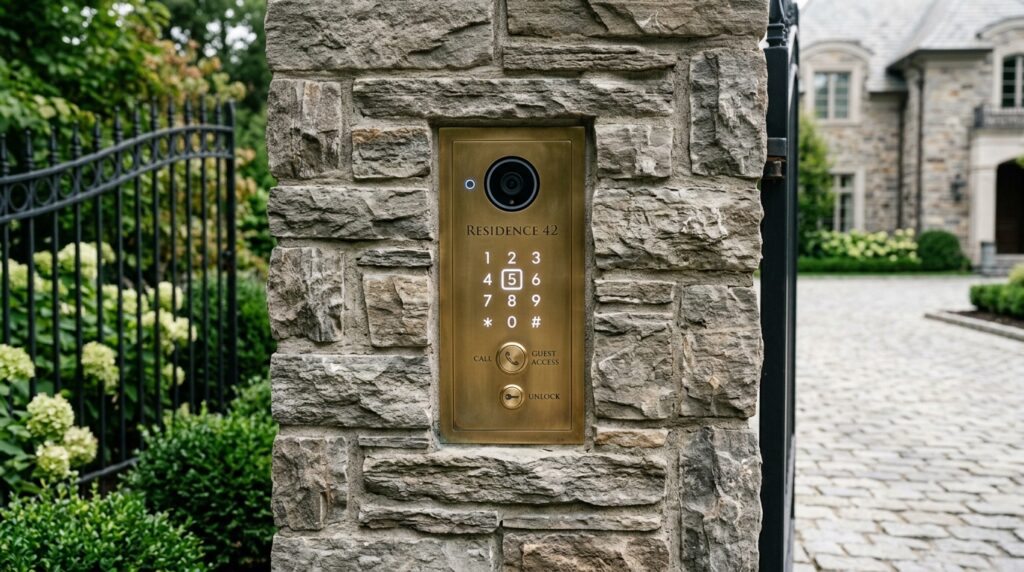
- From my perspective: Slapping a cheap plastic gate intercom onto an ugly exterior metal goose-neck pole looks incredibly messy and ruins a luxury home’s curb appeal. Specifying custom, flush-mounted brass or aluminum hardware enclosures allows the technology to blend seamlessly into the stone lines as a premium, highly intentional architectural detail.
- What I would add here: Running an oversized 2-inch flexible PVC conduit pipe through the center of the pillar core during construction to make routing future smart-home data wires or fiber-optic upgrades incredibly easy.
Idea #10 Subgrade Magnetic Vehicle Exit Loop Sensors
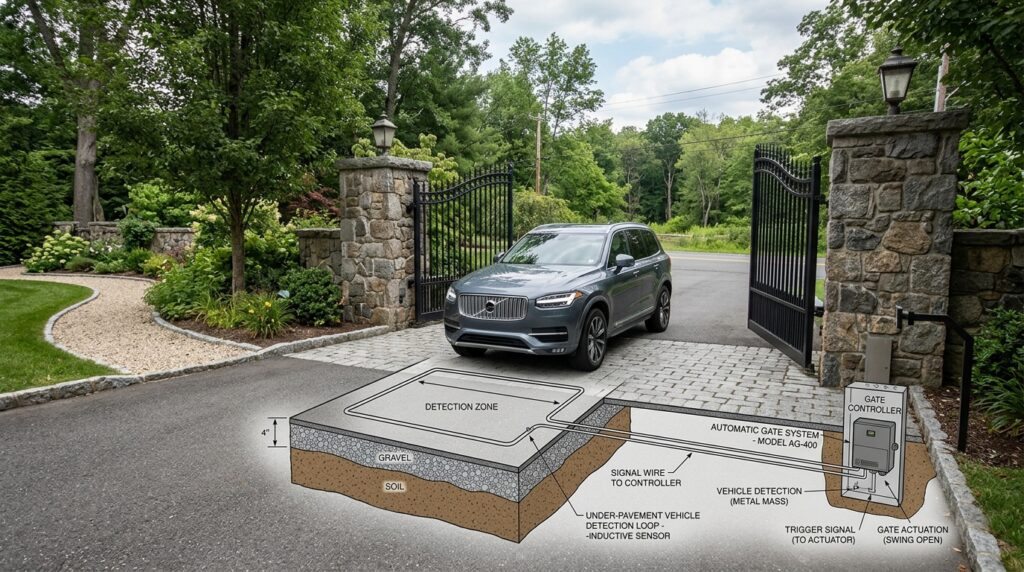
- Personally, I believe that: A premium luxury home should operate completely effortlessly. Integrating subterranean magnetic loop sensors means departing guests never have to fumble for a remote control or keypad code; the system detects the large metal mass of the vehicle automatically, opening the entry gates with absolute precision.
- What I would add here: A smart digital time-delay buffer circuit inside the gate automation programming to prevent the gates from closing prematurely if a secondary vehicle is following closely behind.