An outdoor dining room sheltered by a wisteria-draped rafter system is the ultimate expression of European romance and sensory luxury. In elite landscape design, this layout transforms a simple dinner into a theatrical event. In the spring, the structure explodes into a cascading canopy of fragrant lavender, violet, or white blossoms; in the summer, the dense, overlapping emerald leaves provide a cool, dappled shade that naturally lowers the temperature of the dining terrace below. By engineering heavy-duty timber or steel rafter grids to support the immense weight of old-world vines, we create a living, breathing architectural ceiling. In this guide, we explore 10 masterfully curated wisteria dining rooms.
Classical European & Monolithic Stone Salons
These designs draw inspiration from historic Italian villas and French country estates, using heavy masonry elements to anchor the soft, romantic floral canopy.
Idea #1: The Tuscan Heavy-Timber & Travertine Feast
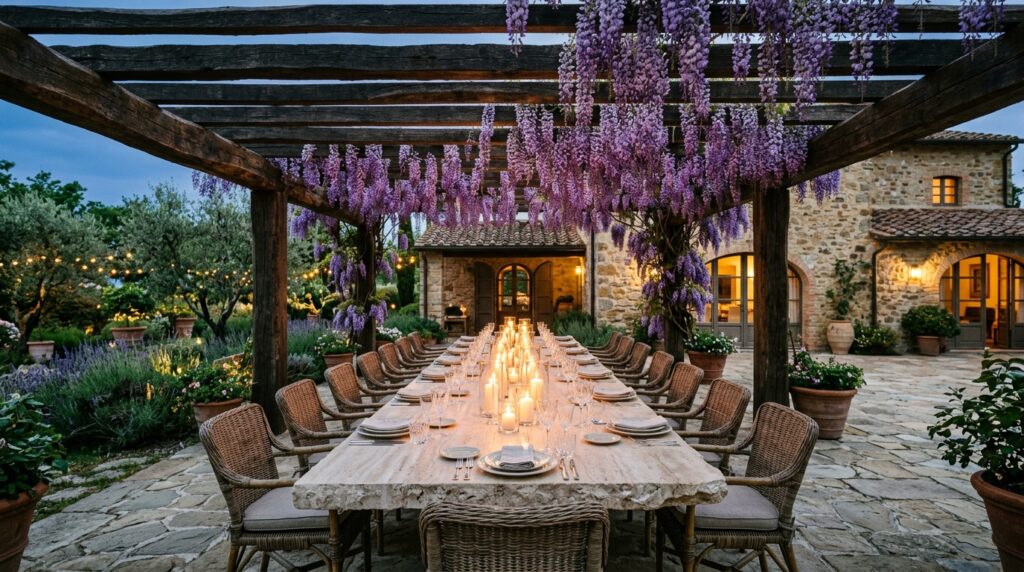
- My Design Perspective: To complement the ethereal, delicate beauty of hanging wisteria blossoms, you need structural weight below. I couple the vines with thick, dark, hand-hewn oak rafters (8×8 inches) supported by solid stone pillars. The cream-toned travertine dining table acts as a bright canvas, catching the beautiful purple silhouettes and shadows cast by the setting sun filtering through the flowers.
Idea #2: The Sunken French-Lime Courtyard
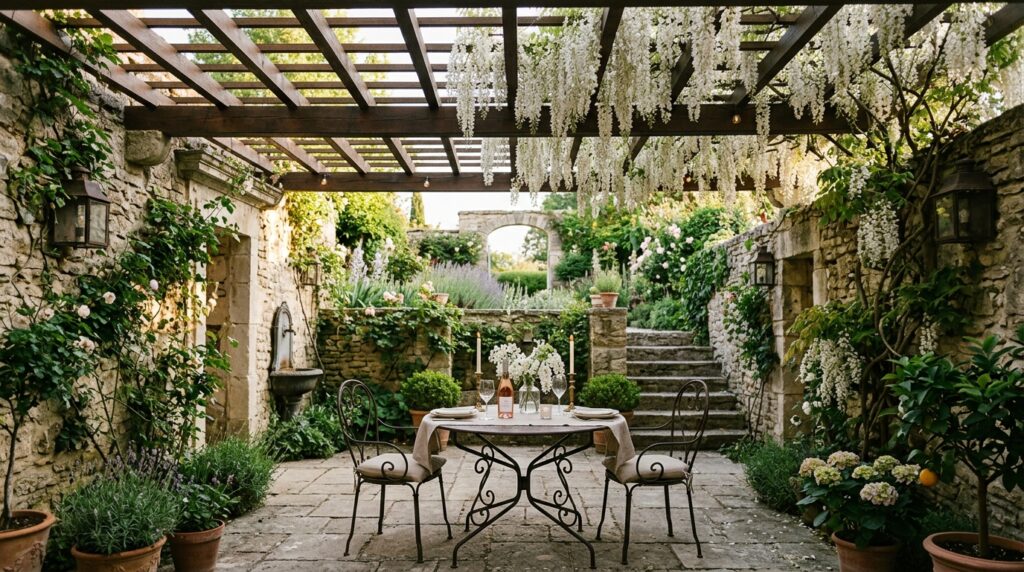
- My Design Perspective: White wisteria (Wisteria floribunda ‘Alba’) offers an incredibly clean, high-brightness aesthetic that feels airy and sophisticated. Dropping the dining room down two steps into a sunken limestone courtyard creates an intimate, private room enclosure. The white stone walls bounce light upward, illuminating the underbelly of the white floral canopy beautifully.
Idea #3: The Classical Roman Colonnade Pavilion
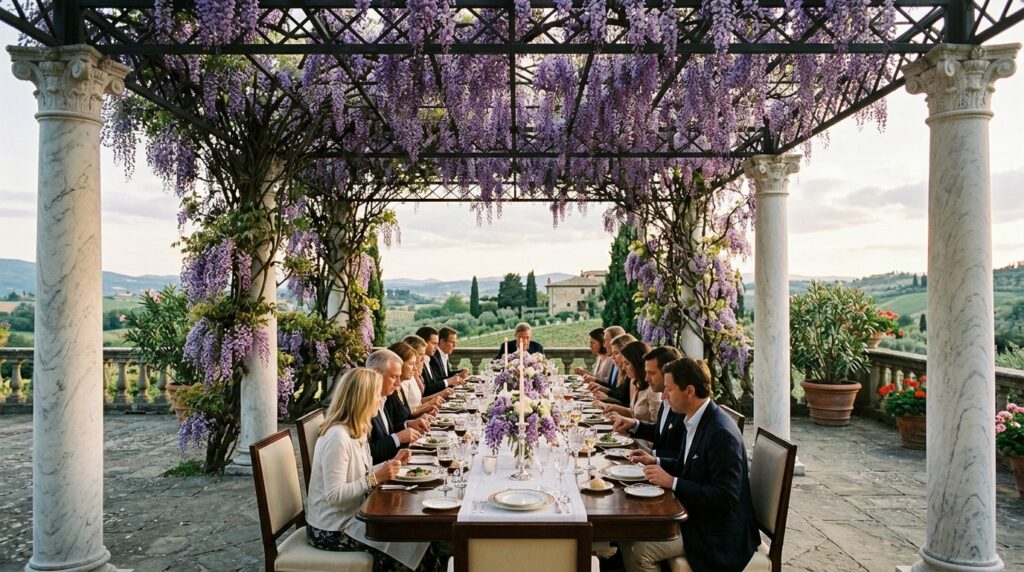
- My Design Perspective: For a truly grand, symmetrical estate look, I transition away from rustic wood and use formal stone columns. Pairing white marble pillars with a sleek, slender black iron rafter grid allows the wisteria vines to wrap tightly like living jewelry. The long, weeping flower clusters hang perfectly straight through the iron grids, creating a majestic natural ceiling.
What I Would Add Here (Classical Section): I always hide micro-sized, low-voltage copper up-lights (2700K) directly at the core junction points where the main wisteria trunks meet the overhead rafters. Washing the gnarled, twisting vine branches and hanging flower racemes with warm, indirect light from below transforms the ceiling into a glowing, magical dreamscape after nightfall.
Modern Geometric & High-Contrast Structures
Designed to complement contemporary, minimalist, or industrial-chic architecture, these layouts utilize clean metal frames and architectural lighting to frame the organic vines.
Idea #4: The Matte Black Industrial I-Beam Matrix
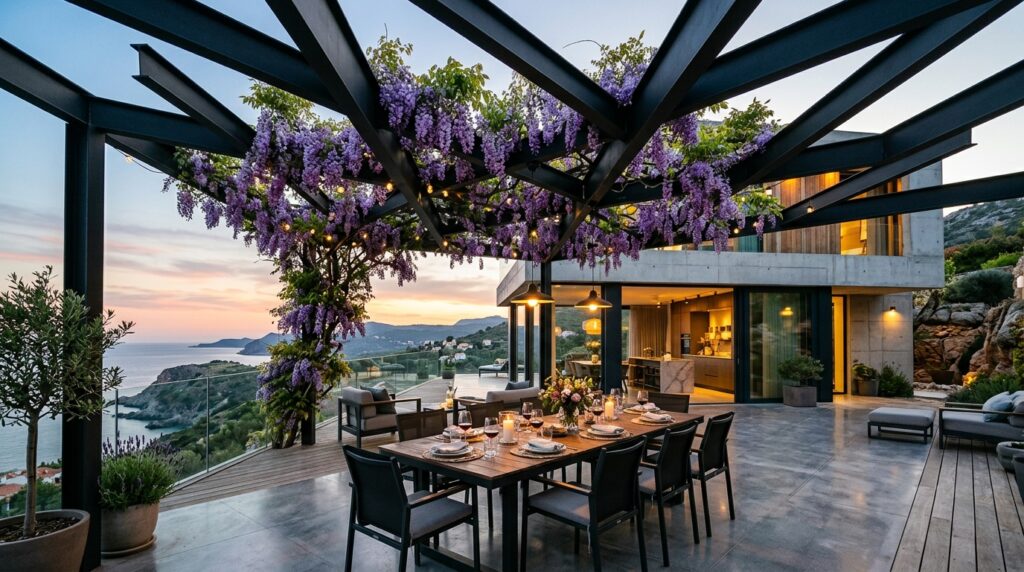
- My Design Perspective: This is a powerful play on “The Machine vs. Nature.” The rigid, unyielding lines of blackened structural steel provide a gorgeous, high-contrast frame for the wild, organic, fluid growth of wisteria vines. It strips away the traditional “cottage” look of wisteria and elevates it into a high-fashion, architectural statement piece.
Idea #5: The Cantilevered Floating Steel Canopy
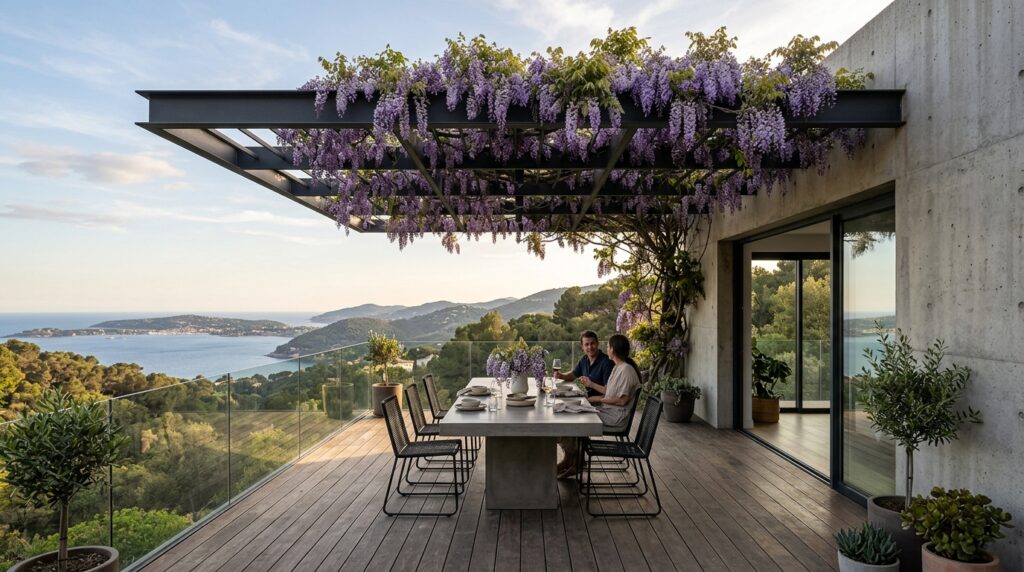
- My Design Perspective: Eliminating outer corner columns keeps the dining footprint completely open and preserves unobstructed views of the surrounding gardens or pool lines. The cantilevered steel framework must be anchored deep into the home’s structural core to support the substantial wet weight of mature wisteria vines, resulting in a clean, gravity-defying, floating floral canopy.
Idea #6: The Origami Faceted Aluminium Lattice
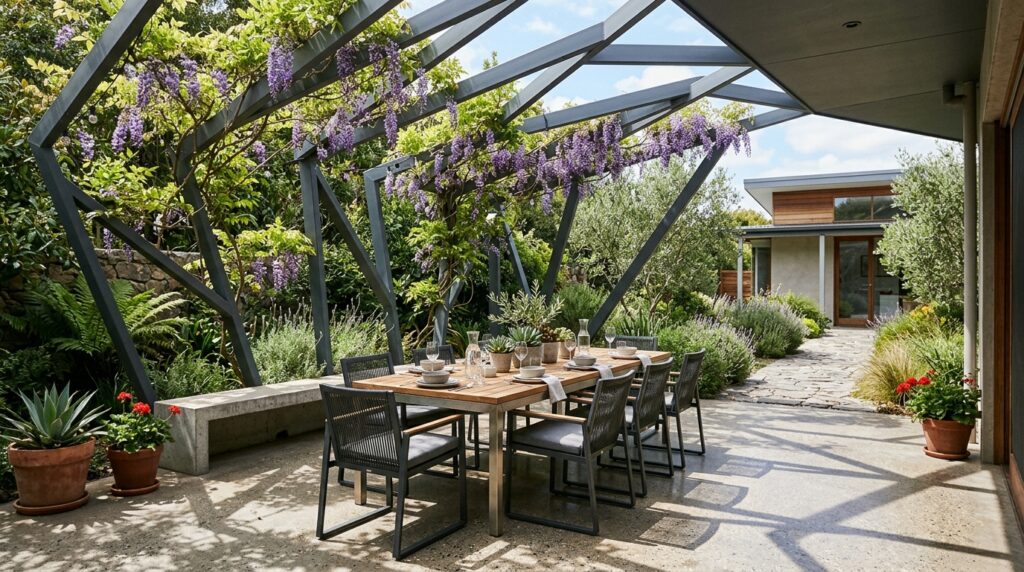
- My Design Perspective: Instead of a standard flat, horizontal grid, I love designing faceted or slightly sloped rafter structures that mimic the sharp lines of origami paper. Using lightweight, powder-coated structural aluminum allows us to create custom, unexpected geometric angles that filter the sunlight dynamically throughout the day as the sun shifts over the estate.
What I Would Add Here (Modern Section): I always integrate a recessed, flush-mount matte-black linear slot heating channel system into the overhead beams or nearby structural walls. This ensures that during early spring—when the wisteria is in its prime, spectacular bloom but the evening air is still crisp—the dining zone stays perfectly warm, extending the usability of the space.
Organic Modernism & Immersive Epiphany Terraces
These concepts focus on deep sensory immersion, using natural wood textures, water transitions, and specialized vine curation to establish a relaxed, resort-like dining sanctuary.
Idea #7: The Bleached Teak Log Cabin Lanai
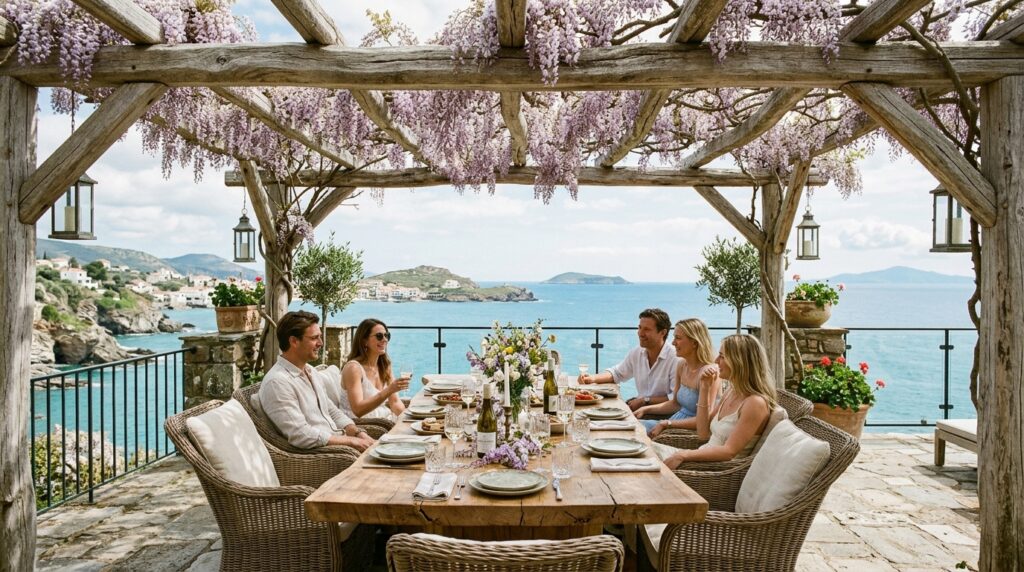
- My Design Perspective: Bleached, silvery-grey teak logs introduce an organic, soft, beach-house warmth to the dining room. The irregular, twisting shapes of the natural log rafters echo the organic growth patterns of the wisteria trunks themselves, creating a space that feels entirely hand-sculpted by nature.
Idea #8: The Reflective Water-Moat Dining Platform
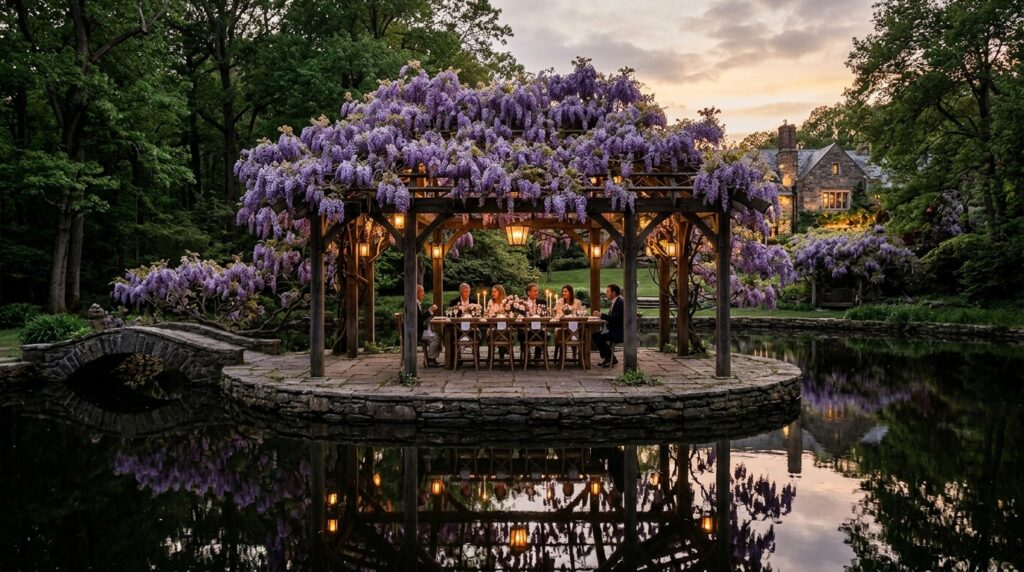
- My Design Perspective: Water magnifies the beauty of floral architecture. Building the dining area as a floating island inside a shallow reflection pond doubles the visual impact of the wisteria. The calm, dark water captures the reflection of the hanging blossoms, enveloping the diners in an absolute oasis of color, fragrance, and soothing water ripples.
Idea #9: The Japandi Double-Lattice Bamboo Screen
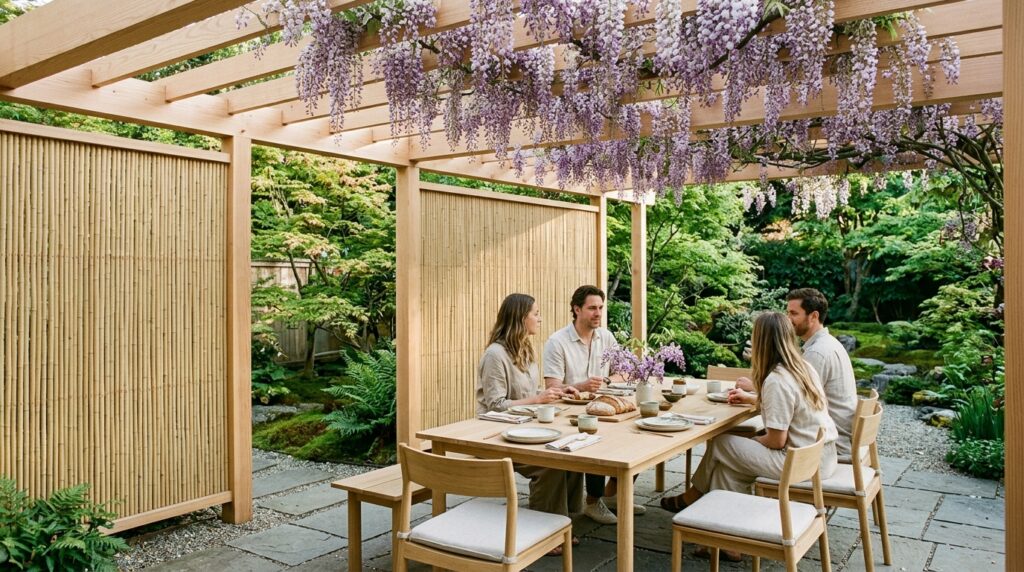
- My Design Perspective: Japandi style relies on clean, vertical rhythms and natural harmony. By installing a fine-gauge double lattice over the main rafters, we give the wisteria vines a precise grid to crawl across. This keeps the canopy thin, neat, and highly curated, allowing beautiful, crisp shafts of dappled light to illuminate the minimalist dining setup below.
Idea #10: The Multi-Varietal Gradient Arbor
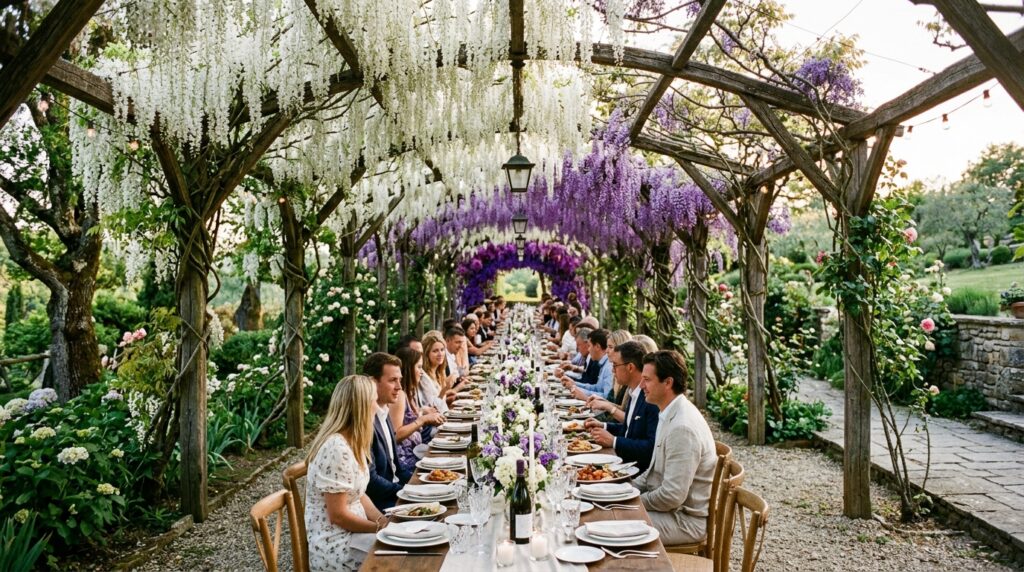
- My Design Perspective: For grand-scale entertaining or long banquet layouts, you can create an unforgettable visual journey by planting a gradient of wisteria varieties. Interweaving Wisteria Alba (white), Wisteria Rosea (pinkish-mauve), and Wisteria Royal Purple along a long continuous rafter run creates a breathtaking ombre color transition that serves as the ultimate conversation starter for guests.
What I Would Add Here (Sensory Section): I always mandate the installation of a completely concealed copper misting system integrated directly along the upper rafter grid, paired with heavy-gauge, clear anti-bird netting tensioned flush above the rafters. The misting system drops the ambient temperature by up to 15°F during hot summer afternoons without dampening the table, while the invisible overhead netting protects the elite dining setup from falling debris and birds, keeping your linen tablecloths and fine china absolutely flawless throughout the meal.