Are you looking to break away from standard vertical dog-eared fencing and give your property line a sleek, high-end architectural boundary? Traditional vertical fences can look dated and commercial, while solid vinyl options feel sterile and trap heavy winds. In this comprehensive landscape engineering manual, we will explore Horizontal Slatted Cedar Fences for a Clean Contemporary Look. We will analyze how Western Red Cedar’s natural tannins resist decay, how precise structural slat spacing manages wind deflection, how hidden stainless steel fasteners prevent unsightly black streak staining, and how integrating low-voltage lighting networks turns a basic boundary fence into a stunning residential design asset.
Hidden Mechanical Fastening & Modern Shadow-Gap Engineering
The clean lines of a contemporary horizontal fence depend entirely on the precision of the gaps between the slats and the complete invisibility of the mounting hardware.
Idea #1 The 1/4-Inch Shadow-Gap Matrix with Cortex Hidden Fasteners
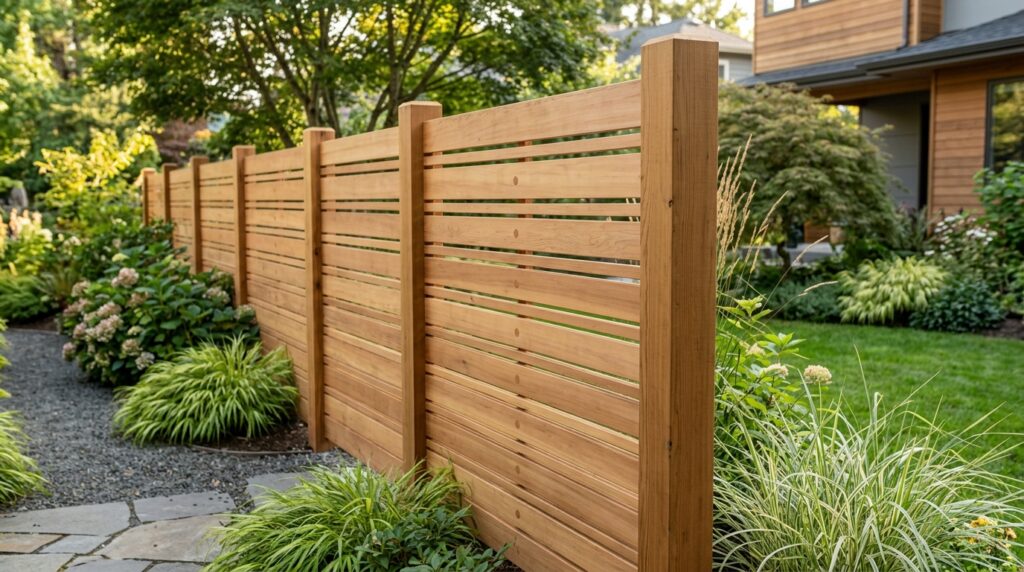
- My Opinion: Personally, I find visible silver or gold deck screws completely ruin the high-end look of a modern horizontal fence. Using a professional hidden plugging system makes the face look like a continuous, uninterrupted ribbon of luxurious wood, maximizing the architectural “shadow-gap” effect.
- What I would add here: A custom-machined 1/4-inch aluminum spacer block used during installation to guarantee the horizontal lines remain perfectly level and uniform across long property slopes.
Idea #2 Alternating Variable Slat Widths (1×2, 1×4, and 1×6 Ratios)
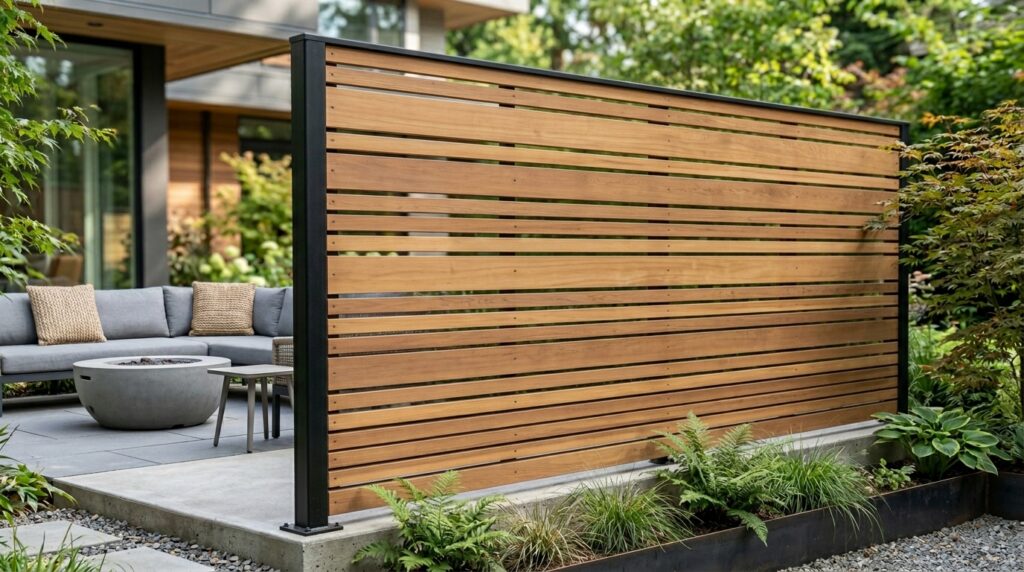
- From my perspective: Using a single uniform board width can sometimes look slightly monotonous over a large perimeter. Mixing variable slat widths introduces a beautiful, rhythmic asset that mimics high-end interior architectural wood paneling, giving your backyard a highly tailored custom look.
- What I would add here: Ensuring the wood is sourced as “Kiln-Dried” rather than “Green” cedar to prevent the different board widths from shrinking unevenly and warping your precise gap spacing over the seasons.
High-Contrast Architectural Framing & Structural Core Splicing
Pairing the natural warmth of Western Red Cedar with structural metal frames completely eliminates wood sag while delivering a striking, industrial-modern aesthetic.
Idea #3 Matte Black Powder-Coated Steel I-Beam Posts
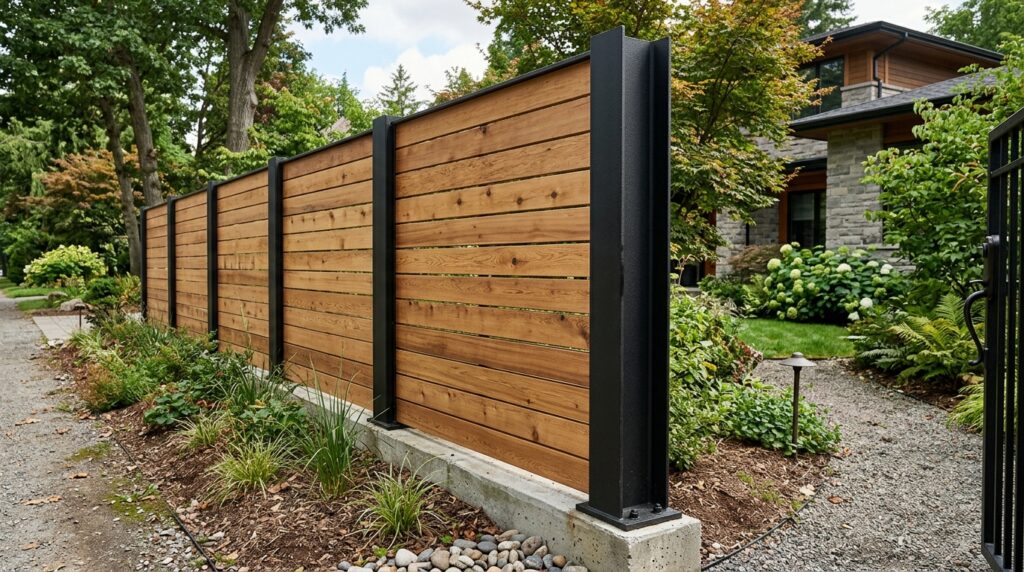
- In my experience: Standard 4×4 wood fence posts will inevitably twist, bow, or rot at the ground line within 10 to 15 years. Sinking matte black steel I-beams into concrete footings provides an indestructible skeleton that beautifully frames the warm cedar wood with a high-contrast black border.
- What I would add here: A 1/8-inch expansion gap inside the steel I-beam channel on both ends of the cedar slats to allow the wood to naturally expand and contract with seasonal humidity without buckling.
Idea #4 Inset Cor-Ten Weathering Steel Framing Accents
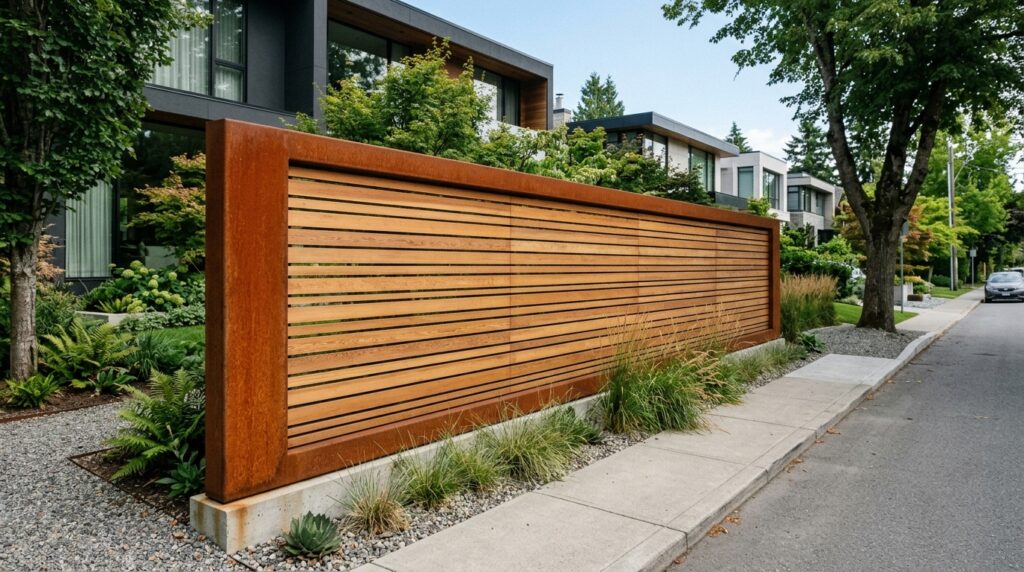
- Personally, I believe that: The natural amber and reddish tones of Western Red Cedar pair flawlessly with the organic, oxidized orange patina of Cor-Ten steel. The combination feels incredibly premium, blending architectural precision with natural earthy textures.
- What I would add here: A layer of clear zinc-rich primer underneath the Cor-Ten steel anchors to isolate the metals and prevent galvanic corrosion between different structural steel components.
Low-Voltage Ambience & Precision Grazing Networks
A contemporary fence should remain a dramatic design feature after dark. Integrating hidden low-voltage lighting accentuates the deep linear shadows of horizontal hardscaping.
Idea #5 Recessed Under-Cap Linear LED Down-Grazing Channels
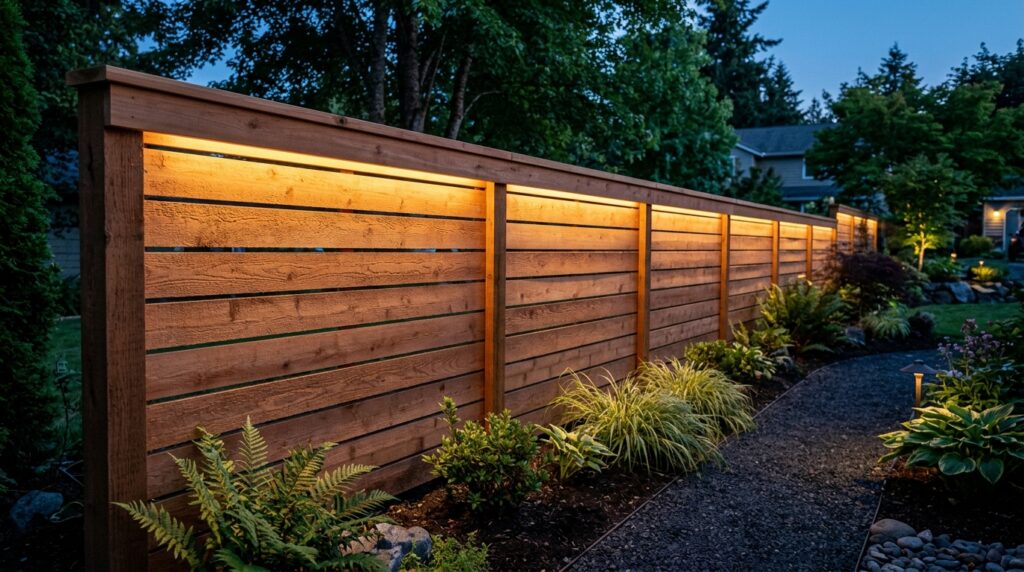
- In my opinion: Linear down-grazing is vastly superior to mounting individual post-cap lights. The continuous sheet of light catches the top edge of every single horizontal cedar slat, casting crisp, elongated linear accent shadows down the entire face of the fence line.
- What I would add here: A frosted, UV-stabilized polycarbonate diffuser lens over the LED channel to completely eliminate harsh individual light bead reflections, ensuring a perfectly smooth sheet of ambient light.
Idea #6 Flush-Mounted Low-Profile Black Bollard Sconces
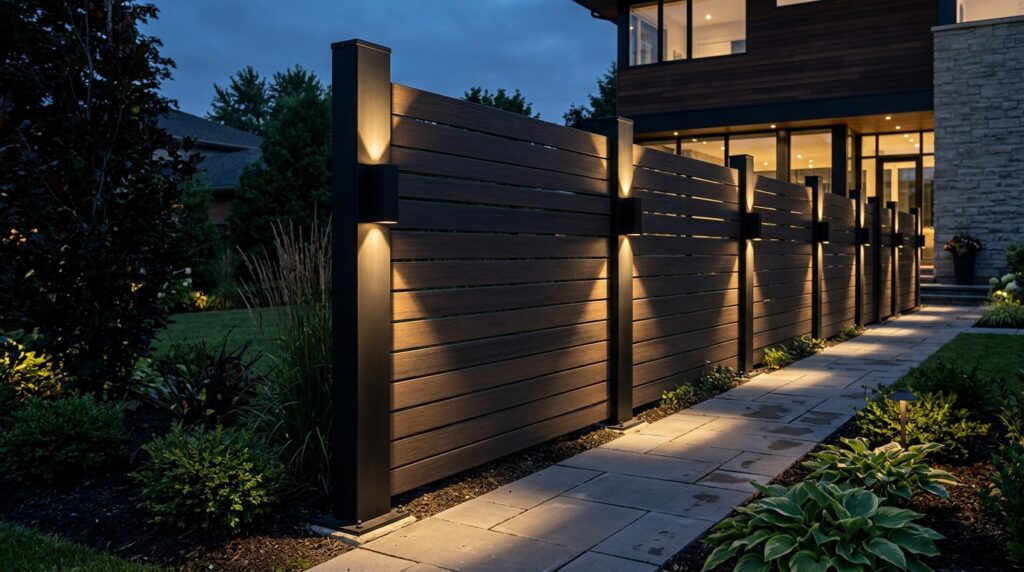
- In my experience: Up-and-down post lighting is an excellent trick to visually break up a very long, flat fence line. It creates a series of bright architectural columns along the boundary, drawing the eye across the landscape while providing great path security.
- What I would add here: An automated astronomical timer connected to the low-voltage transformer that automatically adjusts the lighting schedule based on seasonal sunset changes.
Advanced Moisture Management & Civil Engineering Integration
Because horizontal slats present a large flat surface to the elements, incorporating professional drainage and moisture-barrier techniques is vital to extending the lifespan of the wood.
Idea #7 The Elevating Marine-Grade Stainless Steel Base Stand-Off
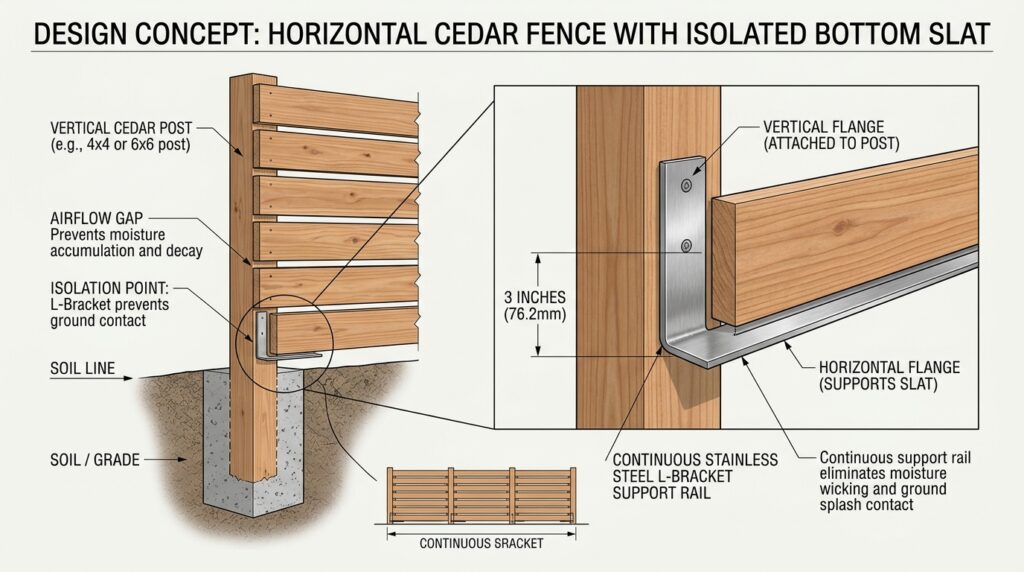
- My Opinion: The number one killer of wood fences is direct contact with wet soil, mulch, or lawn grass, which leads to rapid rot and fungal decay. Keeping the lower slat floating safely above the ground line drastically extends the life of the entire structure while maintaining a clean, levitating look.
- What I would add here: A clean layer of 1-to-3 inch dark Mexican beach pebbles running directly under the fence line to prevent mud from splashing up onto the lower cedar slats during heavy downpours.
Idea #8 Double-Sided “Louvered” Airflow Privacy Slats
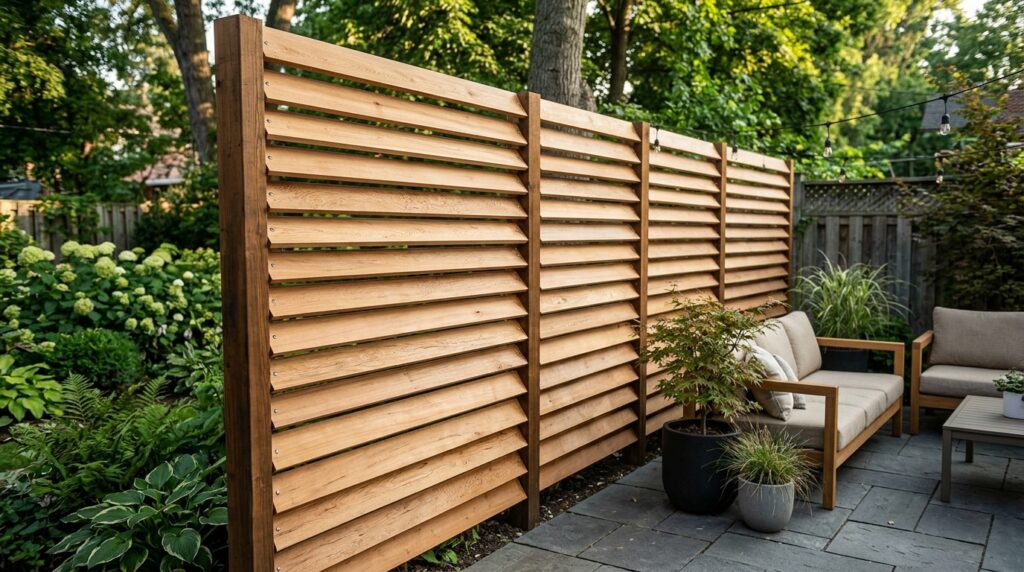
- What I would add here: Utilizing marine-grade 316 stainless steel ring-shank nails or screws to assemble the angled louvers, ensuring zero rust streaks develop over time.
Mixed-Media Hardscaping & Floating Functional Assets
Integrating functional lifestyle components directly into the horizontal structural matrix turns a simple perimeter barrier into a fully interactive outdoor living room wall.
Idea #9 Integrated Floating Cedar Slatted Bar Top
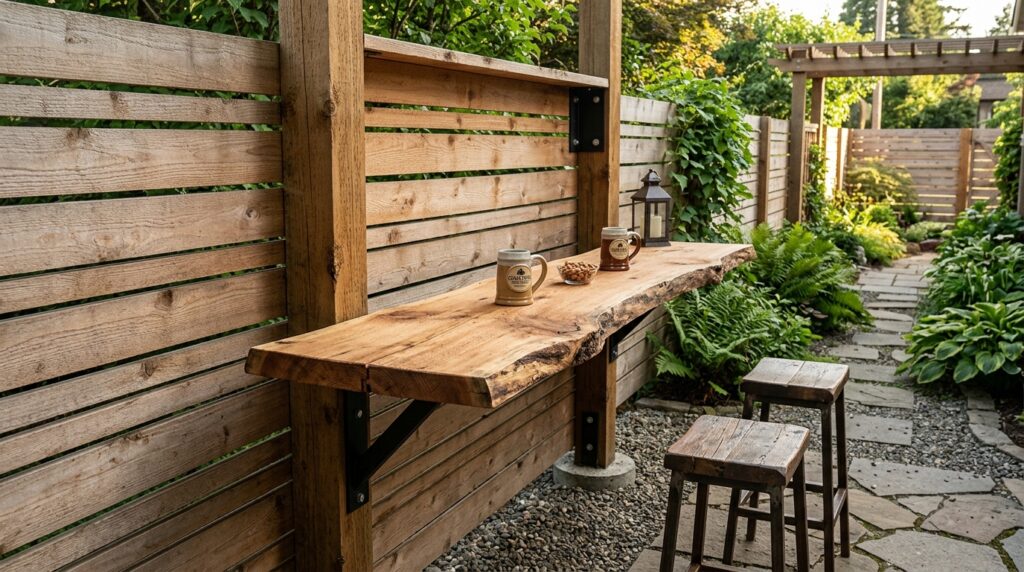
- In my opinion: Sinking a functional bar top directly into your perimeter fence line is a masterful space-saving trick for compact urban patios. It instantly creates a high-end outdoor social hub for guests without crowding the center of your entertaining deck.
- What I would add here: Heavy-duty, 1/4-inch thick laser-cut structural steel cantilever brackets hidden behind the horizontal slats and bolted directly into the main structural fence posts to safely support heavy weight loads.
Idea #10 Alternating Recessed Powder-Coated Aluminum Planter Insets
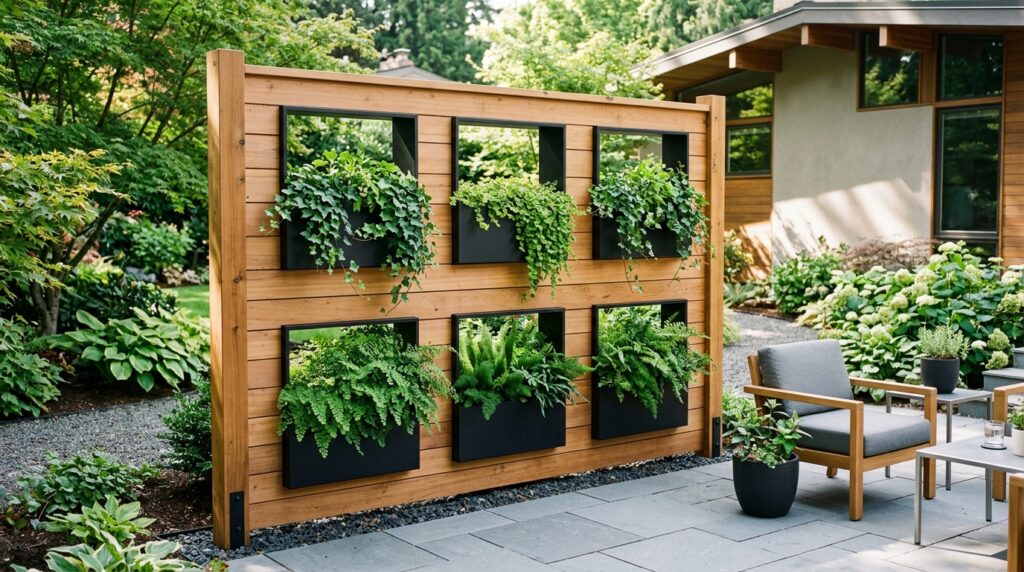
- Personally, I find that: Punching geometric windows into a solid wood fence and filling them with vibrant living plants breaks up the timber mass beautifully. The crisp black aluminum frames create a stunning modern frame for the soft green foliage.
- What I would add here: Integrated 1/4-inch subsurface drip irrigation lines snaked completely out of sight behind the cedar slats, delivering automatic watering straight to the inset planter boxes without ugly dangling tubes.