1. The Post-Tensioned Cantilevered Concrete Canopy
Extend a massive, unsupported raw concrete slab directly from the villa’s main structural core, floating weightlessly over the primary vehicle berth.
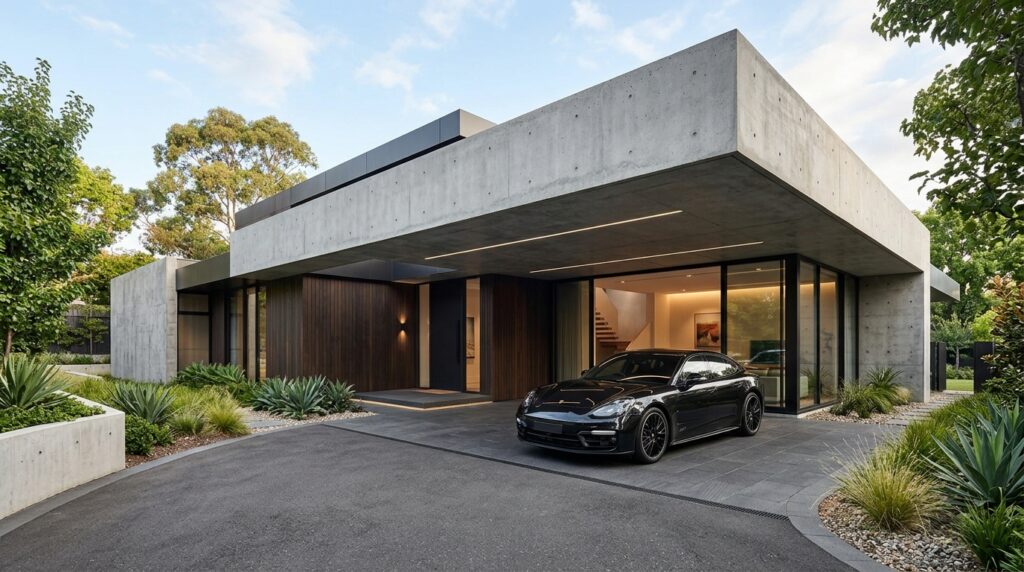
- My Perspective: Traditional support columns break up the visual footprint and ruin your turning radius. A post-tensioned concrete cantilever makes a bold statement of structural physics, keeping your driveway 100% open and scannable.
- What I would add: A 2-inch wide recessed shadow-gap channel where the concrete slab meets the main structure, hiding an ultra-slim 2400K LED ribbon to make the roof appear to float at night.
2. Rough-Sawn Cedar and Matte-Black Steel Space Frame
Construct an industrial-grade carport framework utilizing sandblasted matte-black H-beams, topped with thick, weathered cedar planks arranged in a geometric grid.
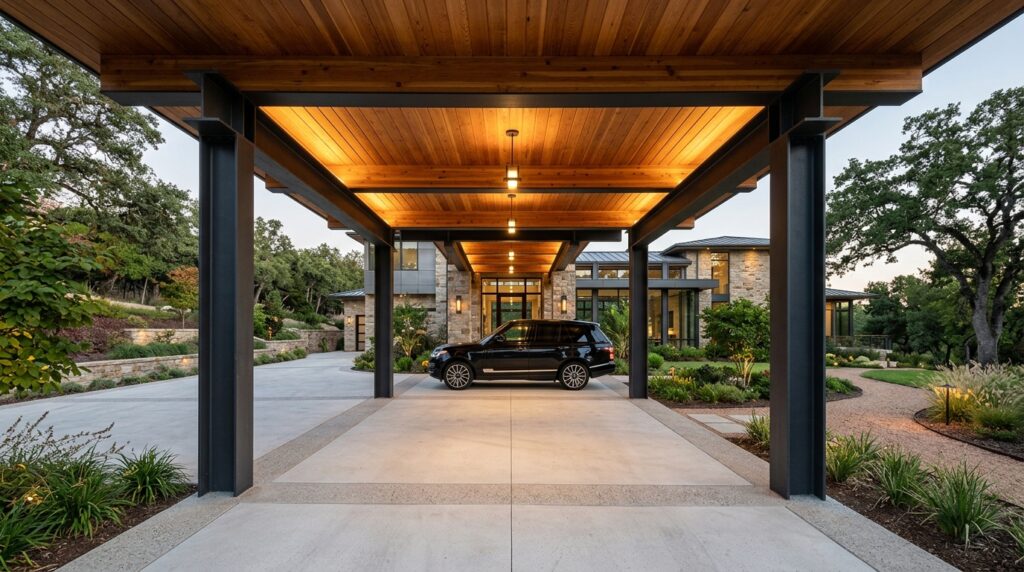
- What I would add: Concealing all assembly hardware entirely within the steel channels, ensuring that every joint looks completely flush, clean, and custom-machined.
3. Subterranean Drive-Down Retaining Bunker
Cut a dedicated, sloping parking bay directly into your front landscape topography, flanked on both sides by towering, board-formed concrete retaining walls.
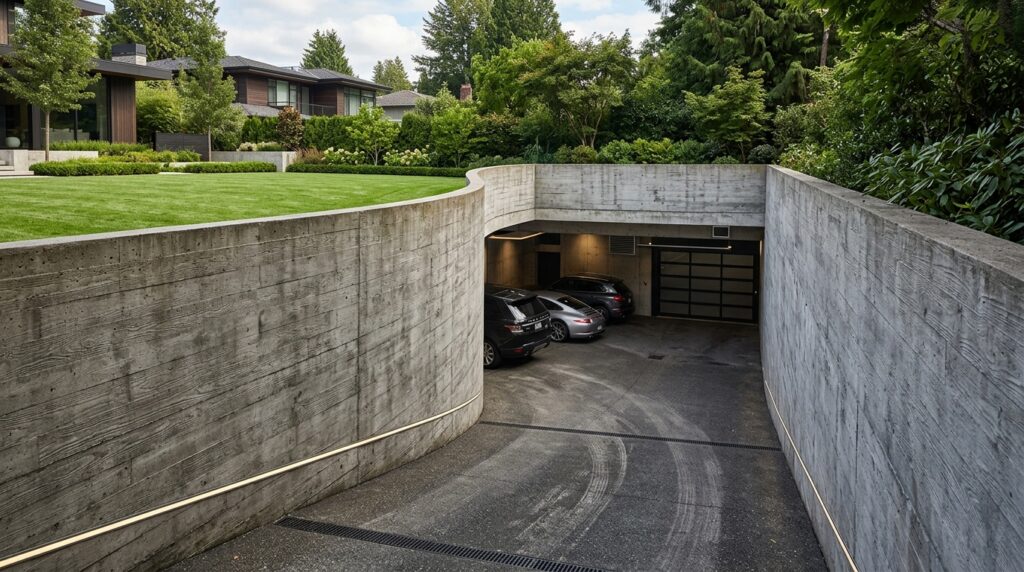
- My Perspective: If your property has natural elevation changes, don’t flatten it. A drive-down bunker hides the vehicle profile from direct street-view, maintaining a minimalist front elevation while celebrating heavy earth-retaining geometry.
- What I would add: Sinking a continuous linear drainage trench filled with dark charcoal micro-gravel along the bottom baseboards to handle heavy rain runoff silently and invisibly.
4. Flush-Mount Heavy-Duty Hydraulic Roof Lift
Install a dual-scissor industrial vehicle lift where the top roof platform is clad in the exact same large-format stone pavers as your primary driveway, sitting 100% flush when lowered.
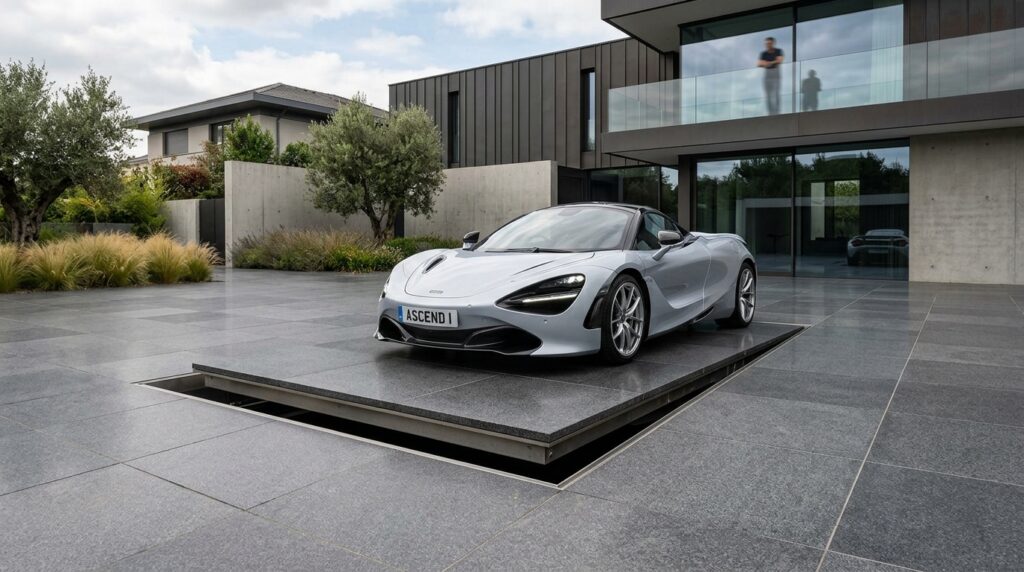
- My Perspective: This is the absolute peak of automotive minimalism. Vanishing infrastructure preserves the pristine view of your front entrance, turning a simple parking sequence into a dramatic architectural performance.
- What I would add: A high-capacity, automated pneumatic perimeter rubber seal that expands the exact second the lift docks flush at ground level, making the underground chamber entirely watertight.
5. Asymmetrical Tectonic Concrete Entrance Plates
Frame your parking canopy with massive, vertically oriented raw concrete panels that overlap each other at alternating, staggered angles to deflect high-velocity wind shear.
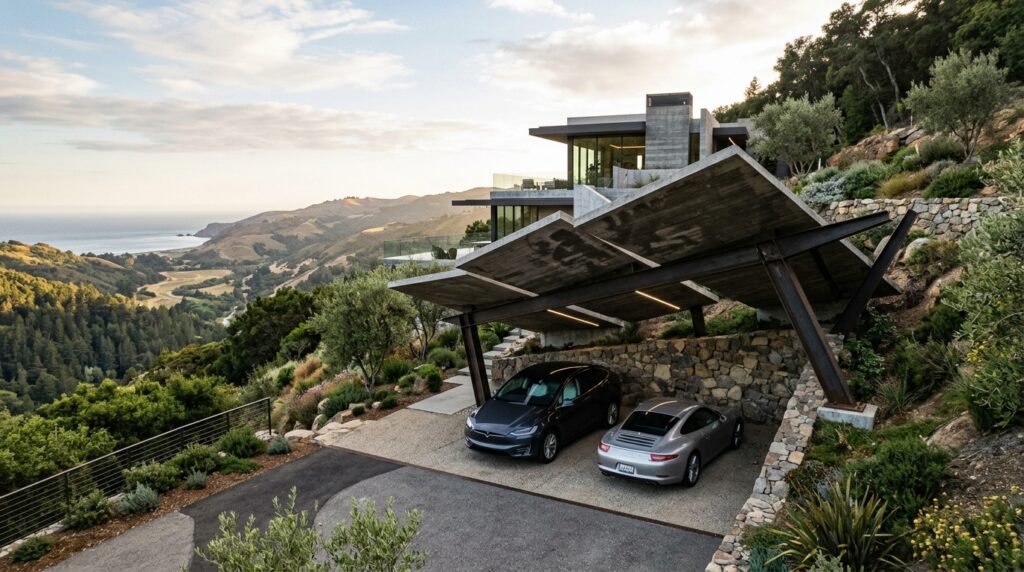
- My Perspective: Standard square carports look uninspired. Overlapping tectonic plates mimic natural rock layers, announcing that your estate values security, structural mass, and bold architectural sculpture.
- What I would add: A premium hydrophobic crystalline sealer applied to the concrete faces to prevent water-tracking and keep the matte-grey surface free of moisture stains.
6. Translucent Frosted Glass and Titanium Grid Canopy
Frame an overhead canopy using high-strength structural titanium tracks holding oversized panels of triple-laminated, chemically etched frosted privacy glass.
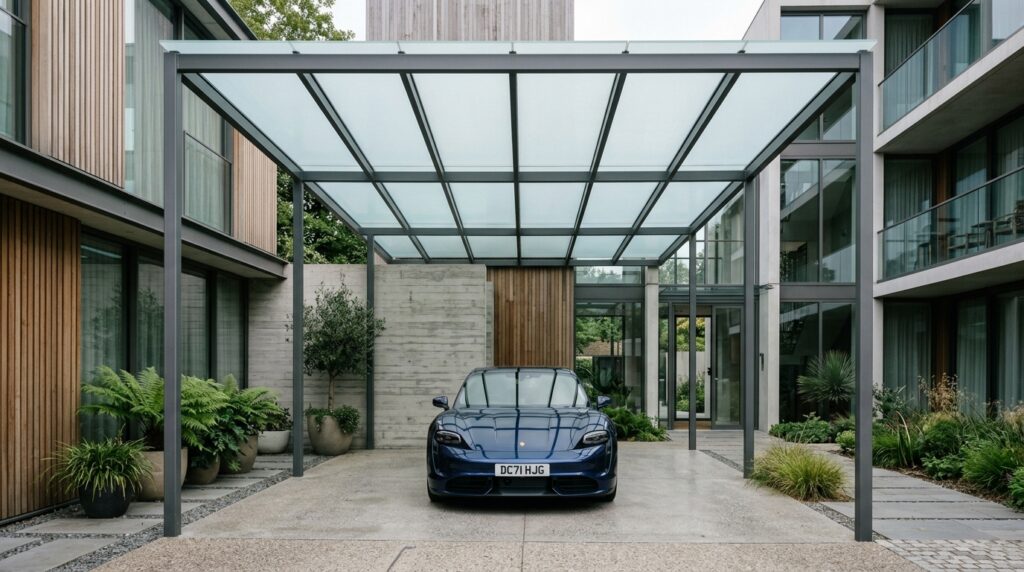
- My Perspective: Solid roofs can sometimes block too much natural light, making the front entrance feel dark and heavy. Frosted glass diffuses intense midday sun glare beautifully while maintaining total privacy from upper-level windows.
- What I would add: A specialized titanium-dioxide self-cleaning coating on the top glass layer that uses rainwater to instantly break down and wash away environmental dust.
7. Razor-Sharp Black Anodized Aluminum Louver Matrix
Install an overhead carport ceiling composed entirely of motorized, rotating aluminum louvers finished in a deep, non-reflective matte black.
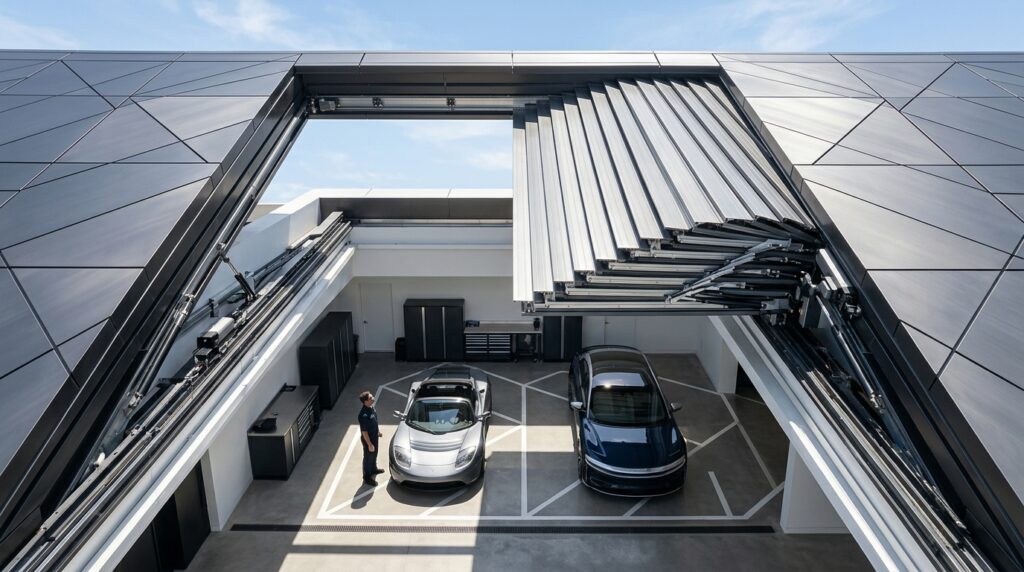
- My Perspective: Kinetic architecture brings a spectacular sense of custom luxury to external structures. Motorized louvers allow you to dynamically alter your carport environment from a fully enclosed, storm-proof shelter to an open, ventilated frame.
- What I would add: Linking the motorized ceiling louvers to your smart home automation network so they close tightly the exact second an integrated weather sensor detects rain.
8. Polished Graphite Micro-Cement Driveway Beds
Surface the entire internal parking footprint of your carport with a multi-layered, diamond-honed polished micro-cement mixed with rich charcoal-grey pigments.

- My Perspective: Standard driveway paving or cheap garage epoxy can crack and peel under hot tire compounds. Polished micro-cement offers a completely seamless, industrial-grade matrix that handles massive weight while providing a museum-like reflection pool effect.
- What I would add: A lithium-silicate liquid densifier applied during the final hone stage to permanently lock the cement pores, making the floor 100% resistant to chemical oil drops.
9. Chevron Pattern Large-Format Basalt Paver Tracks
Lay down the primary tire driving lanes inside the carport using extra-large format, textured black basalt stone slabs arranged in a tight herringbone or chevron layout.
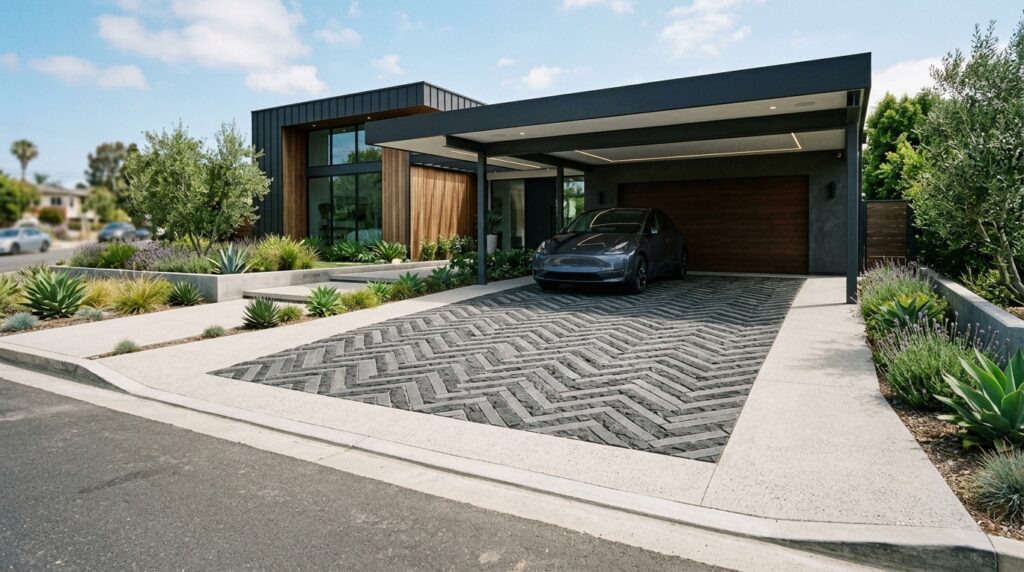
- My Perspective: Bringing sophisticated interior flooring patterns out into your automotive hardscaping creates an incredible sense of luxury. Basalt handles extreme tire heat effortlessly and provides exceptional wet-weather traction.
- What I would add: Sealing the basalt stone tracks with a premium matte penetrating sealer to completely prevent tire grease or braking dust from altering the rich, charcoal color tone.
10. Floating Concrete Pinned Steps
Frame the pedestrian walking path leading from your carport to the main entrance with thick, solid rectangular blocks of raw concrete pinned exclusively into a side retaining wall.
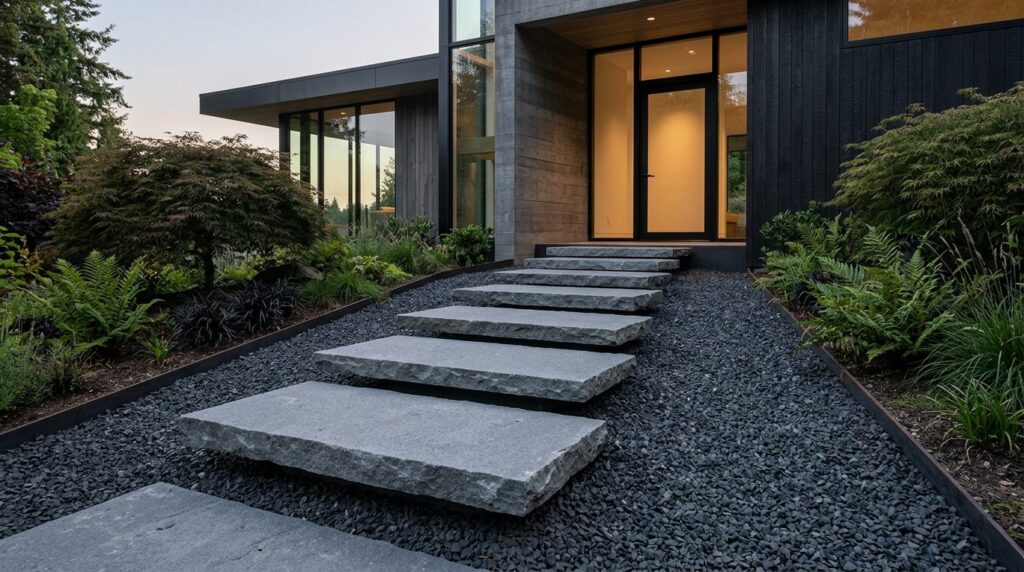
- My Perspective: Closed, traditional staircases look blocky and restrict spatial flow. Floating concrete treads allow natural daylight and landscape drainage to pass completely through, preserving your open sightlines.
- What I would add: Sinking a low-voltage, warm LED strip into the bottom undercut of each individual step to illuminate the walking edge with a soft, clean glow at night.
11. Monolithic Poured Concrete Landscape Borders
Frame your driveway tracks and carport boundaries with clean, 8-inch wide solid borders of architectural poured raw concrete left with a smooth industrial finish.
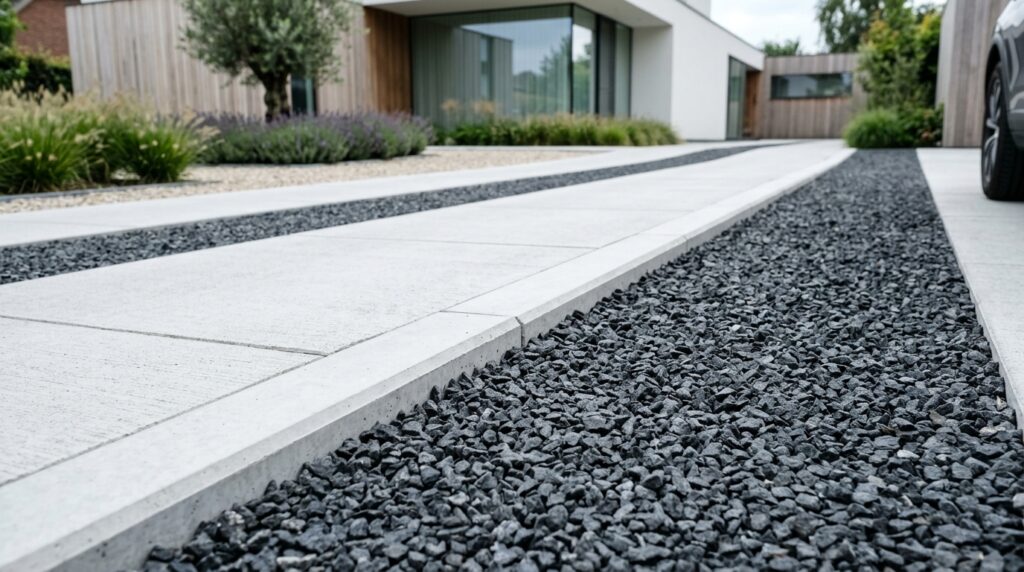
- My Perspective: Standard plastic or thin metal garden edging looks cheap and shifts over time. Raw concrete borders look highly structural, permanent, and maintain an immaculate geometric line that honors modern estate layouts.
- What I would add: Applying a deep-penetrating water-repellent finish to stop moisture from causing the natural concrete borders to develop white salt stains (efflorescence).
12. Textured Split-Face Quartzite Accent Pillars
Clad the heavy structural vertical pillars supporting your carport canopy with hand-split, dry-stacked white quartzite stone tiles featuring highly varied block depths.
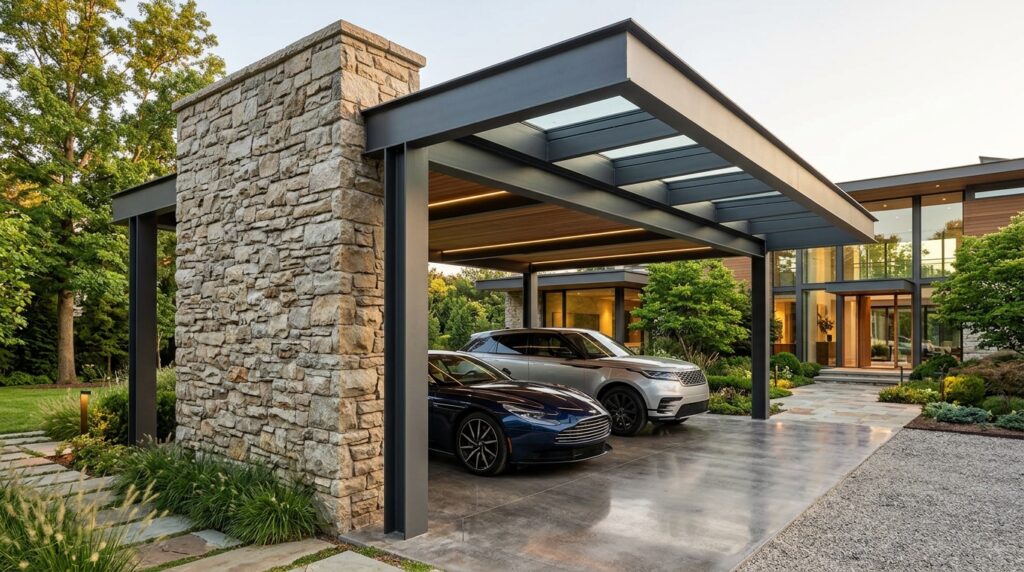
- My Perspective: Mixing rough, raw stone textures directly next to smooth sheets of architectural steel or polished car panels creates a stunning tactile tension that defines premium modern design.
- What I would add: Installing high-intensity narrow-beam LED downlights at the upper roof header to cast sharp, dramatic grazing shadows down across the rugged quartzite stone ridges at night.