For any artist, light is the ultimate tool, and seclusion is the ultimate luxury. When I design a custom art studio within a heavily wooded lot, my primary goal is to capture perfect, indirect northern light while integrating the building seamlessly into the surrounding forest. By combining strategically angled architectural skylights with minimalist structures, these studios become private sanctuaries that floating effortlessly among the trees. In this guide, we will explore 10 custom sky-lit art studio concepts designed for the ultimate creative retreat.
Angled Light & Roofline Matrix Studios
These designs focus heavily on the geometry of the roof to capture consistent, glare-free natural light throughout the day, avoiding direct harsh sunlight that ruins an artist’s color perception.
Idea #1: The Northern Sawtooth Light Pavilion
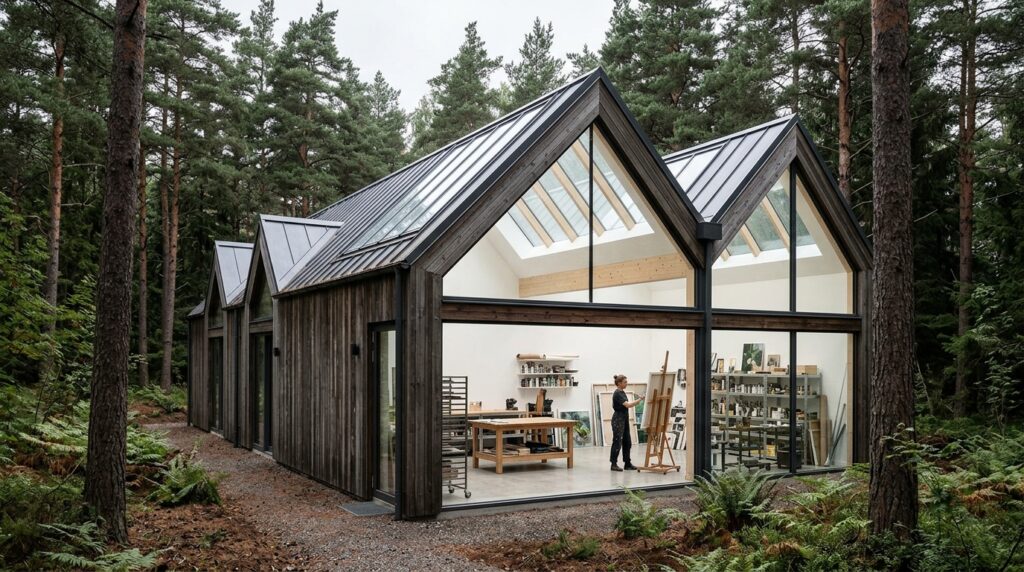
- My Design Perspective: The sawtooth roof is a classic architectural technique for a reason. By angling the skylights strictly toward the north, I completely eliminate the blinding glare and harsh shadows of direct sunlight, providing a painter or sculptor with a perfectly consistent light source from morning till dusk.
Idea #2: The Asymmetrical Slanted Glass Wedge
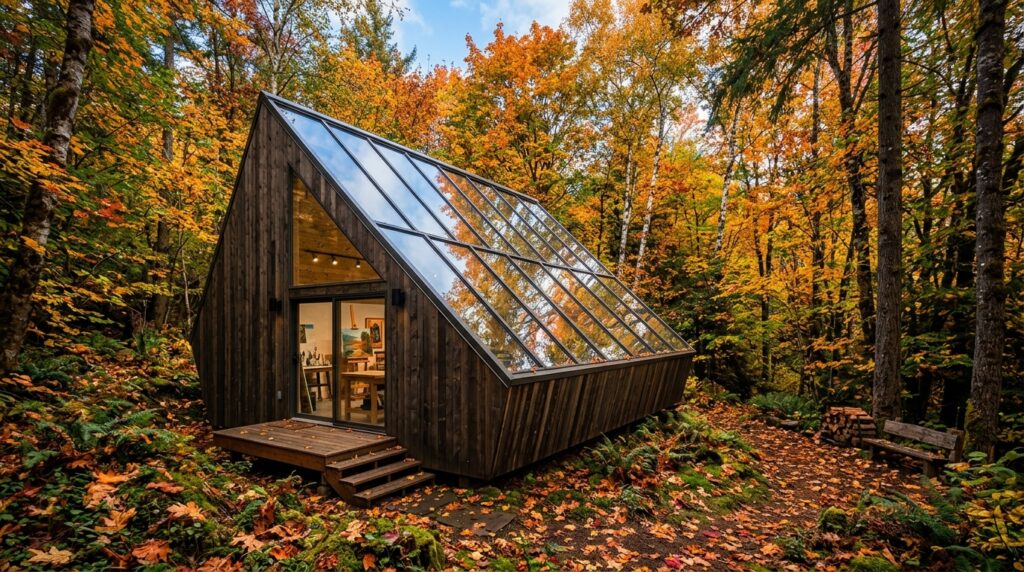
- My Design Perspective: I love using a single, steep roof pitch for woodland studios. It prevents falling leaves and winter snow from accumulating on the glass, while the massive glass slope allows the artist to look straight up into the changing colors of the forest canopy while working.
Idea #3: The Central Oculus Sculpture Core
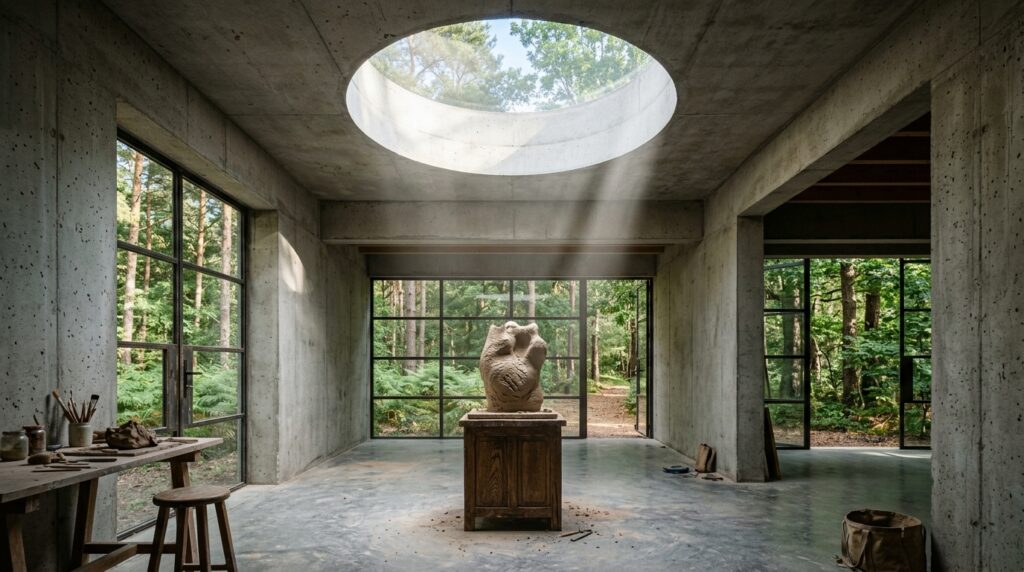
- My Design Perspective: For sculptors who work with 3D forms, a central circular skylight is magical. As the sun moves across the sky, the light beam moves dynamically across the studio floor, highlighting the textures, curves, and contours of the art piece in real-time.
What I Would Add Here (Angled Light Section): I always recommend installing motorized architectural exterior blinds or smart electrochromic glass over these massive skylights. This allows the artist to completely block out the light or dim it with a remote control when working on digital art or film projection pieces.
Cantilevered & Elevated Tree-Canopy Retreats
To capture light that is often blocked by dense forest floors, these studios are elevated into the air, placing the artist directly inside the tree canopy for inspiration.
Idea #4: The Stilt-Elevated Glass Art Capsule
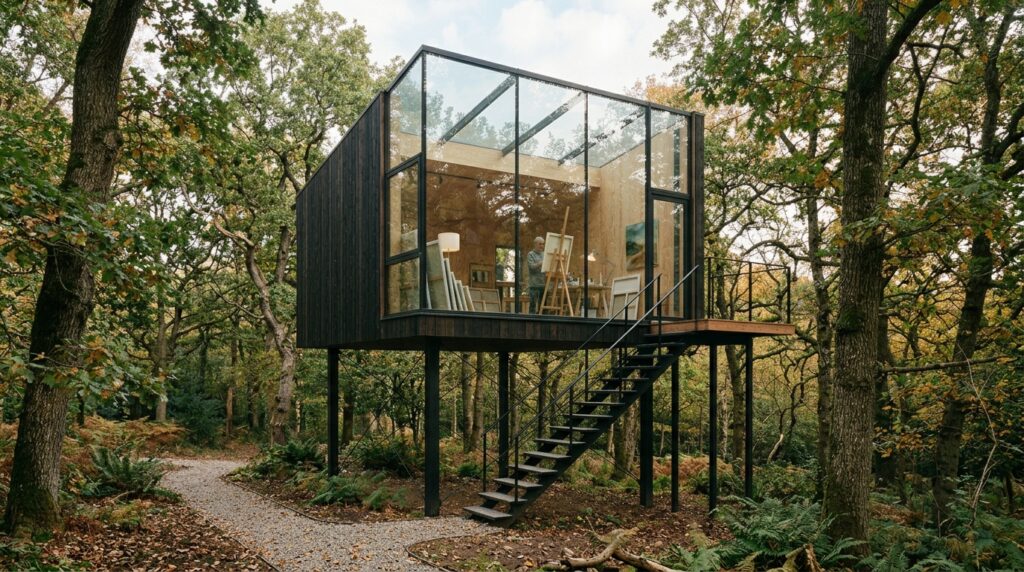
- My Design Perspective: When the forest floor is too dark due to dense thickets, I push the studio upward. Elevating the structure on steel columns not only brings you closer to the sky-lit canopy but also leaves the natural forest floor completely untouched, minimizing the environmental footprint of the build.
Idea #5: The Floating Cantilevered Studio Deck
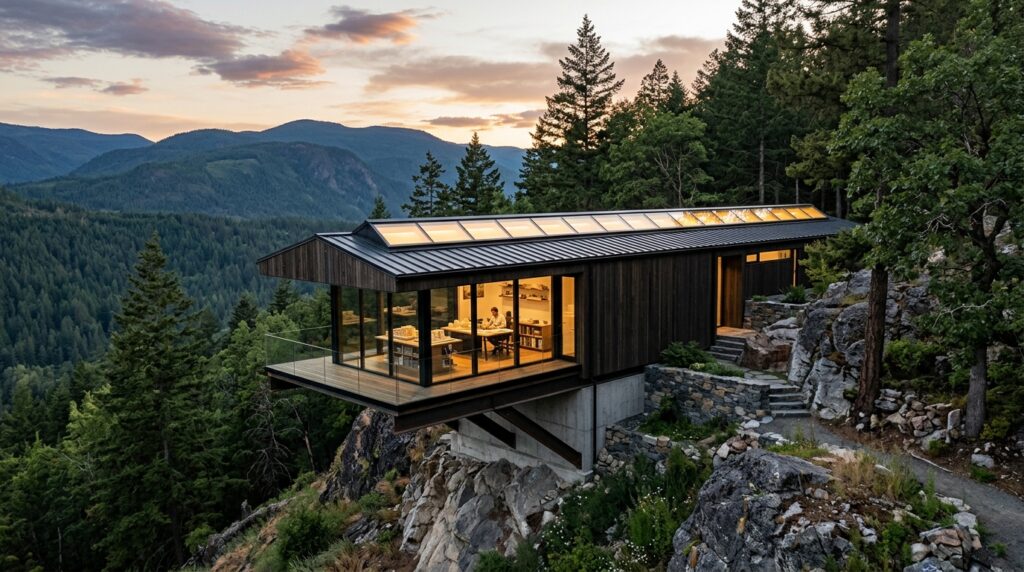
- My Design Perspective: This layout creates an intense feeling of freedom. By running a continuous linear skylight down the center spine of the roof, the interior stays bright, while the cantilevered glass edge makes the artist feel like they are floating directly over the valley floor.
Idea #6: The Tree-Pierced Courtyard Studio
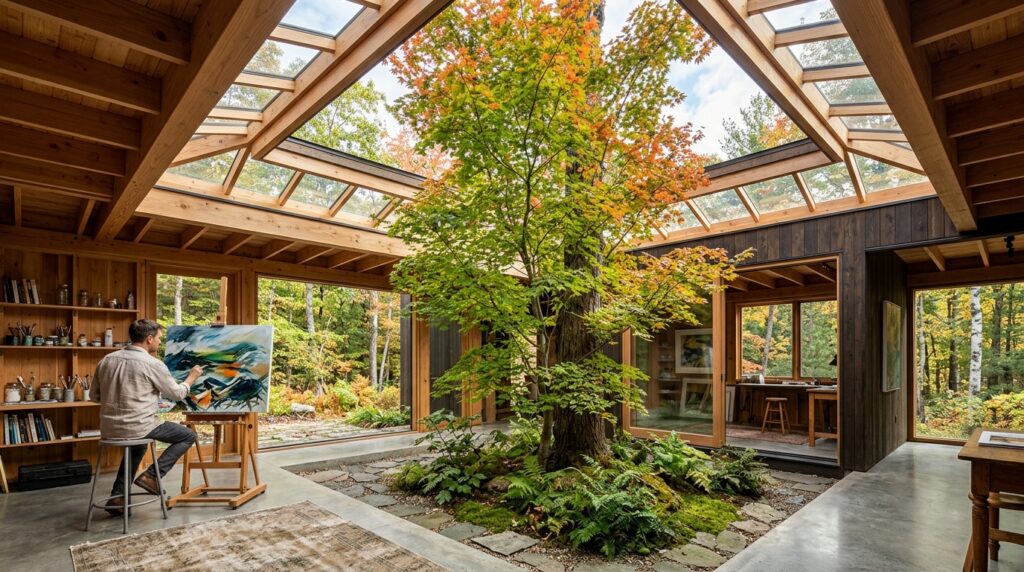
- My Design Perspective: Instead of cutting down trees, I build around them. Designing a doughnut-shaped studio with an open sky-lit core allows natural light to enter from the center of the building, creating a stunning internal garden that provides 360-degree seasonal inspiration.
What I Would Add Here (Elevated Canopy Section): I always specify heavy-duty structural steel tension cables for elevated studios. High up in the trees, wind loads can cause structures to sway; these cables anchor the pavilion tightly, ensuring that fine, precise brushstrokes or delicate clay work remain completely stable.
Minimalist Industrial & Raw Material Ateliers
For artists who work with heavy media—like welded metal, large-scale stone, or messy oil paints—these concepts utilize raw, durable materials paired with striking light wells.
Idea #7: The Corrugated Metal & Timber Frame Loft
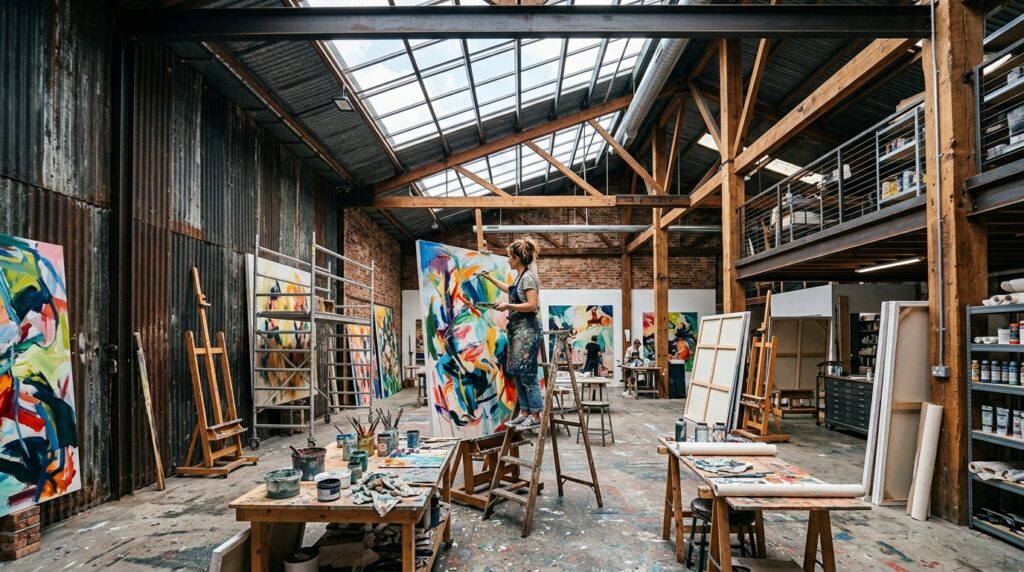
- My Design Perspective: I love pairing cold industrial corrugated panels on the outside with warm, raw timber beams inside. It creates a rugged, highly durable workshop environment that can handle the messes of large-scale oil painting while remaining incredibly inspiring.
Idea #8: The Brutalist Concrete Cube with Light Slots
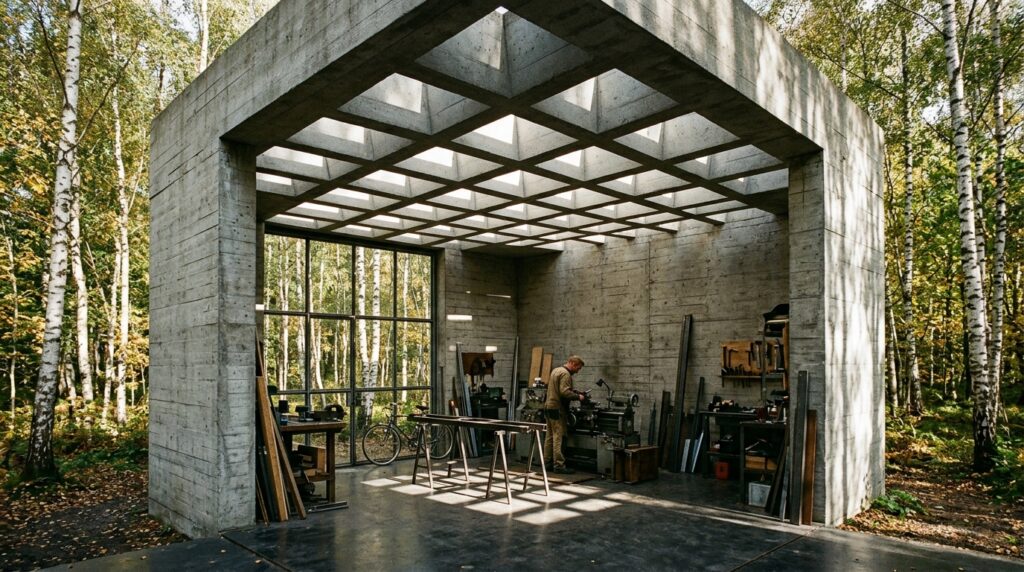
- My Design Perspective: Raw concrete absorbs light rather than bouncing it harshly. By slicing deep, narrow geometric skylight slots into a thick concrete ceiling, I create a dramatic, museum-like atmosphere where light is treated as a physical, structural element.
Idea #9: The Mirrored-Facade Forest Disguise
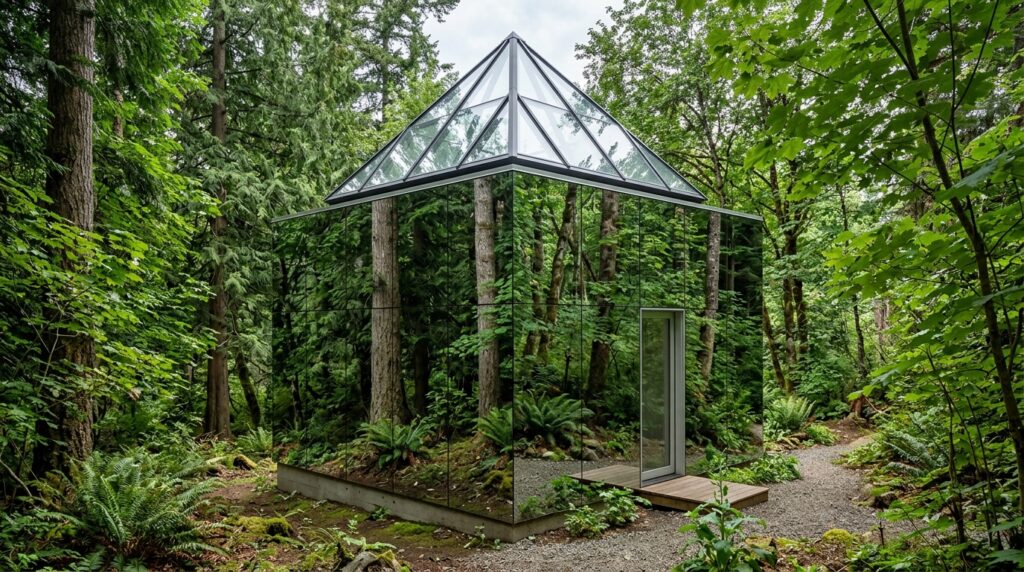
- My Design Perspective: This is the ultimate way to respect a wooded lot. The mirrored facade reflects the trees, making the studio practically invisible from the outside. Meanwhile, the massive pyramid skylight on top acts as a massive funnel, trapping every bit of available light from above.
Idea #10: The Reclaimed Barn-Wood Pottery Sanctuary
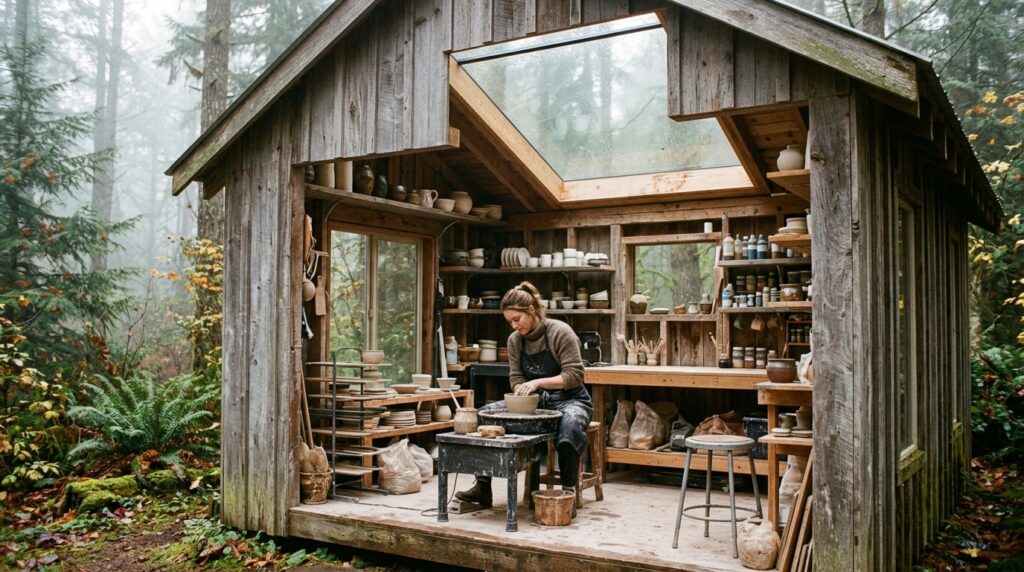
- My Design Perspective: For ceramicists and potters, a connection to the earth is essential. Using textured, reclaimed wood grounds the studio in nature, while a single, perfectly positioned frameless skylight over the workstation highlights the texture of the wet clay as it spins on the wheel.
What I Would Add Here (Raw Material Section): I highly recommend integrating a commercial-grade floor drainage system and an industrial sink trap underneath the concrete studio floors. When working with heavy clay, stone, or paints, a simple spray-down cleaning method makes maintaining a luxury workspace entirely effortless.