A monolithic stone accent wall is the ultimate expression of permanence and luxury in residential design. Unlike standard tiled walls or thin stone veneers, a true monolithic living facade utilizes massive, large-format stone slabs, seamless book-matching, or heavy block-on-block masonry to create a monumental focal point. When I approach these large-scale stone installations, my goal is to celebrate the raw geology of the earth—whether that means polishing a rare marble to a high-gloss reflection or exposing the rugged, split-face crags of a mountain rock. In this guide, we will explore 10 monolithic stone wall ideas designed to anchor high-end living spaces.
Book-Matched Slabs & Continuous Veining
These designs treat natural stone as fluid, high-end abstract art, utilizing consecutive cuts of premium marble or quartzite to create perfectly symmetrical, mirrored patterns across a massive vertical surface.
Idea #1: The Book-Matched Calacatta Viola Monolith
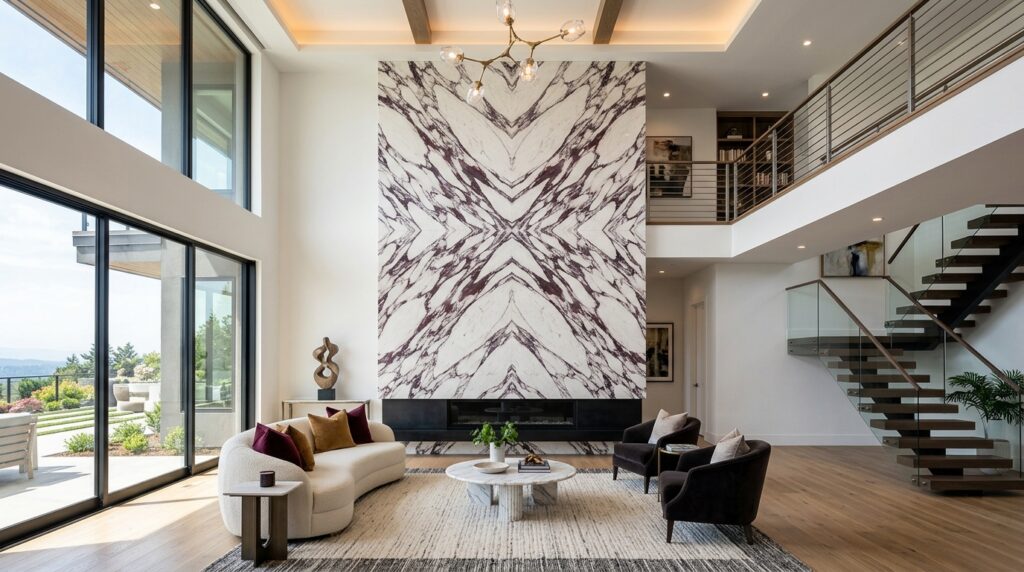
- My Design Perspective: When working with high-contrast marble like Calacatta Viola, the seam placement must be absolutely flawless. I prefer a seamless book-match layout where the veins meet precisely at the center line of the main living facade. The dramatic contrast between the bold burgundy lines and the pure white crystalline stone instantly transforms a simple flat wall into a fine-art installation.
Idea #2: The Backlit Emerald Quartzite Ribbon
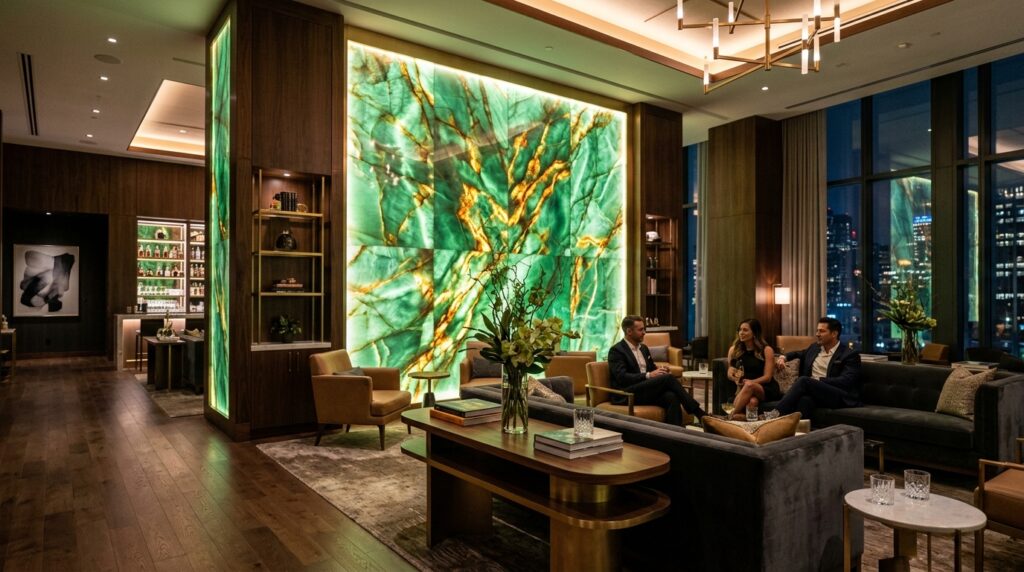
- My Design Perspective: Quartzite is incredibly dense and durable, but certain varieties like Patagonia or Emerald Green have semi-translucent qualities. By constructing a custom structural pocket behind the stone slabs, we can embed specialized dimmable LED light sheets. When turned on, the stone itself glows, revealing hidden layers, depths, and mineral details that are completely invisible under normal room lighting.
Idea #3: The Horizontal Vein-Cut Travertine Canvas
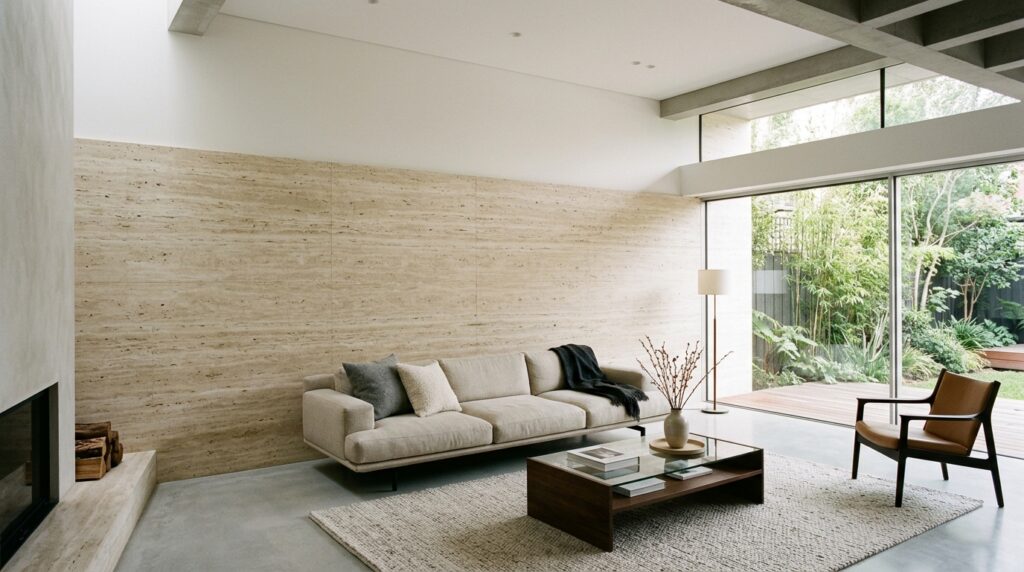
- My Design Perspective: For minimalist or mid-century modern luxury estates, I prefer vein-cut travertine. Cutting the stone along the natural bedding planes creates long, uninterrupted horizontal lines. This draws the eye across the room, visually widening the living space while introducing a soft, sand-colored architectural texture that feels incredibly grounded and soothing.
What I Would Add Here (Slab & Veining Section): I always include a reverse-beveled, matching stone base-molding reveal (shadow gap) at the absolute bottom of the slabs where they meet the floor. This eliminates the need for ugly wooden baseboards and makes the multi-ton monolithic stone wall look like it is floating weightlessly a fraction of an inch above the floor line.
Rough-Hewn, Split-Face & Monumental Blocks
These concepts embrace the raw, rugged massing of heavy stone, utilizing unpolished surfaces and deep dimensional textures to bring a powerful, ancient mountain character indoors.
Idea #4: The Split-Face Granite Mountain Crag
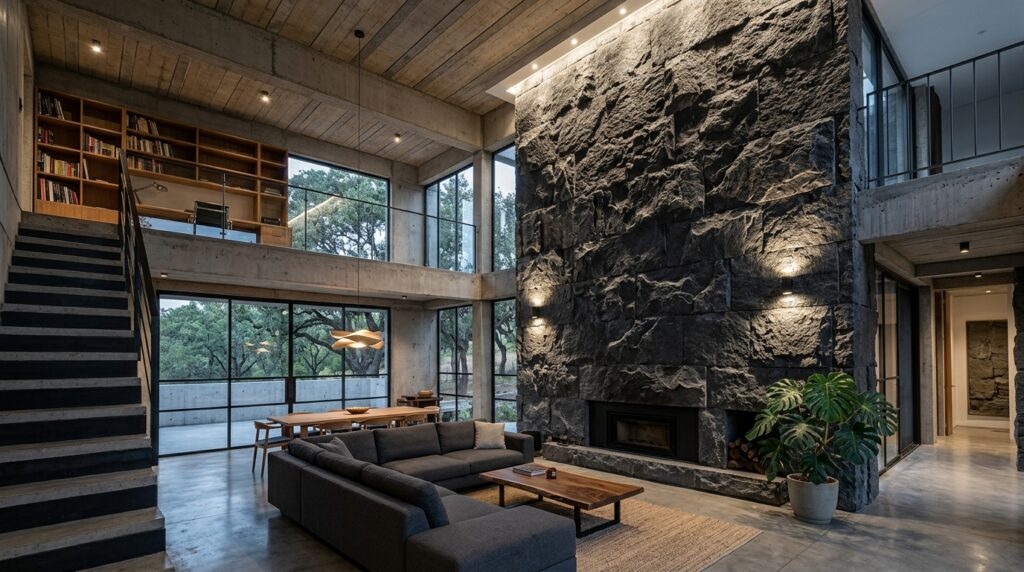
- My Design Perspective: This is the absolute antithesis of smooth marble. Split-face stone is cleaved naturally, leaving the raw, jagged face of the mountain exposed. I mix varying thicknesses of granite blocks to create a dynamic, three-dimensional relief map on the wall. The texture catches light beautifully, bringing a rugged, unshakeable sense of security and raw nature into the home.
Idea #5: The Seamless Limestone Ashlar Grid
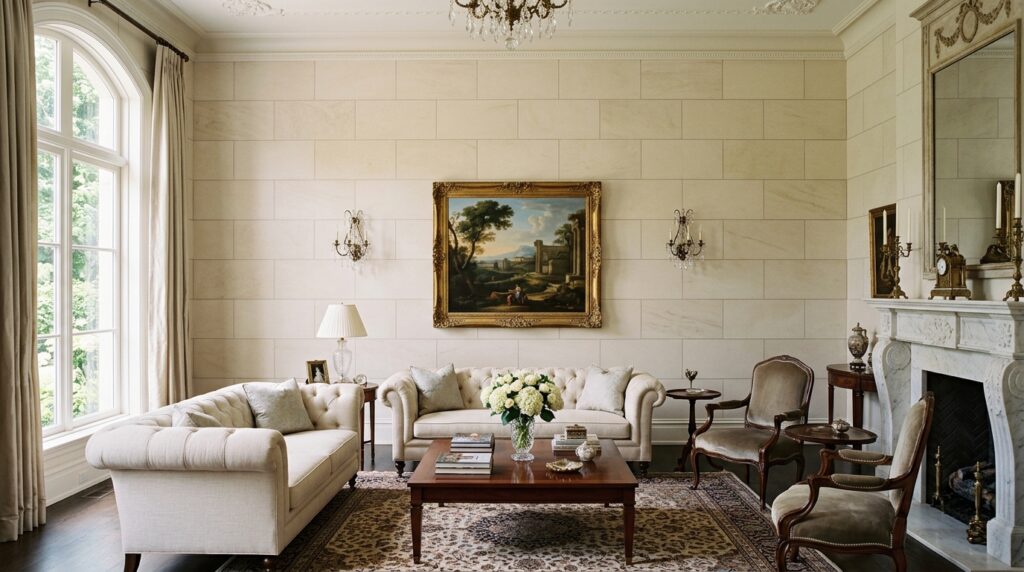
- My Design Perspective: To achieve a grand, museum-like quality, I specify oversized limestone blocks (often 4 feet by 2 feet per block). Laying them in a strict grid with zero-bevel edges and a matching color-pigmented resin instead of standard grout creates the illusion of a solid, monolithic carved stone fortress wall that looks completely unified.
Idea #6: The Weathered Cotswold Stone Integrated Hearth
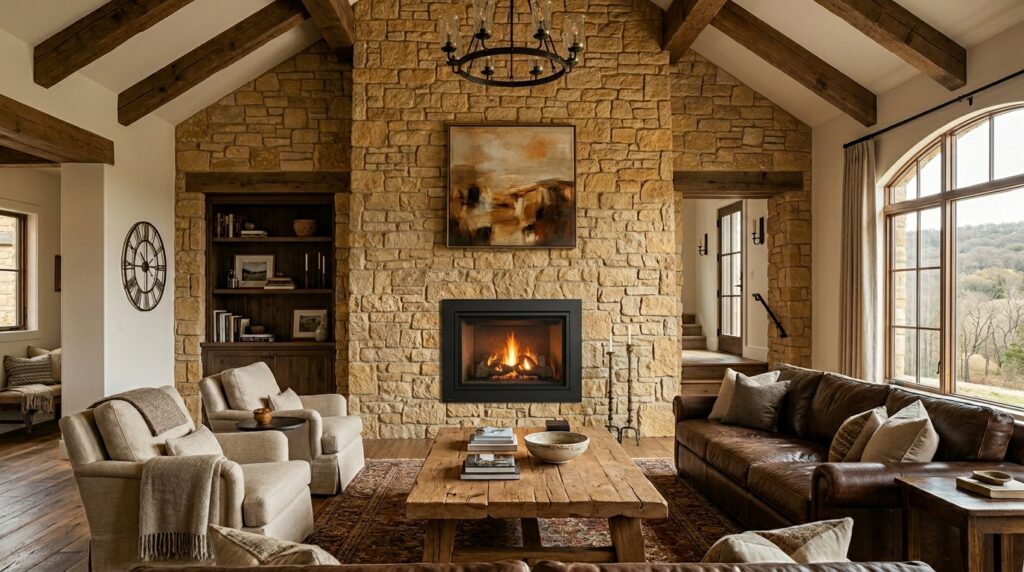
- My Design Perspective: I love using local or historic fieldstones when designing country estates. By building the entire wall out of irregular Cotswold blocks and sinking the fireplace flush into the masonry without a projecting mantel, the entire living facade becomes the fireplace. It feels established, historic, and incredibly cozy.
What I Would Add Here (Rugged Blocks Section): For these heavy, rough-textured stone walls, I always install a recessed linear LED grazing track inside the ceiling joists, positioned exactly 8 inches away from the stone face. Shooting a crisp wall-washer light straight down highlight every individual cleft, peak, and shadow of the rugged masonry at night.
Matte, Dark & Moody Textures
Designed for ultra-modern, masculine, or cinematic spaces, these ideas utilize deep charcoals, blacks, and dark bronze stones to create a high-fashion, high-focus environment.
Idea #7: The Matte Nero Marquina Charcoal Monolith
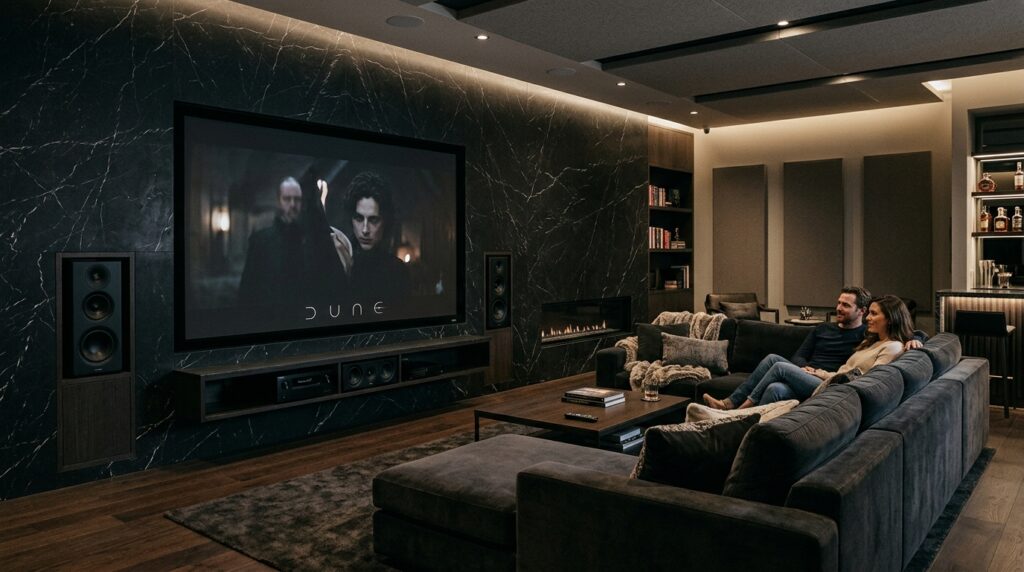
- My Design Perspective: I avoid polished black stone inside residential living spaces because it acts like a giant mirror, reflecting distracting glare from TVs and windows. By specifying a honed or leathered finish, the black marble takes on a rich, soft, velvet-like matte texture that absorbs light beautifully, creating an ultra-luxurious, moody backdrop.
Idea #8: The Fluted Dark Basalt Linear Facade
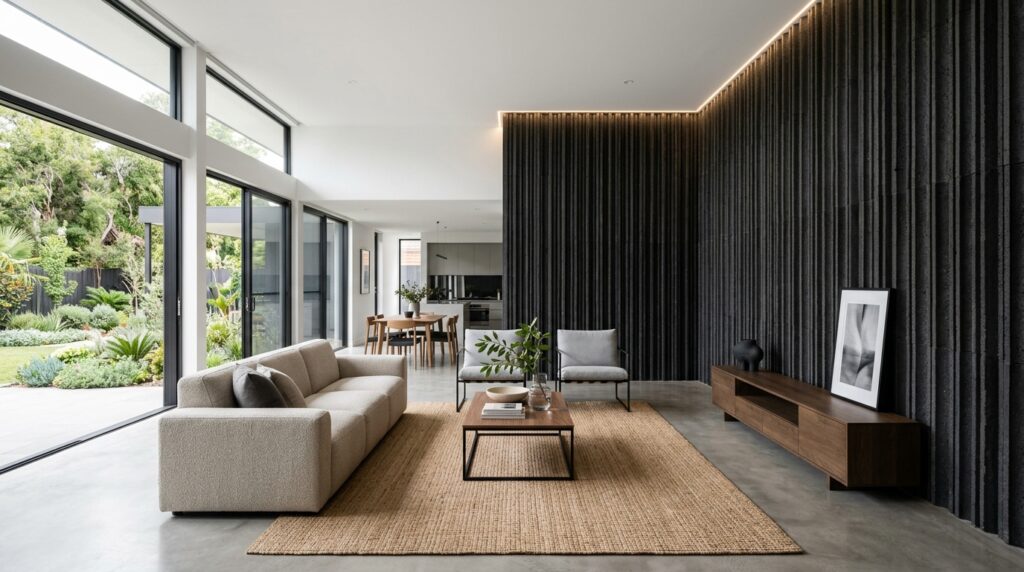
- My Design Perspective: Volcanic basalt is an incredible material due to its rich charcoal color and fine acoustic properties. I have the stone custom-milled into a continuous pattern of vertical convex ridges (fluting). This introduces a beautiful, clean, mathematical rhythm to the living room facade that breaks up flat drywall surfaces flawlessly.
Idea #9: The Oxidized Iron-Stone Slate Matrix
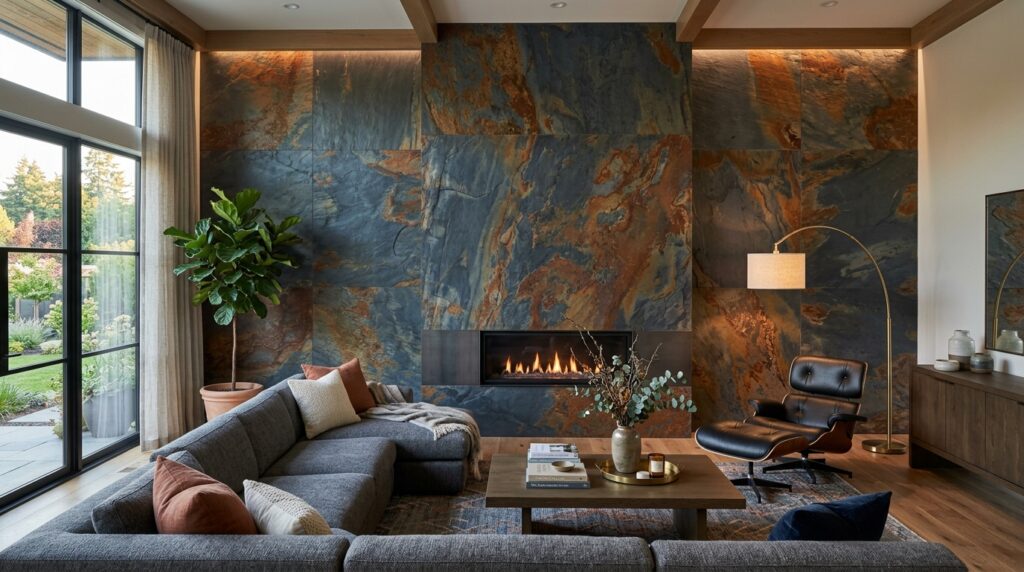
- My Design Perspective: Slate offers a beautiful natural patina that bridges the gap between industrial metal and organic stone. The iron deposits inside the stone naturally oxidize over thousands of years, resulting in a rich tapestry of coppery orange and deep slate blue. It pairs spectacularly well with warm walnut wood ceilings and cognac leather furniture.
Idea #10: The Polished Absolute Black Quartzite Horizon
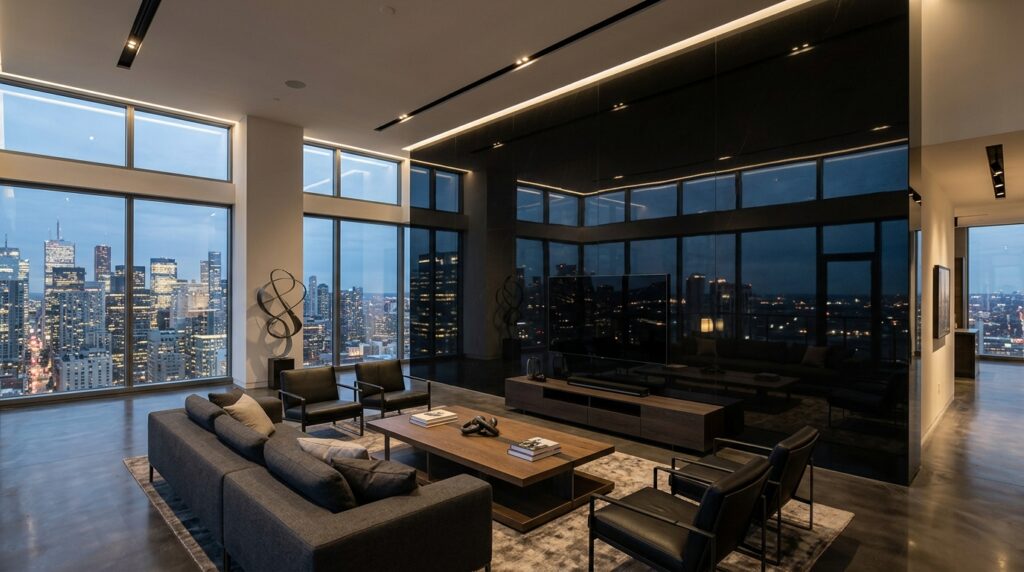
- My Design Perspective: This is the ultimate statement for high-fashion, high-altitude penthouse living. By using an absolutely pure, zero-veining black quartzite and polishing it to a mirror sheen, the wall reflects the city skyline or the outdoor landscape directly into the room. It blurs the spatial boundaries and turns the entire wall into a sleek, reflective infinity horizon.
What I Would Add Here (Dark & Moody Section): I highly recommend integrating all media conduits, power outlets, and AV wiring into a concealed recessed chase behind the stone before fabrication. Cutting into a monolithic slab after installation is nearly impossible; pre-planning allows televisions, floating shelves, or artwork to mount completely flush to the stone with zero visible wires.