Traditional wooden pergolas and heavy aluminum pavilions can sometimes feel visually bulky and permanent. For a contemporary estate, a custom-engineered tarp-shade sail array offers a lightweight, high-performance alternative that celebrates pure geometric form. By tensioning commercial-grade, UV-blocking architectural fabrics between minimalist marine-grade steel posts or structural anchor points on the main residence, you create a gravity-defying canopy. These overlapping, multi-layered fabric sails slice through the air, filtering harsh midday sun into a cool, shaded oasis while casting sharp, dynamic geometric shadow lines across your deck. In this guide, we explore 10 elite shade sail array layouts.
Hyperbolic Paraboloids & Multi-Level Overlaps
These designs leverage advanced tension engineering to twist and layer fabrics at varying heights, creating stunning, three-dimensional sculptural shapes that handle high winds effortlessly.
Idea #1: The Overlapping Triple Triangular Matrix
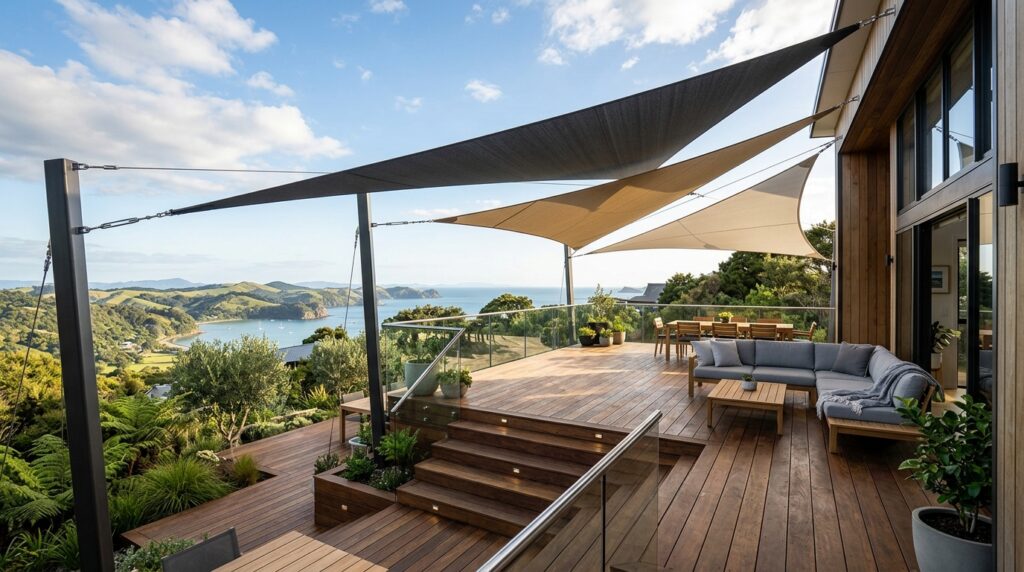
- My Design Perspective: Using a single flat sail can look cheap and sag over time. I prefer layering three distinct triangular sails at staggered heights (e.g., 9 ft, 11 ft, and 13 ft off the deck). Overlapping the edges by 20–30% creates a rich, architectural tapestry of color and shadow, giving the deck a highly sophisticated, multi-dimensional canopy.
Idea #2: The Twisted Hyperbolic Saddle Array
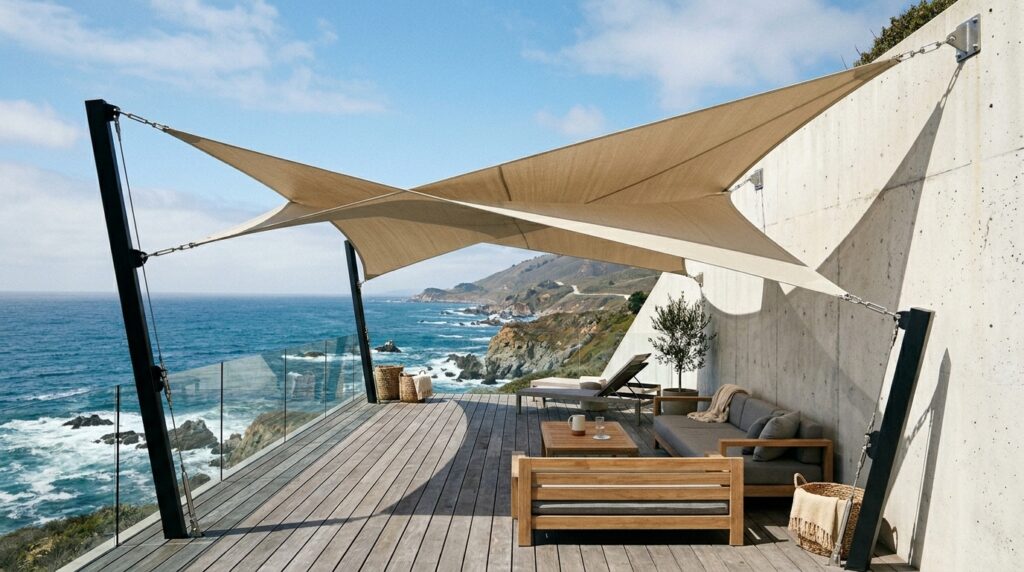
- My Design Perspective: This is pure geometry at work. By anchoring the four corners of a rectangular sail at alternating high and low points, you force the fabric into a structural twist (a saddle shape). This tension prevents the fabric from flapping or pooling water during heavy rain storms, shedding wind loads gracefully while looking like a fluid, modern art installation.
Idea #3: The Asymmetrical Pentagon Silhouette
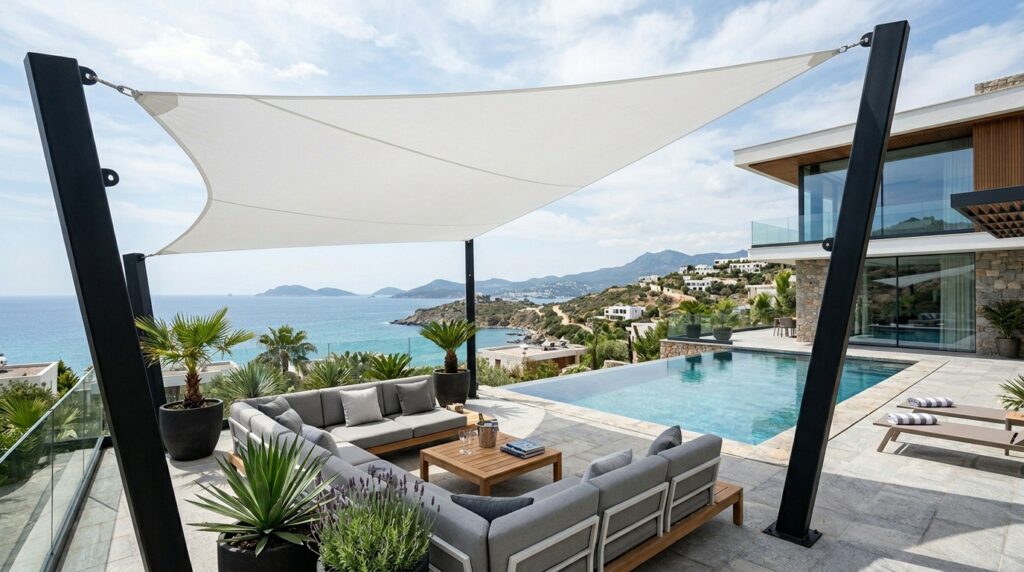
- My Design Perspective: Standard triangles don’t always capture the unique footprints of custom modern decks. Designing an asymmetrical pentagonal or custom multi-sided array allows us to trace the exact layout of your outdoor kitchen or dining salon, maximizing shade coverage where it’s needed most while breaking away from predictable geometric lines.
What I Would Add Here (Tension Section): I always mandate the use of commercial-grade, high-load stainless steel mechanical turnbuckles with integrated spring-loaded tension dampers at every single corner hook. High-end sails expand slightly under hot sun and take heavy abuse during summer windstorms; these heavy-duty springs absorb sudden wind shocks, preventing damage to the fabric and keeping the canopy perfectly taut for years.
Monochromatic Grids & High-Contrast Anchors
Designed to complement stark modern, minimalist, or industrial architecture, these layouts focus on deep charcoal palettes, clean perpendicular grids, and heavy-duty structural masts.
Idea #4: The Monochromatic Charcoal & Smoke Cascade
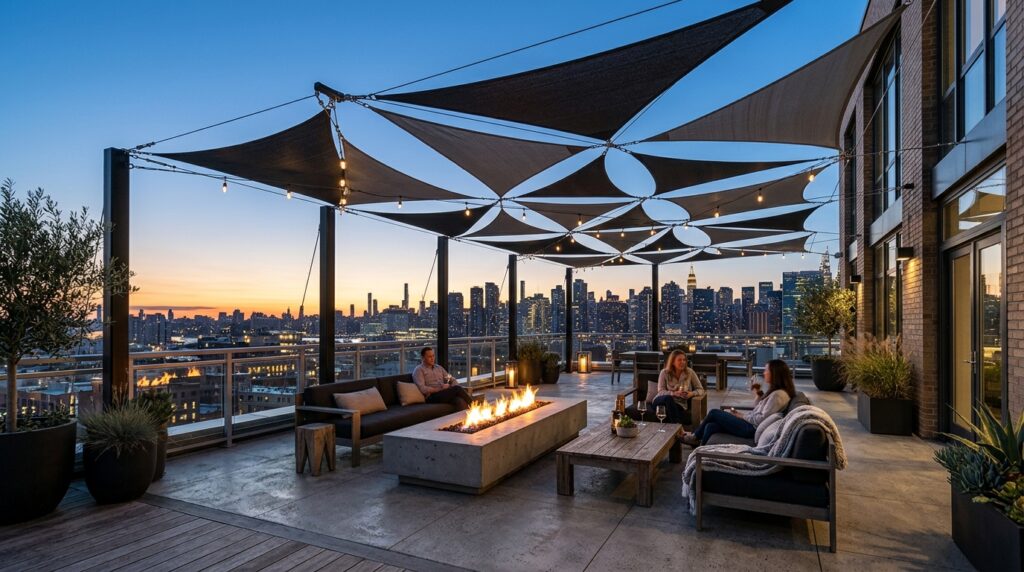
- My Design Perspective: White sails can easily get dirty over time from pollen and dust. For urban or industrial-chic estates, I lean into dark monochromatic gradients. Layering deep charcoals against semi-translucent smoke-grey fabrics absorbs intense heat while casting a moody, low-glare, ultra-luxurious shadow over the entertaining zone.
Idea #5: The Perpendicular Grid Box Framework
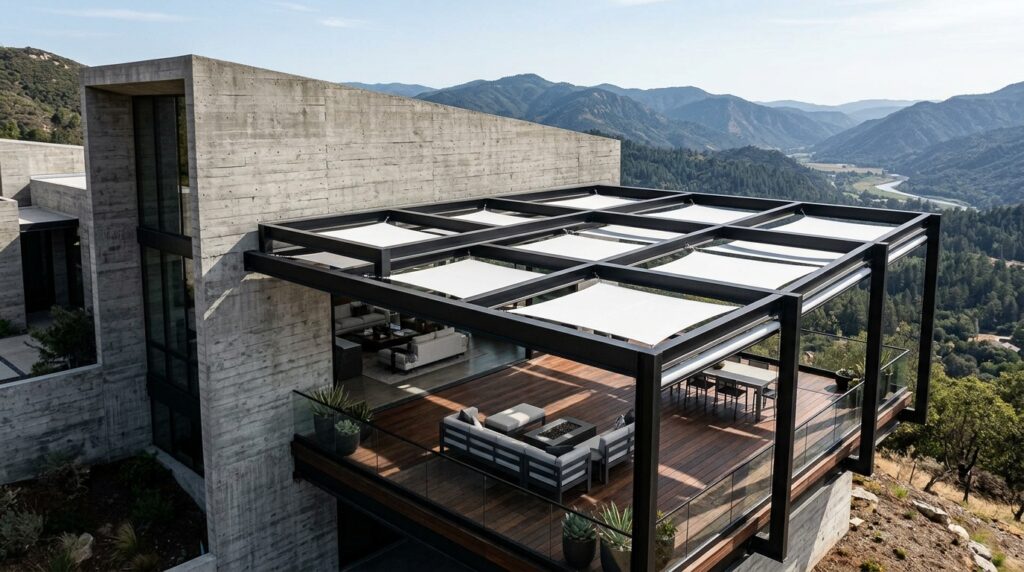
- My Design Perspective: If you prefer a clean, architectural box outline rather than organic sails crossing into the sky, I build a dedicated structural steel frame. Tensioning smaller, modular square fabric sails perfectly flush within the frame lines gives you the lightweight look of fabric with the rigid, clean geometry of a modern pavilion.
Idea #6: The Deep Bronze Floating Origami Array
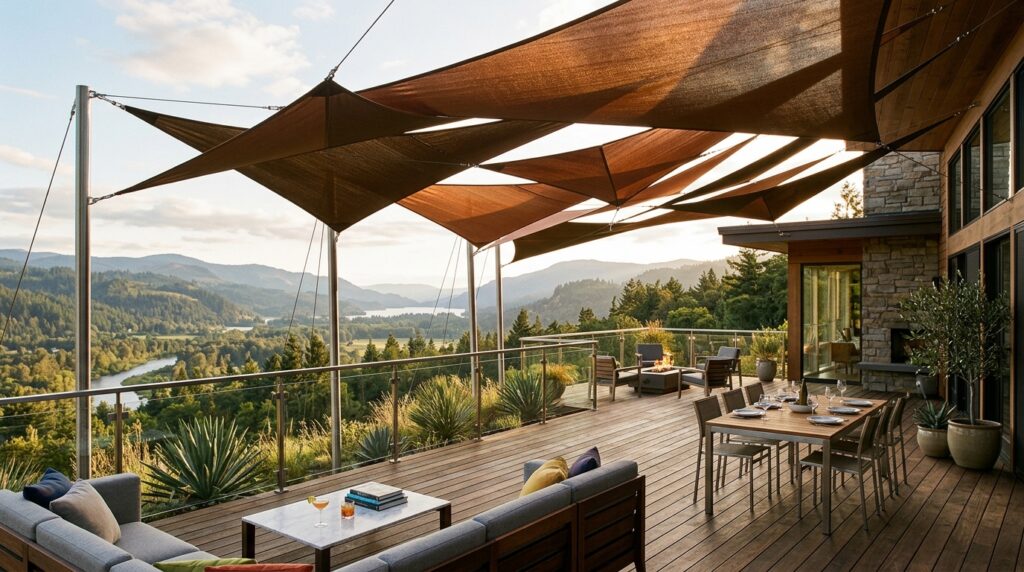
- My Design Perspective: To match warm architectural materials like walnut wood ceilings or brick fireplaces, I avoid stark white or black. Specifying premium fabrics in rich bronze and deep tan tones introduces an earthy warmth. When layered at sharp, aggressive angles, the sails mimic structural origami, casting rich, amber-filtered light onto the deck below.
What I Would Add Here (Industrial Section): For these heavy-contrast layouts, I prefer to use heavy-wall, schedule-80 structural steel pipe masts finished in a sandblasted powder-coat matte black. Burying these columns 4 feet deep in concrete footings allows them to easily handle the immense tension forces exerted by commercial fabrics without ever bowing or warping.
Linear Bands & Architectural Extensions
These concepts treat shade fabric like long architectural ribbons, running long parallel tracks to frame linear walkways and continuous lounge footprints.
Idea #7: The Parallel Ribbon Linear Tracks
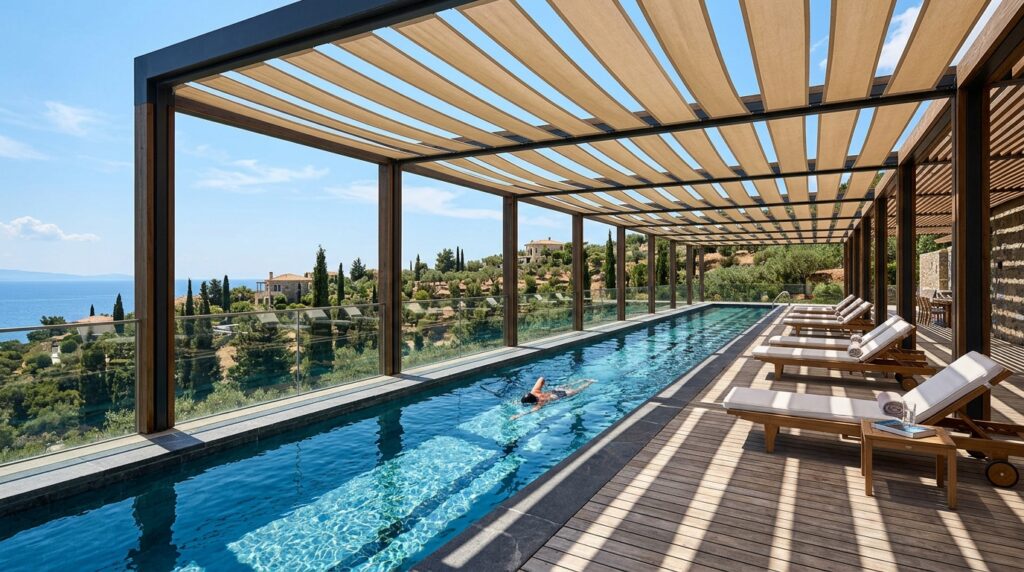
- My Design Perspective: For long, linear decks or transitional walkway corridors connecting multiple outdoor zones, traditional triangular sails leave too many unshaded gaps. Using a series of long, narrow rectangular fabric ribbons spaced exactly 6 inches apart creates a beautiful, rhythmic “slatted” shade effect that feels incredibly modern and fast.
Idea #8: The Direct Facade-Integrated Cantilever Extension
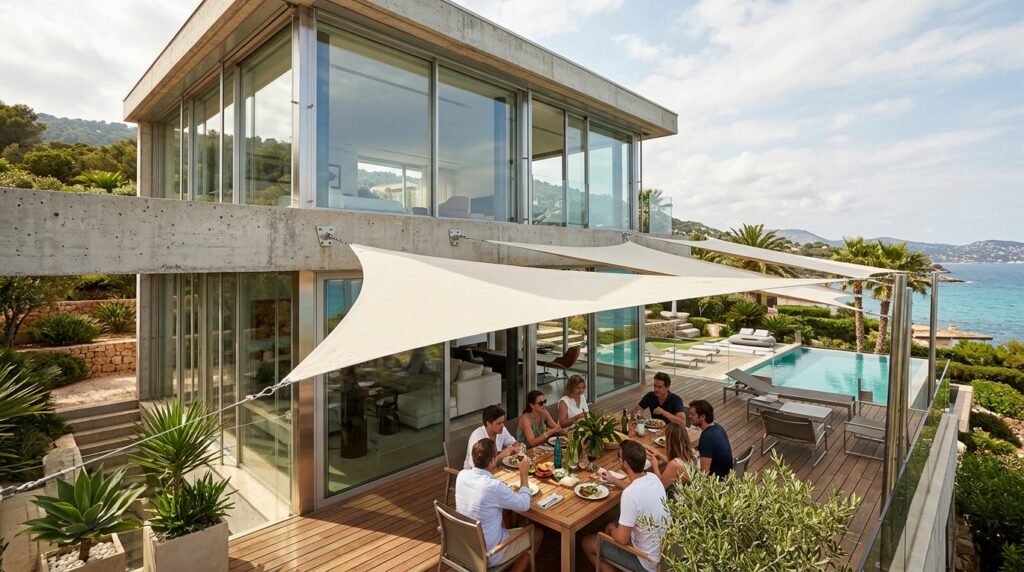
- My Design Perspective: To make the shade array look like an organic extension of the house rather than an afterthought, I work with engineers to mount heavy-duty pad eyes directly into the home’s structural concrete or steel headers during framing. Eliminating columns on the house side keeps the deck apron 100% clean and wide open for walking traffic.
Idea #9: The Radial Starburst Fan Array
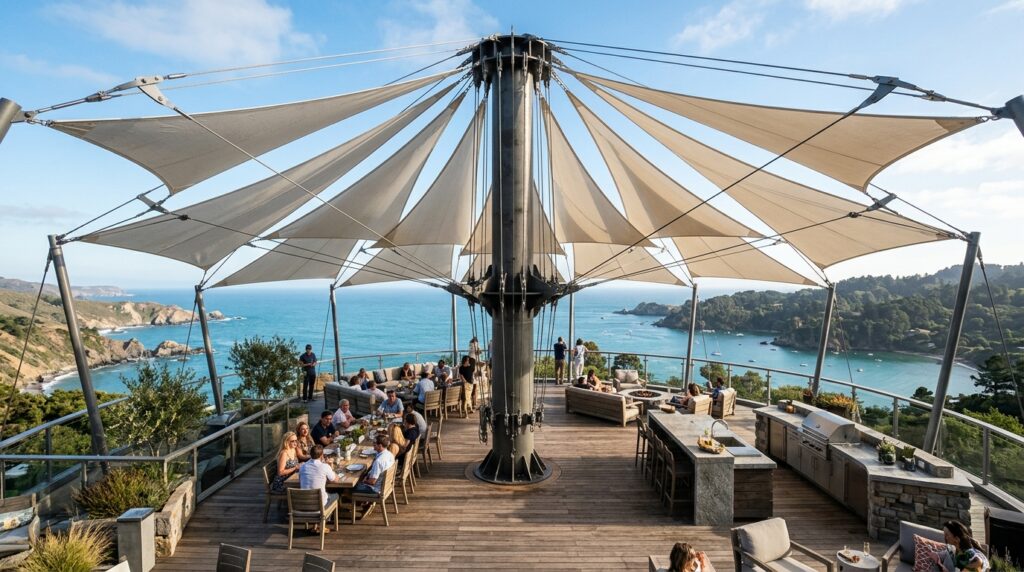
- My Design Perspective: This is a spectacular layout for large, circular seating hubs or poolside lounges. By anchoring one corner of multiple triangular sails to a single high central mast, and fanning the outer corners down to lower posts around the perimeter, you create a majestic, canopy-wheel silhouette that defines the absolute epicenter of the estate.
Idea #10: The Coastal Breeze Chevron Wings
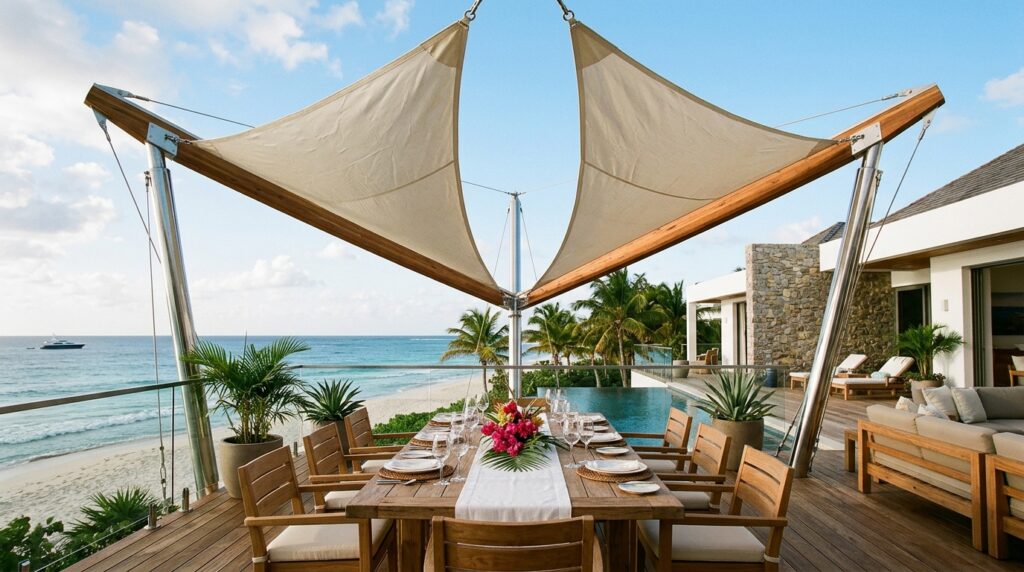
- My Design Perspective: For coastal properties where wind is a constant presence, standard flat designs will catch air like a parachute. Pitching two large triangular sails in an inverted chevron (“V”) formation creates a natural aerodynamic wind-scoop. The coastal breeze is safely funneled upward through the center gap, stabilizing the structure while framing an open view of the ocean horizon.
What I Would Add Here (Linear & Extension Section): I always specify commercial-grade HDPE (High-Density Polyethylene) monofilament knitted mesh fabric for the sail material. Unlike standard solid vinyl tarps which trap hot air underneath, knitted HDPE mesh breathes flawlessly. It allows hot air to escape upward through the fabric pores while blocking up to 95% of harmful UV rays, reducing the temperature on the deck by up to 15 degrees.