Are you looking to resolve intense property slope changes while injecting a bold, muscular, industrial-chic aesthetic into your landscape architecture? Traditional smooth concrete retaining walls can look sterile, while timber tie walls rot, bow, and fail under hydrostatic soil pressure within a decade. In this structural hardscaping manual, we will explore Heavy-Duty Gabion Stone Retaining Walls for Industrial Texture. We will break down zinc-aluminum triple-twist wire mesh matrices, structural internal tie-back engineering, specific porous rock aggregate densities, and integrated low-voltage lighting networks. Discover how to turn raw civil engineering infrastructure into a striking, high-end architectural asset.
High-Contrast Frameworks & Premium Geologic Fills
The visual character of a gabion wall depends entirely on the contrast between its wire basket containment and the stones packed inside. Specifying clean, hand-sorted angular rock aggregates creates dense surfaces that look incredibly architectural.
Idea #1 The Matte Black Powder-Coated Steel Grid Cage with Pure White Quartz
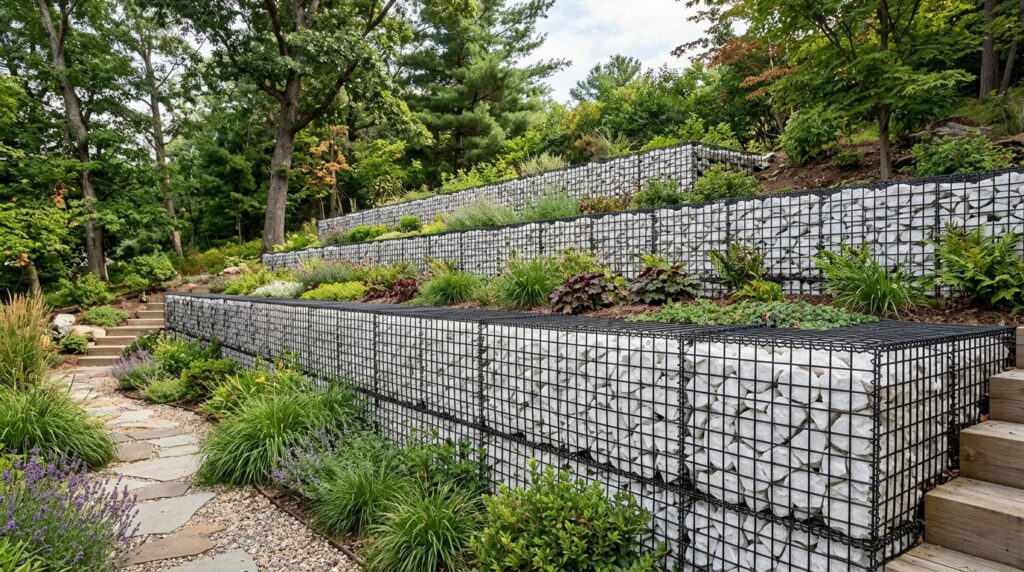
- My Opinion: Personally, I find the combination of high-gloss white quartz and stark matte black wire coating to be the ultimate statement in modern monochrome landscape design. It completely sheds the “civil engineering highway project” look, turning a heavy retaining barrier into an intentional, high-contrast gallery piece.
- What I would add here: Utilizing a premium hand-faced packing method for the front-facing layer ensures the flat faces of the quartz rocks sit tightly against the wire mesh, minimizing hollow voids and maximizing the solid stone aesthetic.
Idea #2 Basalt Angular Split Stone in Galvanized Zinc-Aluminum Baskets
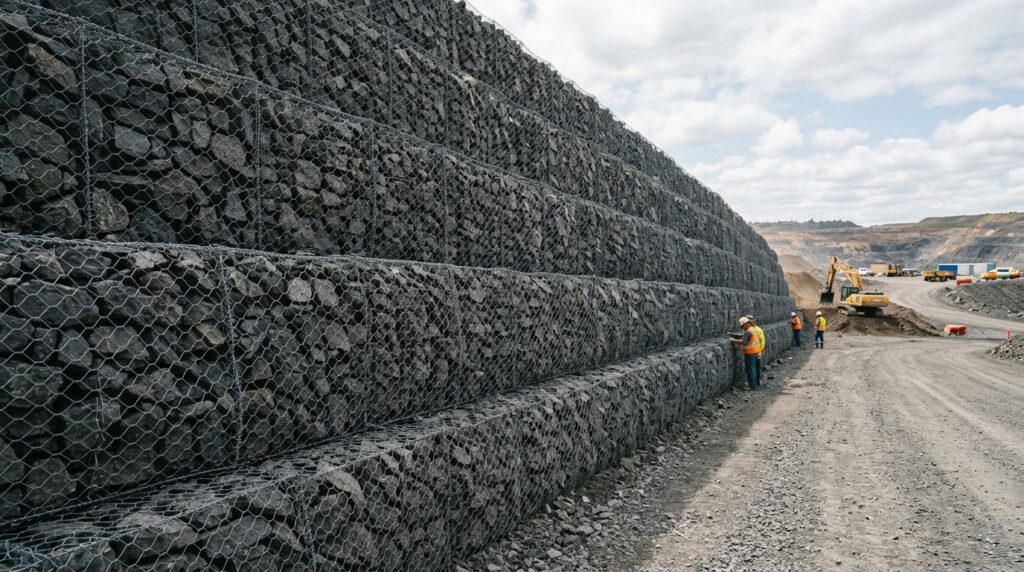
- From my perspective: Galfan coating is essential because it offers up to three times the corrosion resistance of standard hot-dip galvanizing. The rough, matte charcoal texture of the basalt handles tire marks and dirt beautifully, making it an exceptional choices for high-traffic driveways or modern parking courts.
- What I would add here: Heavy-duty internal vertical reinforcing I-beams driven deep into the subgrade concrete footings behind the gabion baskets to permanently prevent any outward wall bowing over decades of heavy backfill shifting.
Geometric Cascades & Structural Earth Tiering
When handling massive elevation drops, breaking up a vertical expanse into terraced geometric steps distributes soil loads safely while creating beautiful pockets for landscaping depth.
Idea #3 Staggered Stepped Retaining Tiers with Built-In Timber Benches
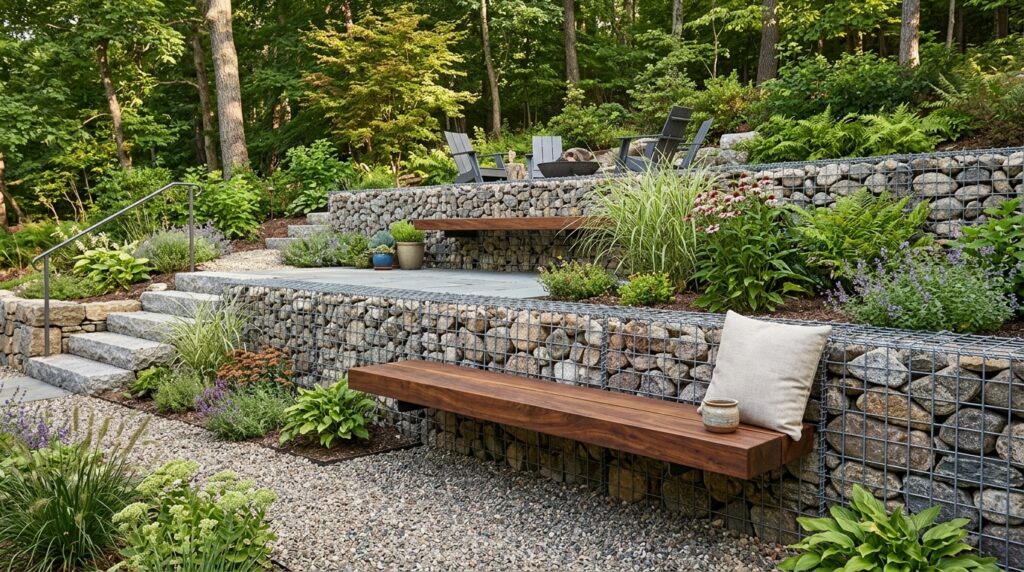
- In my experience: Monolithic 10-foot-tall walls can feel intensely claustrophobic. Stepping the gabion blocks back by 2 or 3 feet at each tier immediately relaxes the visual scale of the yard while providing functional horizontal ledges to introduce luxury built-in seating or aromatic herb gardens.
- What I would add here: Heavy-duty internal stainless steel mounting brackets welded directly into the structural gabion baskets before rock filling to provide an rock-solid, invisible support base for the cantilevered wood bench.
Idea #4 Alternating Linear Slate Ribbons and Cor-Ten Steel Dividers
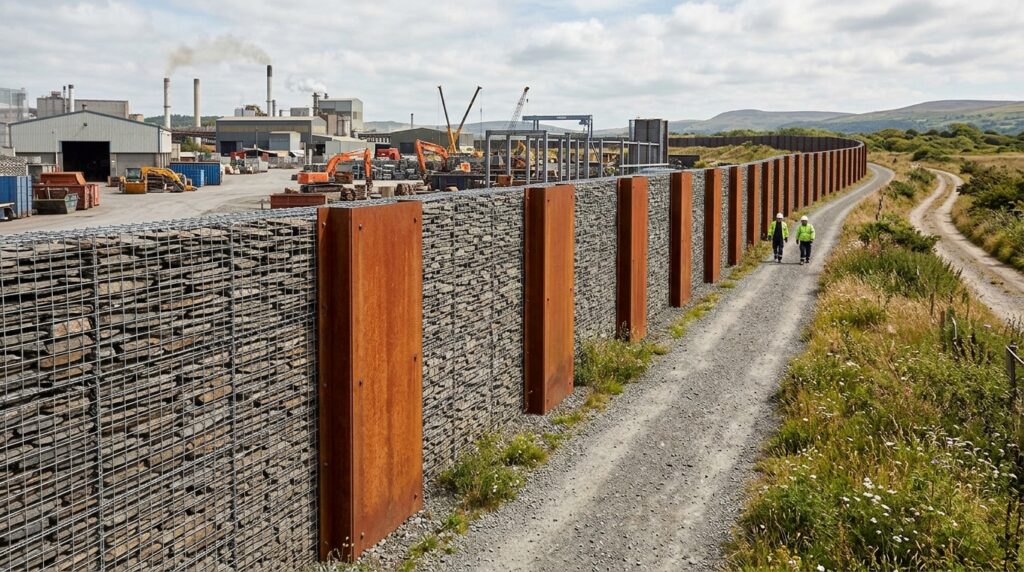
- Personally, I believe that: The orange oxidized patina of Cor-Ten steel pairs beautifully with the cool gray tones of slate rock. The vertical steel plates break up the horizontal monotony of a long perimeter wall, giving the entire hardscape a rhythmic, highly tailored architectural rhythm.
- What I would add here: A clear coat of specialized rust-stabilizing sealer applied to the Cor-Ten steel panels prior to assembly to prevent rusty water runoff from staining the surrounding concrete patio pavers.
Low-Voltage Ambience & Kinetic Hardscape Illumination
Heavy gabion walls shouldn’t turn into imposing, dark shadows at night. Integrating indirect low-voltage lighting accentuates the rugged, deep multi-dimensional textures of the hand-packed stones.
Idea #5 Recessed Under-Cap Linear LED Grazing Strips
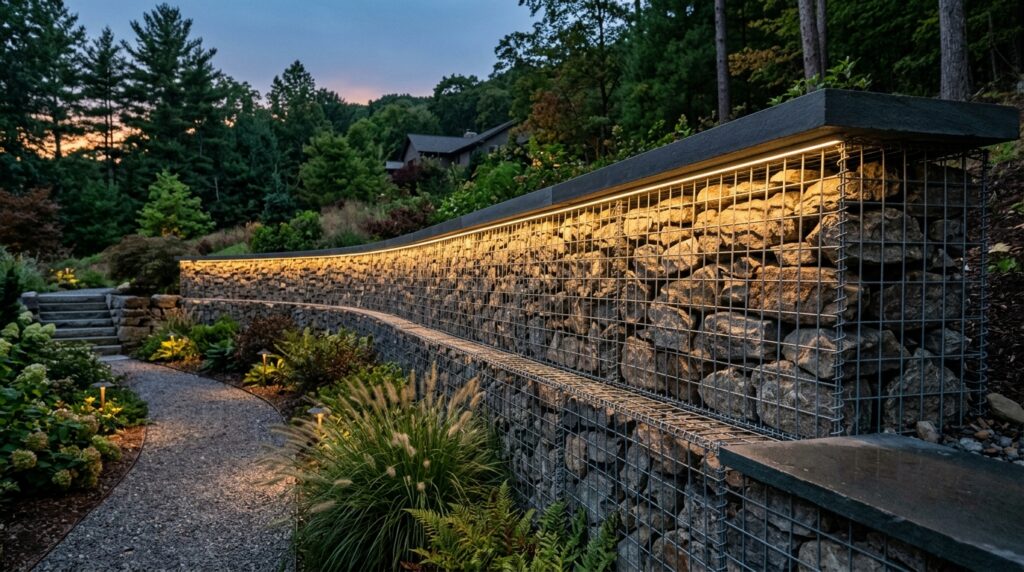
- In my opinion: Avoid placing harsh, exposed floodlights that shine directly at a gabion wall. Under-cap linear grazing is vastly superior because the high-angle downward light catches the top edges of every jagged rock, casting dramatic, intricate micro-shadows that emphasize the wall’s raw, industrial texture.
- What I would add here: A precision-machined drip-edge notch cut into the underside of the bluestone cap to divert rainwater away from the hidden LED light strip, protecting the electrical housing from moisture buildup.
Idea #6 Rugged Brass Solid In-Ground Well Spotlights
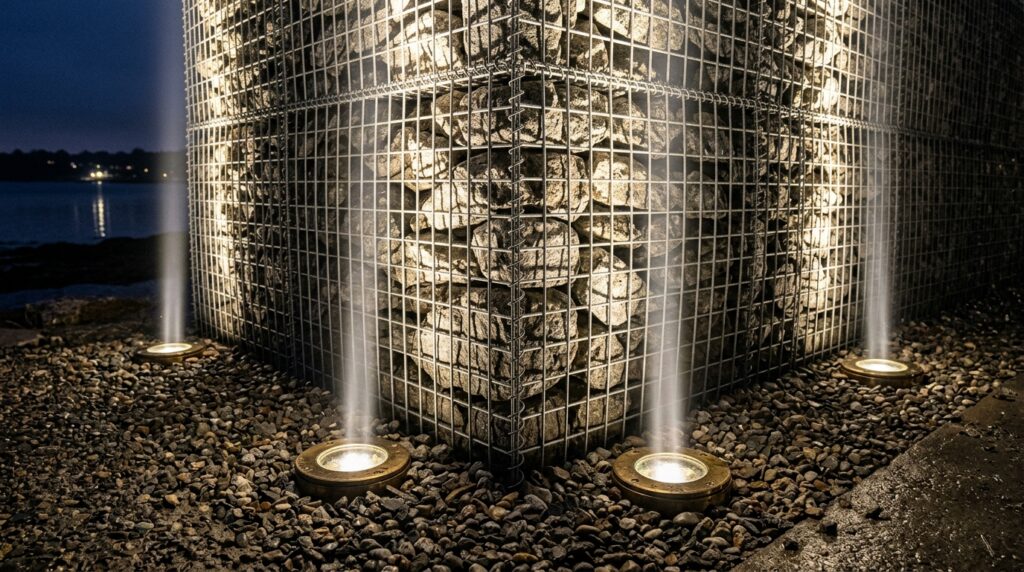
- In my experience: Up-lighting the corners of massive gabion blocks gives the structure a grand, monumental look at night. The light slices through the wire mesh grids and raw stone edges, transforming a basic dirt-retaining structure into an impressive architectural focal point.
- What I would add here: Internal hex-cell honeycomb louvers snapped directly over the spotlight lenses to completely eliminate side-glare, keeping the light tightly focused only on the masonry textures.
Advanced Subsurface Drainage & Engineering Maturation
The number one reason retaining walls fail is hydrostatic water pressure building up behind the wall. Gabion architecture inherently excels at drainage, but maximizing its performance requires a smart backing network.
Idea #7 Geotextile-Lined River Stone Drainage Vaults
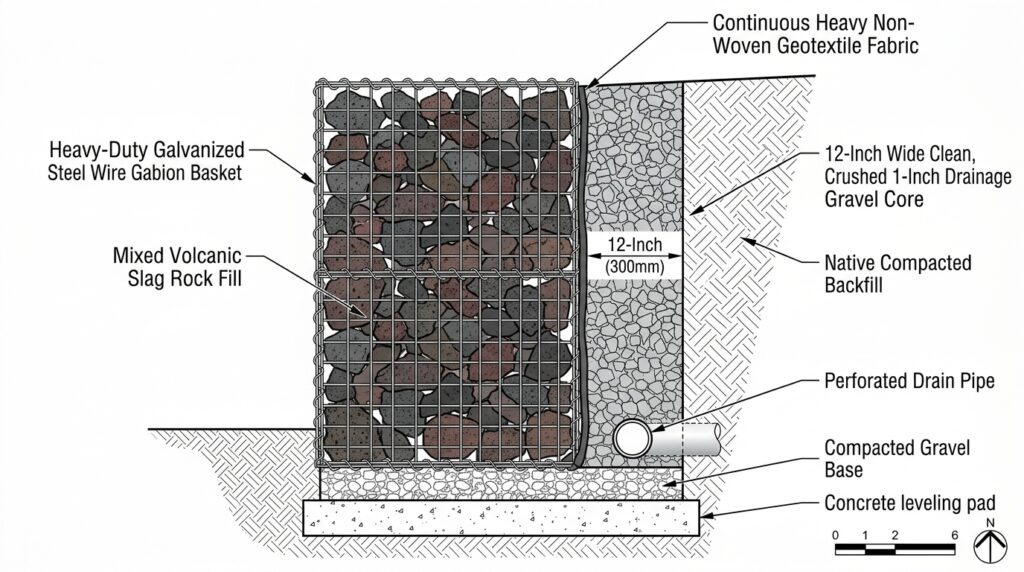
- My Opinion: The natural porosity of a gabion wall is its greatest engineering superpower. Water passes through the loose stone mix effortlessly rather than pressing against it; lining the rear wall with premium geotextile fabric ensures that fine silt and mud cannot migrate into the stones, preventing ugly face clogging over time.
- What I would add here: A perforated 4-inch rigid PVC schedule-40 French drain pipe resting at the absolute bottom-rear base of the wall, sloped to gravity-drain water away to your storm main.
Idea #8 The Culvert-Grade Monolithic Box Gabion Matrix
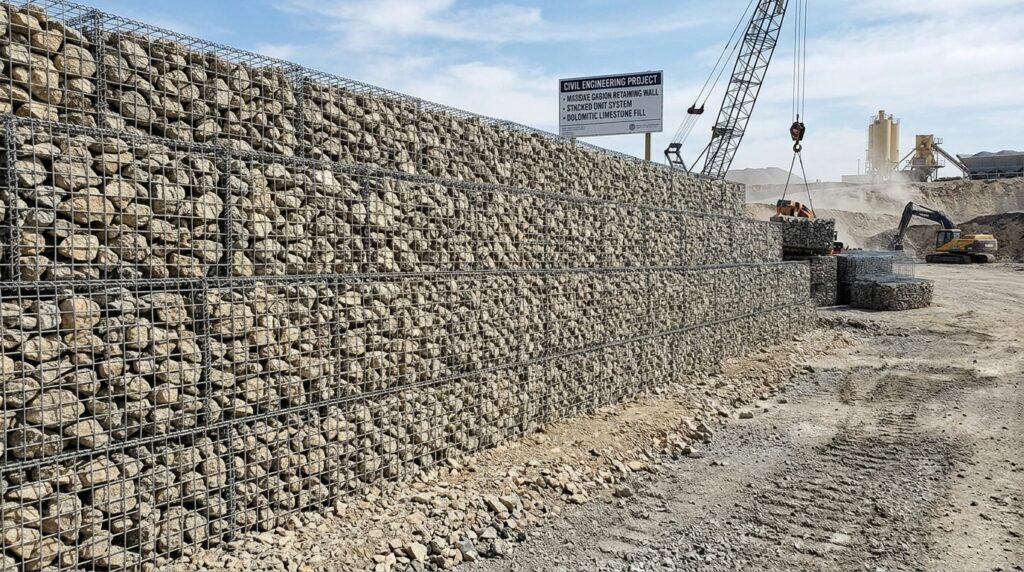
- From my perspective: For severe industrial sites or heavy commercial loading driveways, a running-bond box layout is the safest approach. It mimics traditional structural brickwork, allowing the massive weight of the lower boxes to securely anchor the upper tiers against heavy sliding forces.
- What I would add here: High-tensile stainless steel spiral binders and internal cross-tie wires installed inside every individual box module to completely eliminate any risk of localized face bulging under immense weight loads.
Mixed-Media Hardscaping & Modern Architectural Welcomes
Integrating functional residential features like waterfalls or structural green pockets transforms heavy industrial gabion stone into an approachable, high-end landscape luxury.
Idea #9 Integrated Stainless Steel Sheet Water Shear Cascades
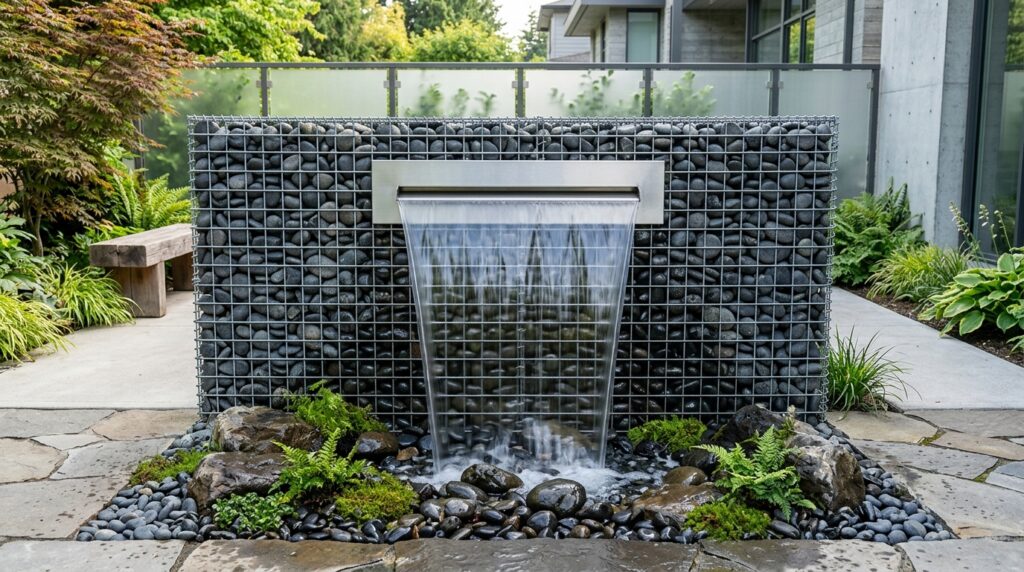
- In my opinion: Sinking a modern stainless steel water shear directly into the rugged, raw texture of a gabion rock wall creates an incredible visual juxtaposition. The clean, polished metal and smooth moving water soften the industrial tone, bringing absolute luxury acoustics to a private patio.
- What I would add here: An easily accessible, rear-mounted mechanical access panel hidden within the rock fill to allow quick maintenance or winter winterization of the water pump supply lines.
Idea #10 Alternating Succulent Pocket Planting Slots
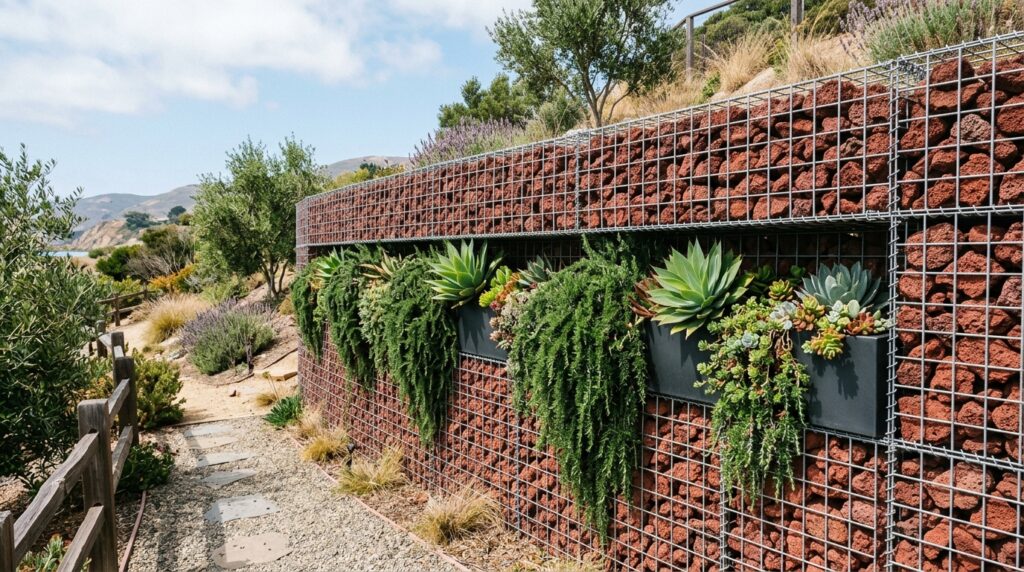
- Personally, I find that: Adding bursts of organic living greenery directly out of the stone face is a brilliant way to breathe life into industrial infrastructure. The red scoria rock provides excellent minerals and looks stunning paired with dusty blue and lime green desert succulents.
- What I would add here: A network of low-profile 1/4-inch drip irrigation micro-tubing snaked through the internal center of the wire cages before packing the stones, keeping the plant roots automatically hydrated without visible lines.