Are you looking to replace cold, stark perimeter fences with a breathing, vibrant ecosystem that actively lowers temperatures and absorbs urban noise? Standard brick walls or timber fences can make your property feel boxed-in and industrial. In this master landscaping guide, we explore Living Vertical Plant Walls for Lush, Green Boundary Enclosures. We will break down modular hydroponic pocket layers, structural load-bearing frame calculations, automated drip fertilization loops, and targeted landscape illumination. Discover how to turn simple property lines into thriving vertical tapestries of rich, architectural greenery.
Hydroponic Modules & High-Contrast Metallics
Combining the soft textures of dense living plants with rigid, industrial metal frameworks creates a striking modern aesthetic. The metal provides a clean, geometric border that frames the natural, wild growth of the vertical garden.
Idea #1 Modular Felt-Pocket Panels on Matte Black Steel
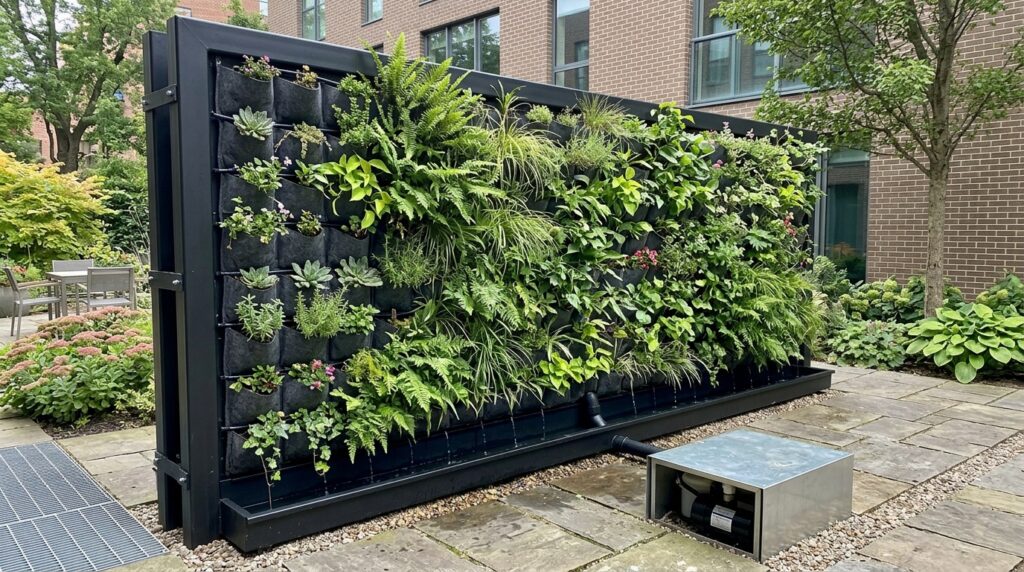
- My Opinion: The contrast here is exceptional. The crisp black steel frame acts like a picture frame around a living painting, preventing the greenery from looking unruly while grounding the perimeter with a clear, architectural boundary.
- What I would add here: A 1-inch air gap using composite furring strips behind the felt modules is vital to prevent moisture from ever transferring directly to the main structural boundary wall.
Idea #2 Brushed Copper Grid Interlock
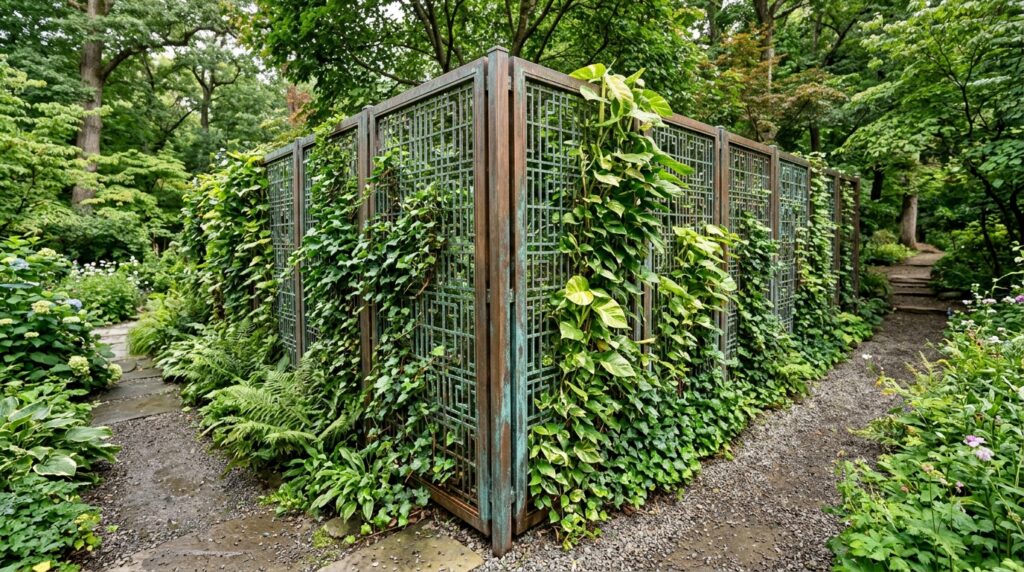
- From my perspective: Using copper is an investment, but the way it interacts with living plants is magical. As the metal oxidizes and develops its signature patina, it merges visually with the green foliage, creating an evolving, antique charm.
- What I would add here: Select a slow-growing, non-aggressive vine like Star Jasmine (Trachelospermum jasminoides) rather than aggressive English Ivy to avoid structural damage to the backing framework.
Low-Voltage Illumination & Kinetic Shadow Play
A living wall shouldn’t disappear into the darkness at night. Strategic low-voltage lighting can emphasize the deep textures of the foliage, casting intricate, moving shadows across your outdoor living spaces.
Idea #3 Grazing LED Linear Top-Bars
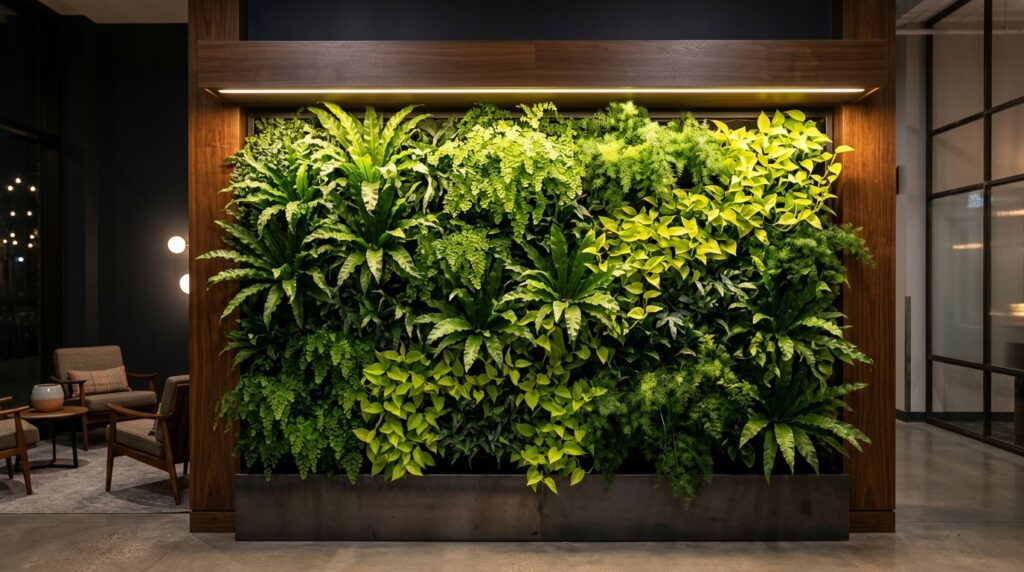
- In my experience: “Grazing” light—shining light parallel to a textured surface—is the single best way to showcase a living wall at night. It catches the tips of every individual leaf, creating incredible depth and emphasizing the lush, three-dimensional layers.
- What I would add here: Specify outdoor-rated fixtures with a high Color Rendering Index (CRI of 90 or greater) to ensure the vibrant greens and deep reds of the plants look completely natural and vivid after dark.
Idea #4 Staggered In-Ground Well Spotlights
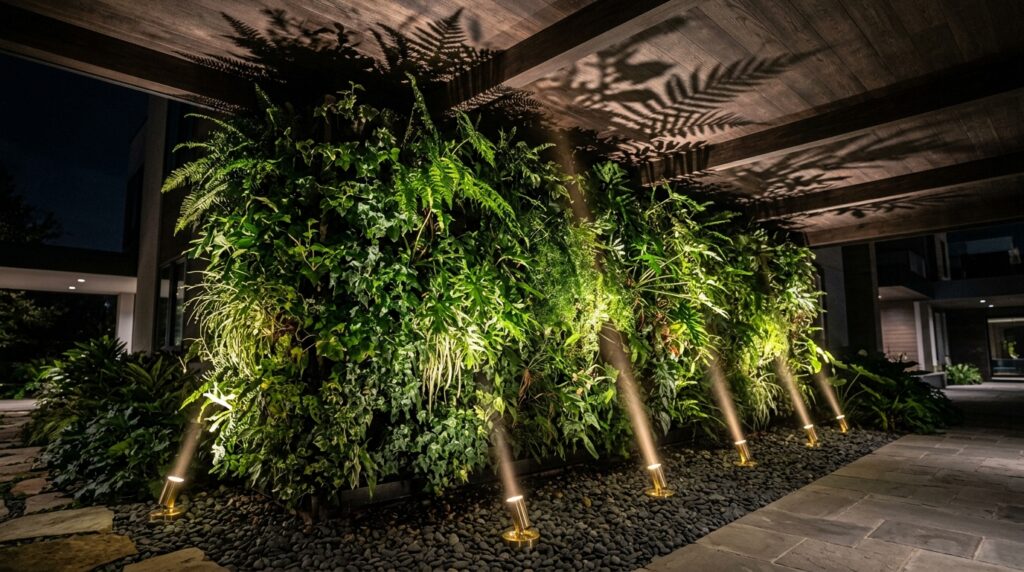
- Personally, I find that: Staggered uplighting adds a dramatic, theatrical flair to private courtyards. The subtle movement of leaves in a evening breeze creates a beautiful, calming kinetic shadow play across the entire patio floor.
- What I would add here: Install debris guards over the well light lenses so falling leaves or dirt don’t block the light beam or cause hot spots on the fixtures.
Automated Hydration & Rigid Structural Framing
The survival of a vertical perimeter depends entirely on its engineering. Automated systems ensure proper hydration and nutrient delivery, while heavy-duty structural anchoring prevents high wind loads from compromising the wall.
Idea #5 Automated Drip-Line Fertigation Matrix
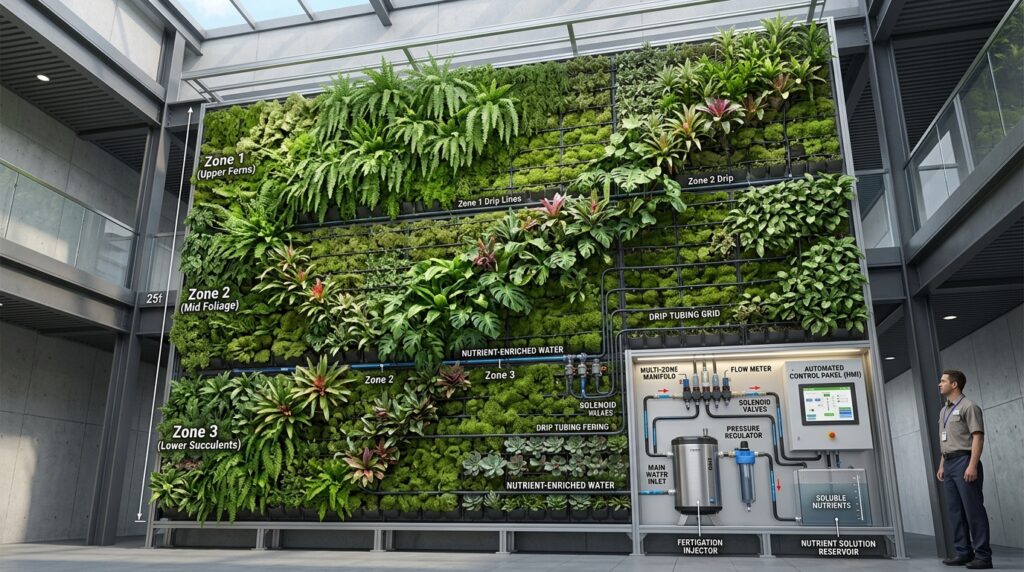
- My Opinion: If you are building a large-scale vertical wall, manual watering is out of the question. An automated fertigation loop takes the guesswork out of maintenance, ensuring the wall stays uniformly lush, vibrant, and dense without constant monitoring.
- What I would add here: Include a digital pressure regulator and an automatic blow-out valve in the plumbing manifold to easily winterize the irrigation system and prevent frozen, cracked lines.
Idea #6 Heavy-Duty Concrete Masonry Core with Anchored Marine Plywood
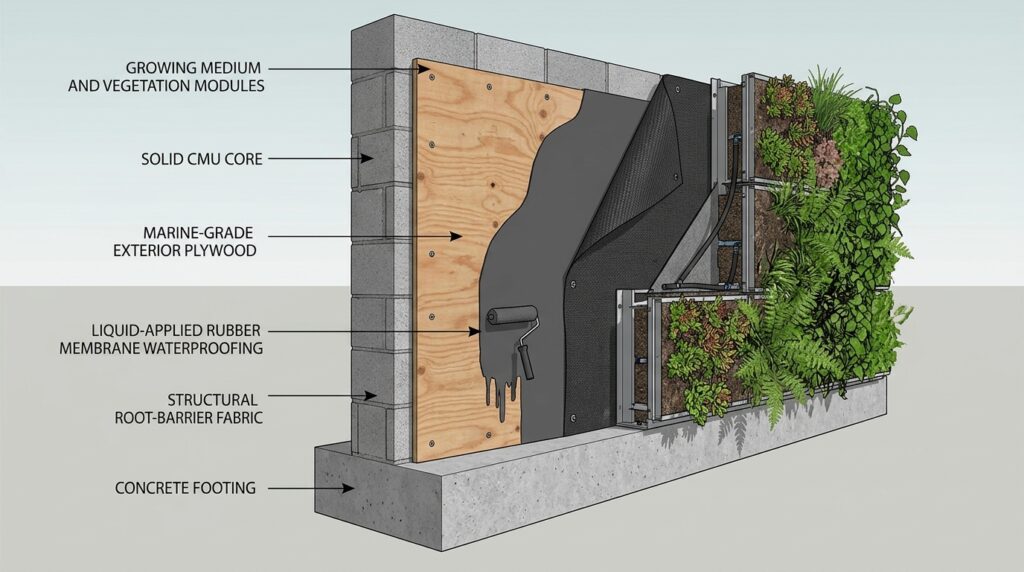
- From my perspective: A living wall soaked in water gets incredibly heavy. You cannot skimp on the underlying skeleton. This heavy-duty CMU and marine-plywood stack provides an indestructible foundation that can handle massive vertical loads and heavy wind shear.
- What I would add here: Use exclusively marine-grade 316 stainless steel screws and concrete anchors to secure the planting modules, preventing rust bleed from staining the surrounding hardscape.
Monochromatic Foliage Layouts & Geometric Waves
Instead of a random mix of plants, organizing your vertical garden into distinct bands of color, texture, or height turns the boundary enclosure into a true architectural statement.
Idea #7 The Swirling Ribbon Foliage Wave
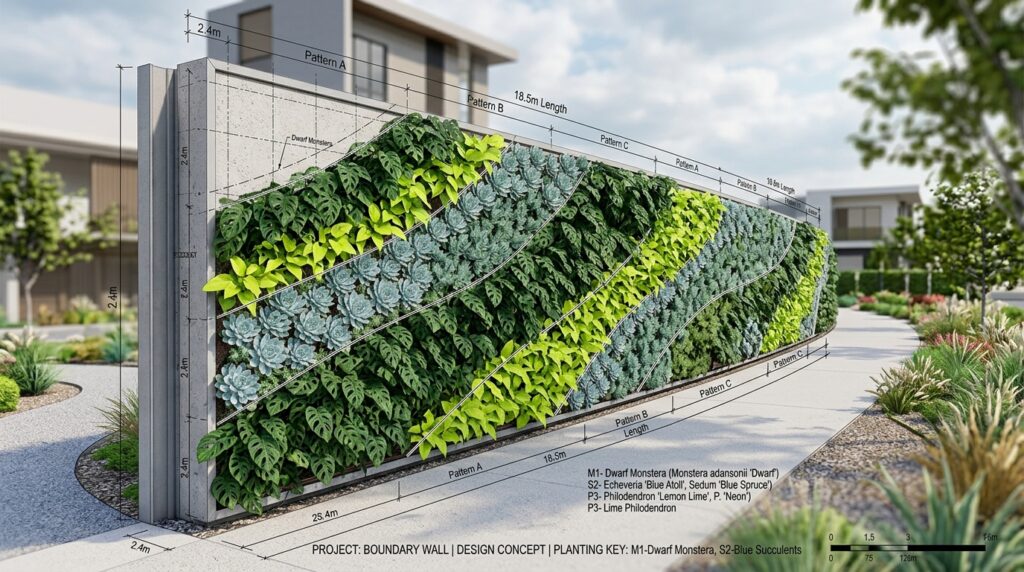
- In my opinion: Organizing plants by color and texture creates a far more premium, designed feel than a random “wild jungle” mix. It draws the eye along the perimeter, making a linear garden look significantly longer and more expansive.
- What I would add here: Group plants strictly by their water requirements; keeping high-moisture ferns on separate irrigation lines from low-water succulents prevents root rot.
Idea #8 Monochromatic Dark Emerald Canvas
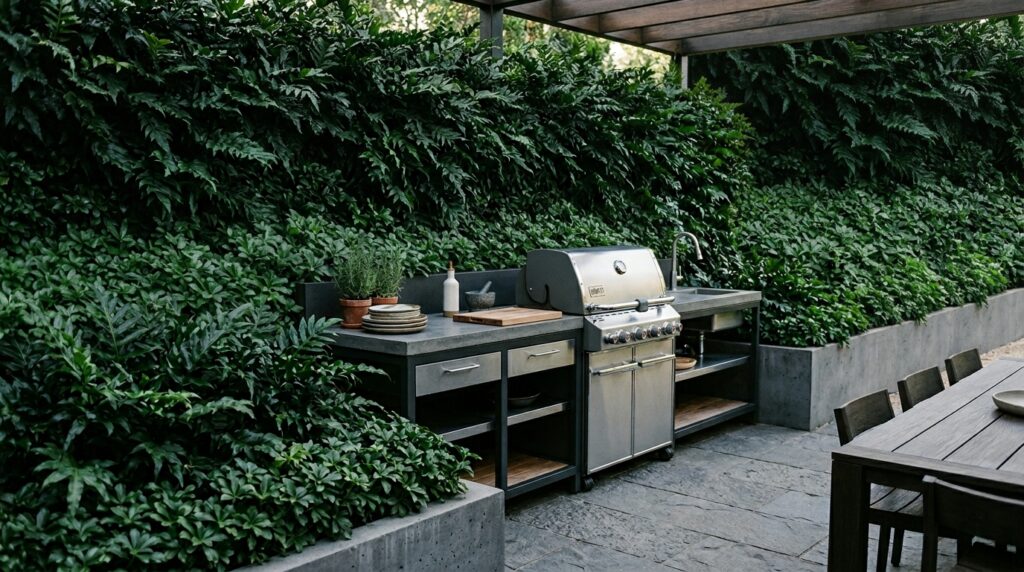
- Personally, I believe that: A monochromatic approach is perfect for clean, high-end modern design. The solid dark green canvas makes white outdoor kitchen counters or stainless steel grills stand out with intense contrast.
- What I would add here: A light, weekly misting with an organic neem oil solution keeps the dense, monochromatic foliage glossy and free from dust and common outdoor pests.
Space-Saving Solutions & Floating Modular Trays
For narrow pathways or tight side-yards, utilizing slim, rigid plastic tray systems allows you to introduce maximum greenery with a minimal footprint.
Idea #9 Angled Rigid Polypropylene Shingle Trays
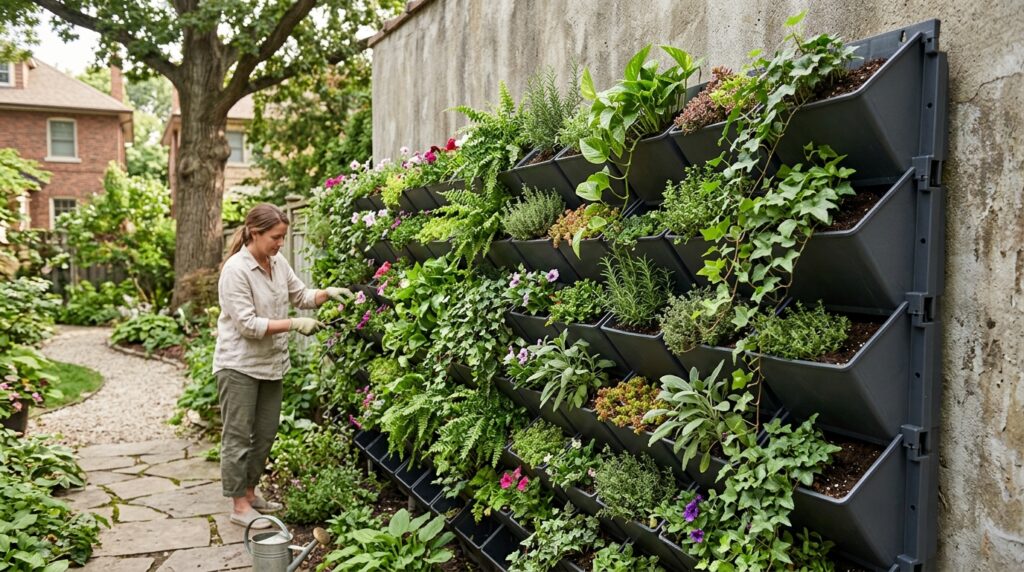
- In my experience: These rigid angled trays are a lifesaver for tight urban side-yards where every inch matters. They hold a decent amount of soil, which means roots stay better insulated against extreme summer heat compared to thin fabric pockets.
- What I would add here: Fill the trays with a lightweight, highly porous engineered soil mix containing expanded shale or perlite to keep the overall structural dead-weight to a minimum.
Idea #10 Floating Green Modules Over Stained Cedar
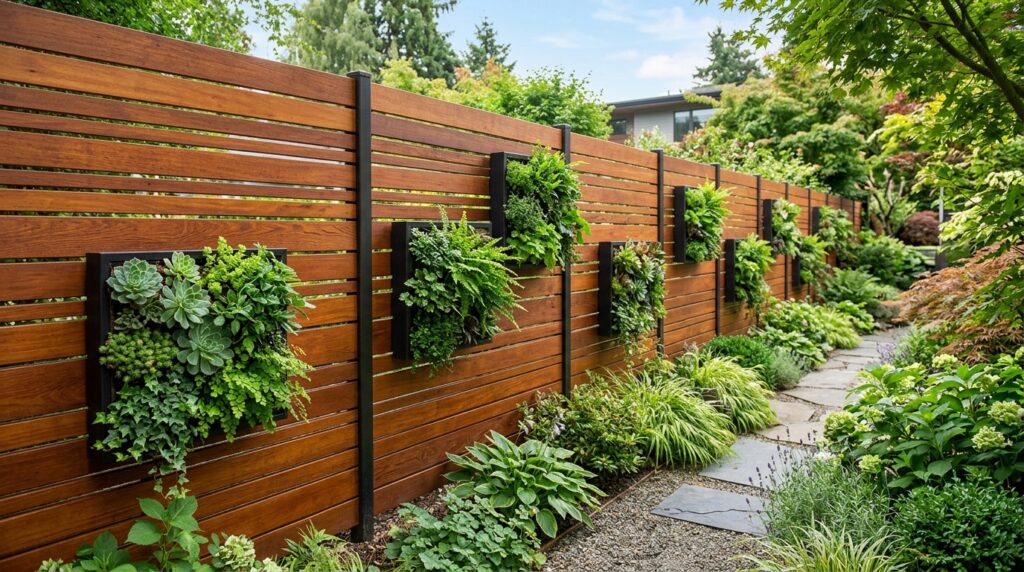
- My Opinion: If covering an entire 100-foot wall with living plants feels overwhelming from a budget or maintenance perspective, this floating modular approach is the perfect compromise. The warm cedar pairs beautifully with the isolated, bursting pockets of greenery.
- What I would add here: Mount the floating green modules on quick-release brackets, allowing you to easily unhook individual panels at chest height for simple replanting or seasonal maintenance.