Are you looking to design an architectural perimeter wall that makes a bold, ultra-minimalist statement while completely defying the elements? Tired of traditional fences that fade, warp, rot, and require tedious maintenance every single two years? In this premium landscaping guide, we will explore Stucco Boundary Walls Finished in Soft, Earthy Mediterranean Tones. We will break down material layers, framing geometries, moisture resistance matrices, and night lighting layouts to show you how a finely finished masonry boundary can protect your home while acting as a breathtaking, dramatic backdrop for your outdoor architecture.
Terracotta Accents & Rhythmic Stucco Textures
The exact tone of earthy stucco combined with structural coping dictates the ultimate character of your modern perimeter. Precision troweling turns simple masonry walls into luxurious, highly textured architectural surfaces.
http://googleusercontent.com/image_generation_content/310
Idea #1 Deep Recessed Geometric Planters
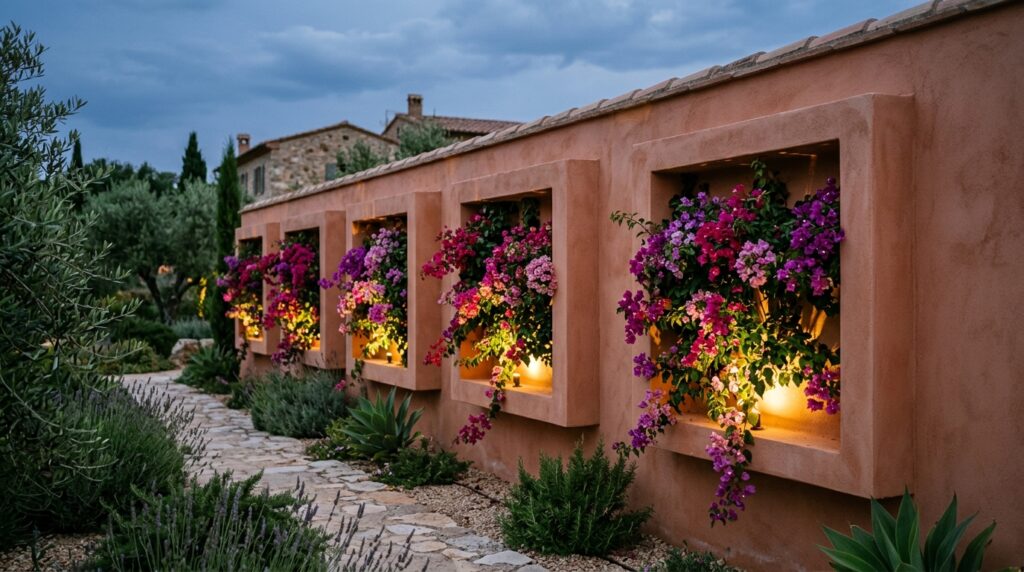
- My Opinion: Personally, I believe the fusion of living plants and architectural geometric stucco is the perfect balance between structure and nature. It transforms a simple barrier into a dynamic vertical garden that feels incredibly high-end.
- What I would add here: A hidden internal drip irrigation system within the planters during construction ensures the bougainvillea stays vibrant year-round with minimal maintenance.
Idea #2 Terracotta Coping with Embedded Ceramic Tiles
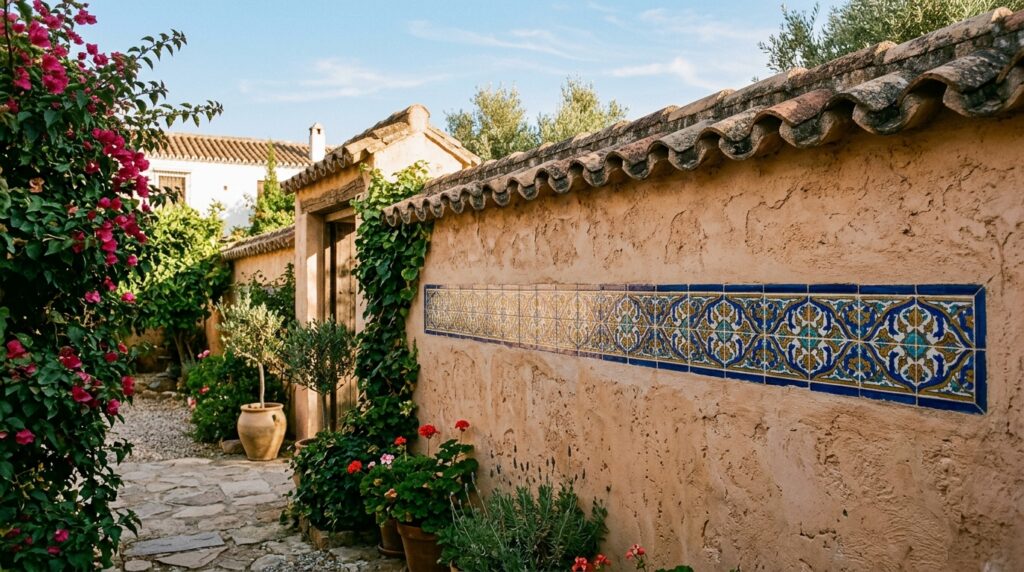
- From my perspective: The dusty peach hue is an excellent canvas for the high-contrast cobalt tiles. Crowning it with terracotta coping provides an authentic, durable finish that protects the stucco wall while defining the entire aesthetic.
- What I would add here: Utilizing a premium elastomeric stucco coating ensures the wall remains flexible, resisting minor cracking while maintaining its vibrant color against UV exposure.
Structural Sculpting & Anti-Rot Substrates
A wall is only as permanent as its underlying support frame and moisture management. Because Mediterranean stucco relies on smooth transitions, your engineering must prevent water damage and structural settling.
http://googleusercontent.com/image_generation_content/311
Idea #3 Curvilinear Organic Flow
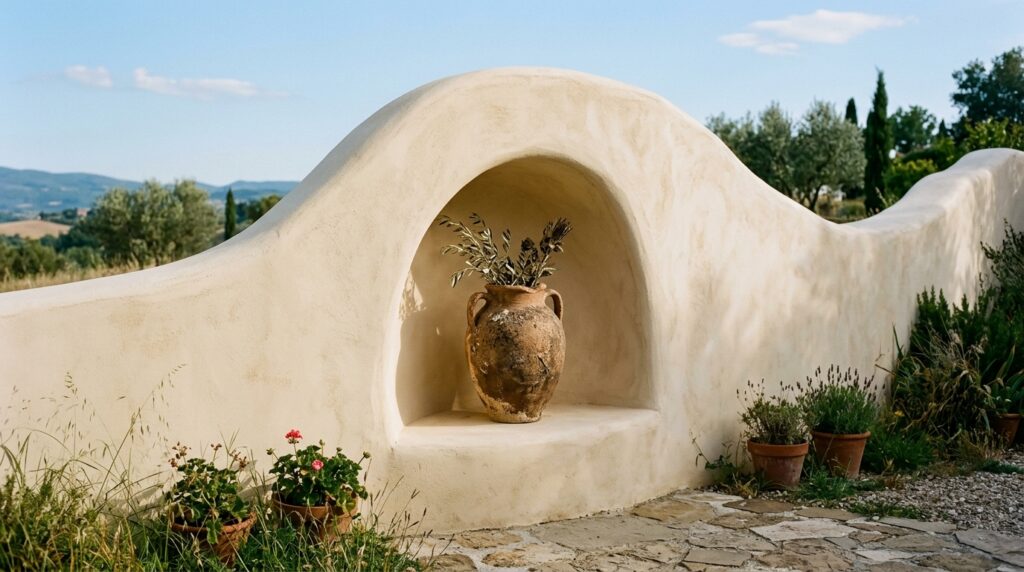
- Personally, I find that: The organic, flowing design is essential for softening large expanses of masonry. It feels handcrafted and intuitive rather than industrial, which is ideal for a relaxed Mediterranean courtyard or entrance layout.
- What I would add here: A continuous reinforced concrete bond beam should follow the entire undulating top line to guarantee structural stability across the wall’s variable heights.
Idea #4 Sand-Texture Stucco with Integrated Bench
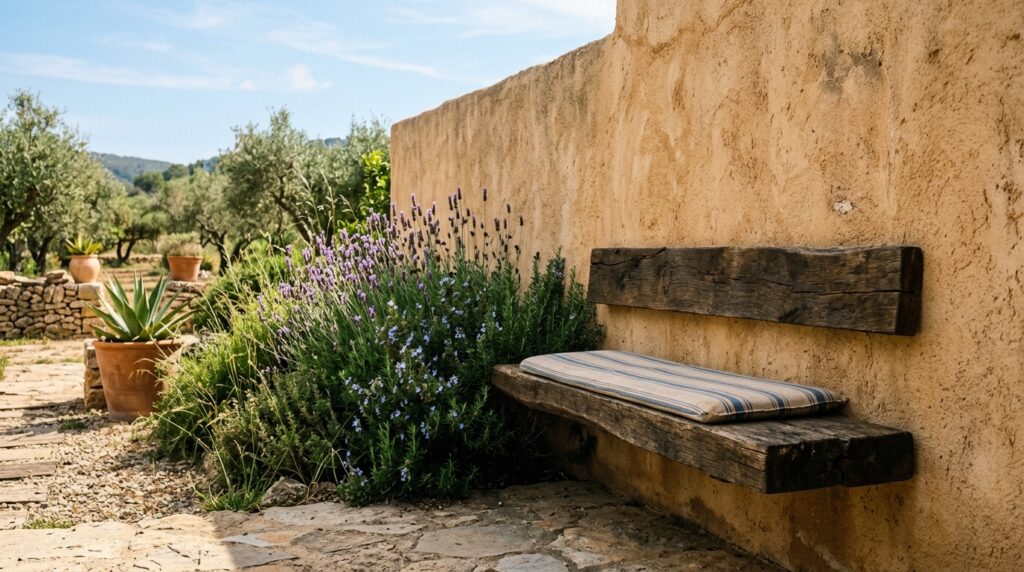
- In my experience: The rough, tactile sand texture is highly forgiving of minor imperfections and weathering. Integrating seating is a brilliant space-saver that seamlessly blends vertical and horizontal design elements.
- What I would add here: Steel mounting brackets for the bench must be securely anchored into the CMU (Concrete Masonry Unit) core of the wall before the stucco finish is applied to support significant vertical loads.
Classic Openings & High-Contrast Features
Merging earth-toned stucco with classic wrought iron or distressed materials introduces a historical elegance to modern property lines.
http://googleusercontent.com/image_generation_content/312
Idea #5 Aged Ocre Patina and Wrought Iron Gates
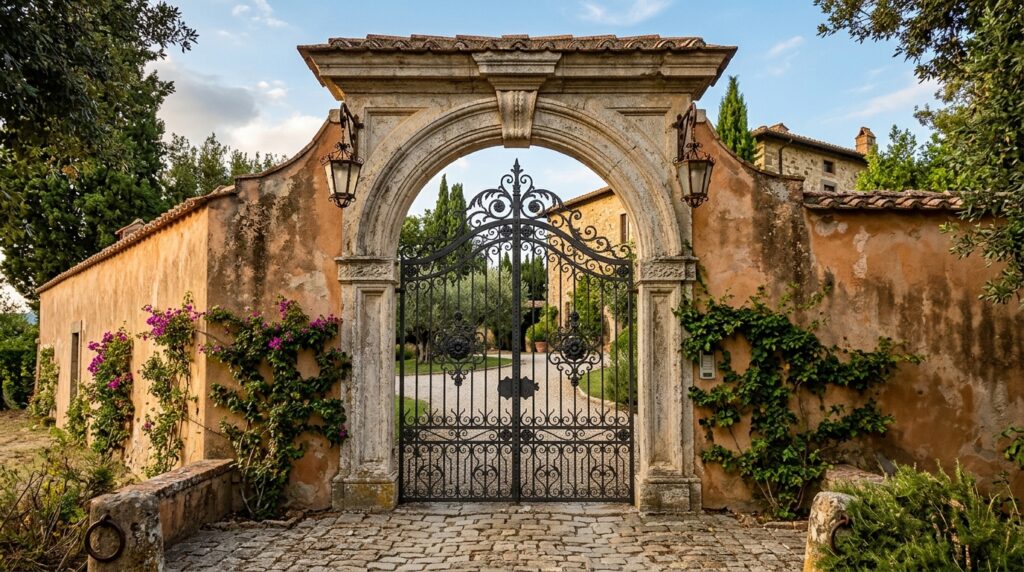
- My Opinion: In my opinion, the aged ocre hue offers a deep, historical richness that new paint often lacks. Combining it with the intricate, dark lines of wrought iron creates an immediate sense of arrival and established security.
- What I would add here: A final coat of clear, penetrating silane-siloxane sealer ensures the “aged” stucco patina is preserved while providing excellent waterproofing and resistance to staining.
Idea #6 Multi-Level Stucco with Cascading Planters
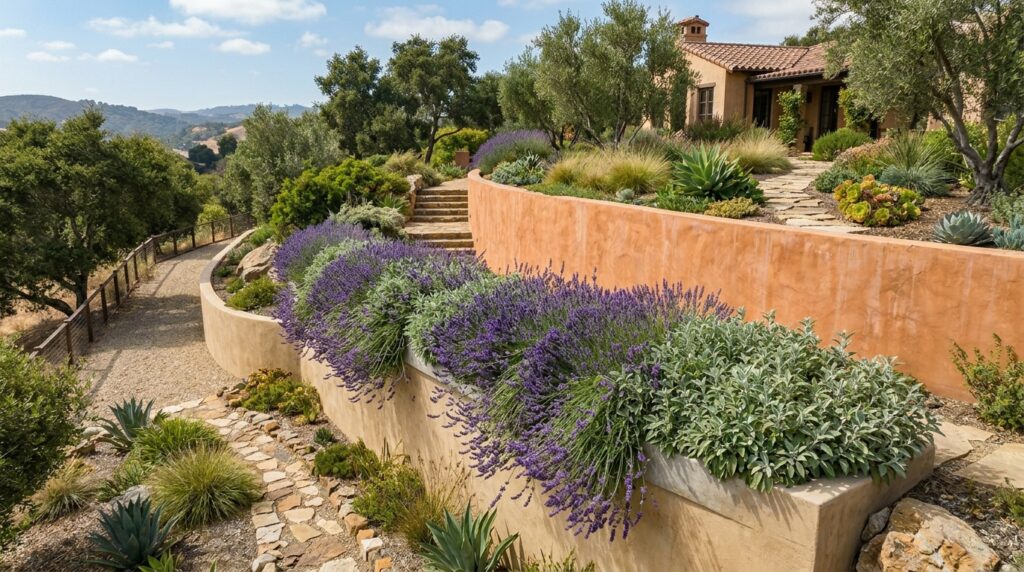
- From my perspective: The multi-tonal approach (sand and dusty orange) emphasizes the varied depths, breaking up the monolithic appearance of traditional retaining walls. This is highly effective for large, sloping acreage.
- What I would add here: Robust weep holes and a hidden gravel drainage matrix behind the stucco walls are critical for releasing hydrostatic pressure and preventing mineral staining on the finished surface.
Dynamic Hardscape Integrations & Aquatic Murmurs
An elite boundary wall should engage multiple senses. Integrating flowing water and deep architectural plant pockets transforms a standard stucco perimeter into a luxury backyard oasis.
http://googleusercontent.com/image_generation_content/313
Idea #7 Integrated Water Feature with Limestone Basins
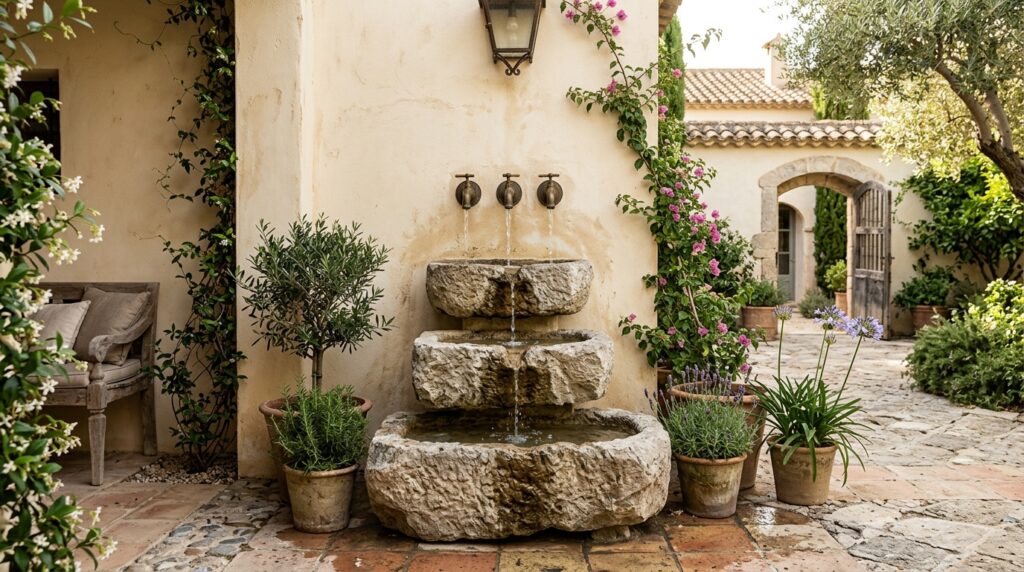
- In my opinion: Water features are crucial in arid Mediterranean design. The simple, elegant flow of brass spouts against the warm cream stucco provides necessary acoustic tranquility and a cooling visual center.
- What I would add here: Utilizing a waterproof crystalline masonry coating on the inside of the stucco basin structure prevents long-term moisture migration and unsightly white efflorescence.
Idea #8 Olive Green Stucco with Cypress Tree Sentinels
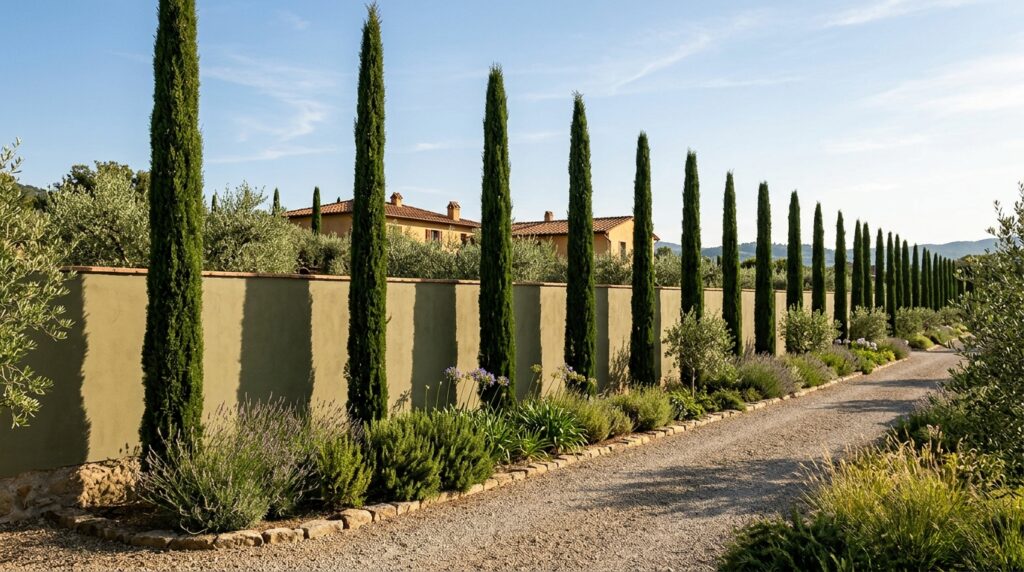
- Personally, I believe that: Olive green stucco is a fantastic choice that mirrors the natural foliage, making the wall feel embedded in the land rather than a severe barrier. The cypress sentinels provide excellent structural verticality.
- What I would add here: A hidden subsurface French drain system running parallel to the wall prevents rainwater from pooling around the base, extending the life of the stucco finish.
Low-Voltage Ambience & Monolithic Dimensions
An elite stucco boundary wall shouldn’t disappear when the sun goes down. Integrating smart low-voltage lighting paths turns the softly textured surface into a spectacular architectural canvas at night.
http://googleusercontent.com/image_generation_content/314
Idea #9 Deep Ocre Recesses with Integrated Night Lighting
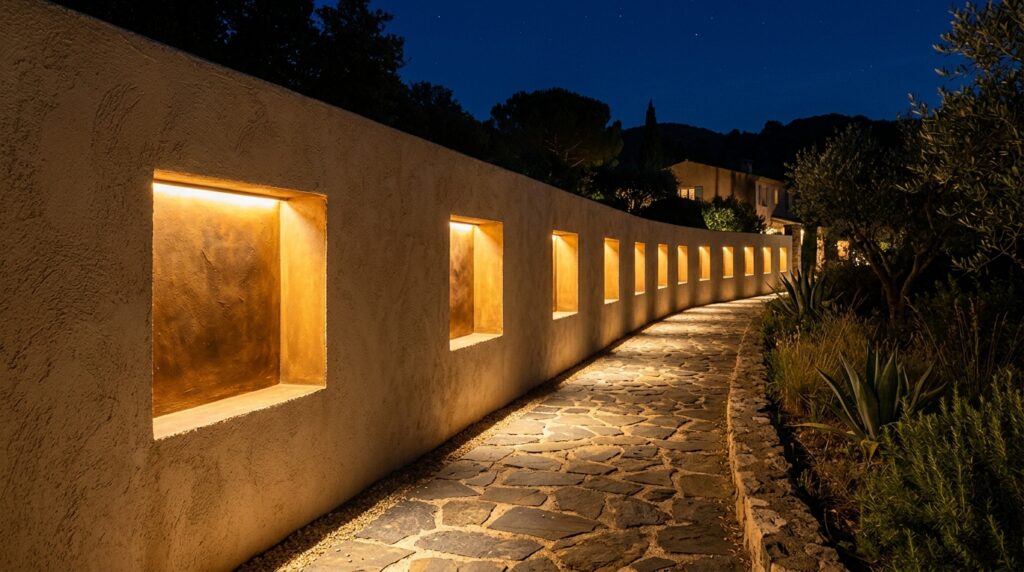
- In my experience: This method solves the problem of illuminating paths without using ugly surface-mounted fixtures. The warm LED light catching the ocre stucco interior provides a beautiful, indirect glow that is highly sophisticated.
- What I would add here: A hidden internal conduit channel within the wall core must be installed during construction to manage all low-voltage electrical wiring, ensuring it is entirely invisible.
Idea #10 The Monolithic Sand-Ochre Compound Wall
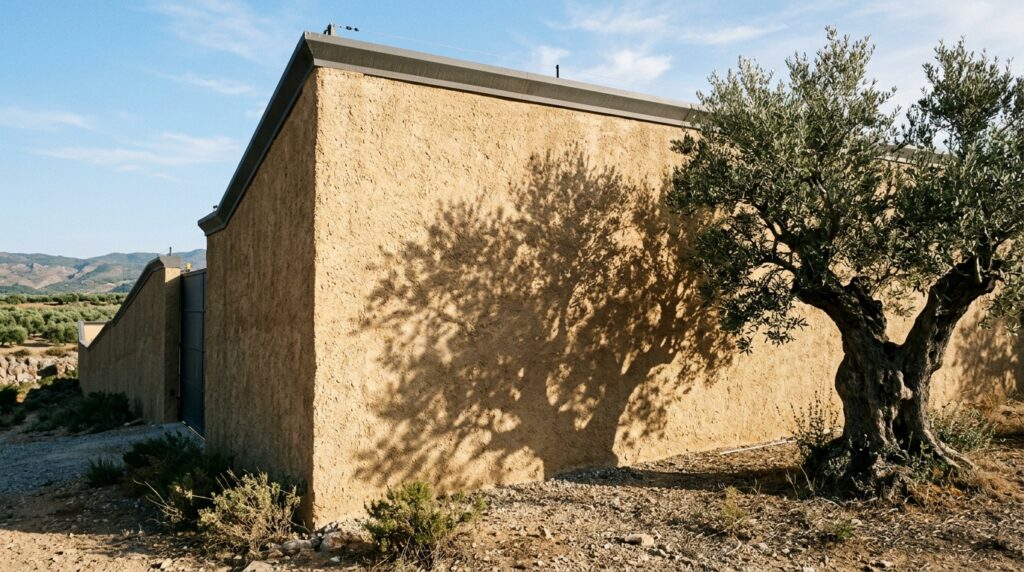
- My Opinion: For massive compound walls, I prefer this monolithic simplicity. The rough sand-ochre texture is durable and anchors the structure in the landscape, relying on the sheer scale and natural shadows to create visual interest.
- What I would add here: A continuous, invisible reinforced concrete bond beam must be integrated into the top course of the CMU wall structure to provide the necessary lateral strength for such a tall masonry expanse.