Are you dealing with a shallow, sloping, or tightly constrained front driveway where a traditional dual-swing gate would completely smash into your parked cars, ruin your manicured landscape beds, or struggle to clear a steep uphill grade? Wondering how to engineer a high-security automated boundary that slides smoothly sideways, vanishing entirely behind an existing perimeter wall? In this comprehensive smart hardscape guide, we will explore the mechanical engineering and visual design of Automatic Sliding Driveway Gates That Maximize Front Yard Space. We will break down heavy-duty rolling track foundations, hidden cantilever balancing counterweights, high-torque commercial brush motors, and discrete multi-material facades to turn a tight urban arrival zone into a fluid, space-saving architectural masterpiece.
Space-Optimizing Track Configurations & Geometry Systems
The specific mechanical way your automatic gate slides dictates exactly how much physical yard clearance you reclaim. Choosing the right tracking geometry ensures your vehicles have maximum parking room right up to the boundary line.
Idea #1 The Cantilever Floating Sliding Gate Matrix
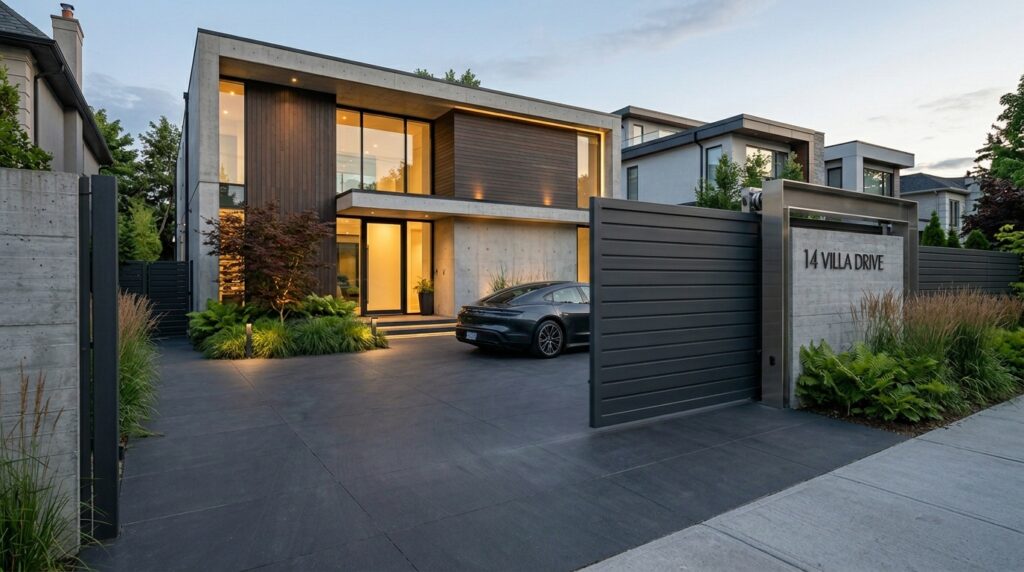
- My Opinion: Personally, I consider the cantilever sliding system to be the absolute pinnacle of high-end driveway engineering. Because it floats completely clear of the driveway floor, you never have to deal with an ugly, dirt-catching ground track that collects leaves, ice, or gravel, ensuring 100% silent and frictionless operation across tight spaces.
- What I would add here: A weighted internal steel counterbalance tail extension hidden neatly inside a dedicated evergreen privacy hedge pocket alongside your property wall line.
Idea #2 Dual-Leaf Bi-Parting Telescopic Sliding Screens
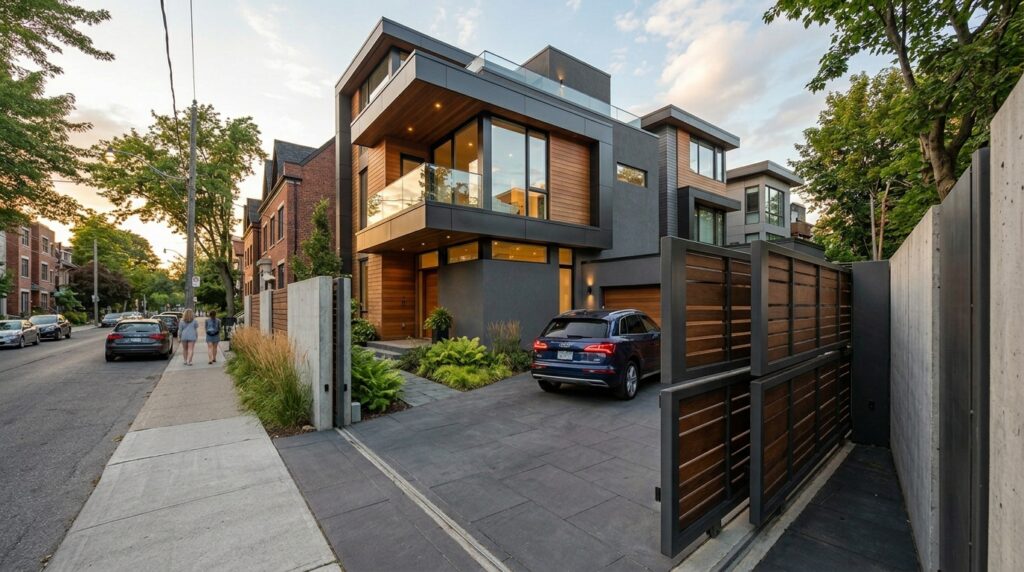
- From my perspective: If your property line doesn’t have enough horizontal lateral run to slide a single massive 16-foot gate panel out of the way, a telescopic multi-leaf configuration is your ultimate lifesaver. By splitting the gate into interlocking leaves that stack over each other, you reduce the required side-yard storage footprint by up to 50 percent.
- What I would add here: High-speed continuous cable-driven synchronization loops inside the bottom tracking rails to ensure both panels arrive at their terminal open and close points completely simultaneously.
Idea #3 Segmented Articulated Corner-Turning Track Sliders
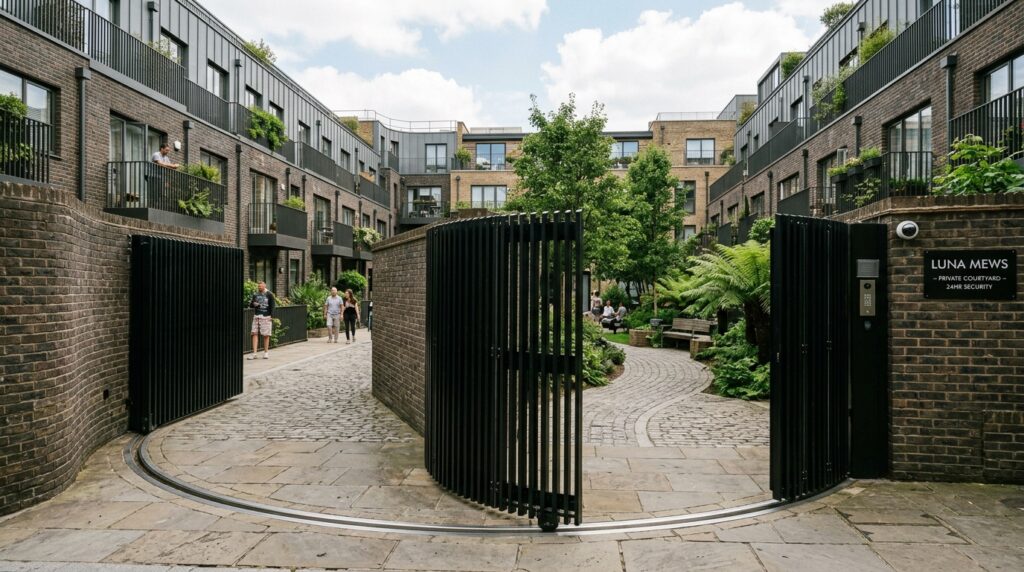
- In my experience: When you have absolutely zero linear lateral space to the left or right of your driveway opening, a standard slider won’t work. An articulated “around-the-corner” segmented gate breaks the rules by folding slightly as it travels, taking a 90-degree turn to park flat along your side fence line, maximizing every single inch of your front courtyard parking pad.
- What I would add here: Machining continuous, self-cleaning debris sweep brushes straight onto the bottom edge of every leading articulated wheel carriage to keep the curved path clear of small stones.
Subsurface Civil Engineering & Heavy-Duty Structural Foundations
Because automatic sliding gates concentrate massive lateral weights and mechanical vibrations onto a single linear path, a bulletproof underground foundation layout is critical to prevent tracking sag, track warping, or motor stall over time.
Idea #4 Continuous Monolithic Reinforced Concrete Track Grade Beams
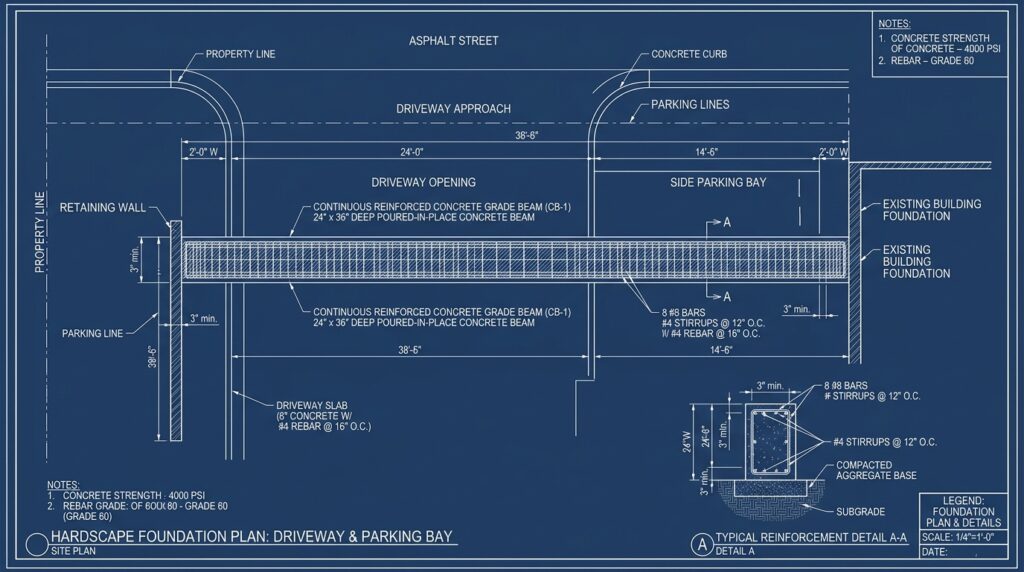
- My Opinion: In my opinion, attempting to anchor a sliding gate track onto standard thin driveway asphalt or disconnected concrete pads is a complete waste of money. Ground shifting from winter frost or heavy vehicle loads will bend the track, instantly burning out your motor; a continuous monolithic grade beam ensures the entire tracking path remains permanently laser-straight for life.
- What I would add here: Dropping a thick 6-inch bed of highly compacted crushed drainage road-base gravel directly beneath the concrete footing to provide groundwater an immediate escape path away from the steel track.
Idea #5 Flush-Mounted V-Groove Inverted Ground Tracks with Integrated Drainage Weeps
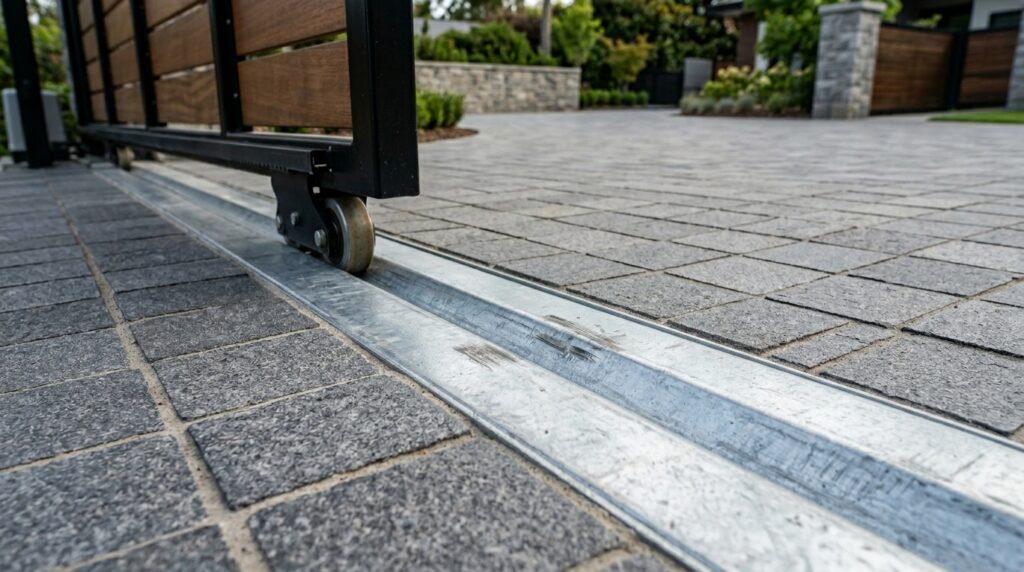
- From my perspective: Traditional raised rolling tracks create a jarring bump every time you drive your car into the garage, while posing a major tripping hazard for guests walking in heels. Utilizing a flush-mounted, inverted V-groove track sunk straight into the concrete grade beam provides a perfectly flat, seamless transition line that looks incredibly high-end.
- What I would add here: Core-drilling small 0.5-inch drainage weep holes every 24 inches along the lowest point of the track channel, connecting directly down into an underlying gravel sub-drain bed to prevent rainwater or mud from pooling inside the line.
Idea #6 Heavy-Gauge Structural Steel Cantilever Support Pillars
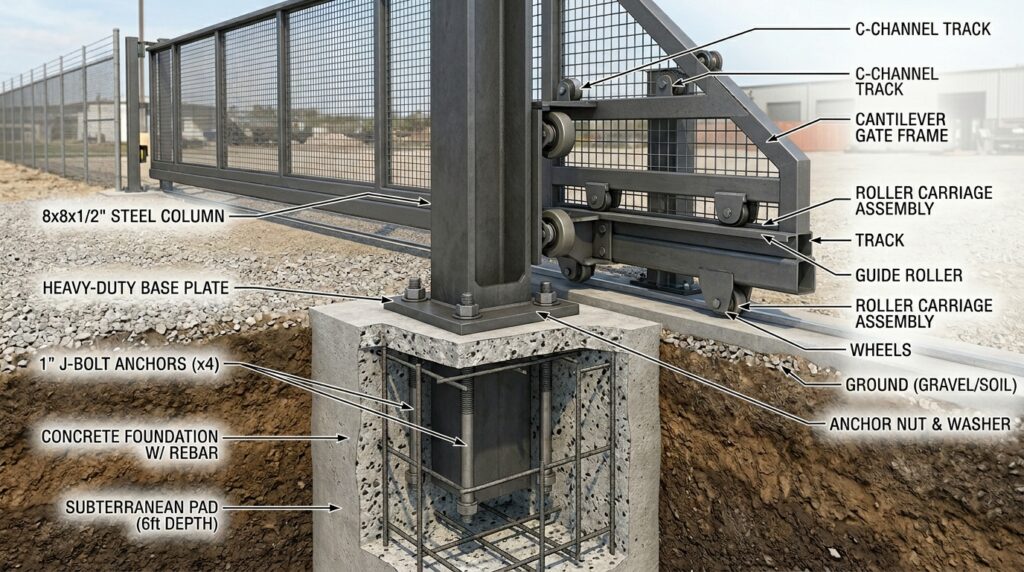
- Personally, I find that: For a floating cantilever system, the gate post takes massive rotational torque loads when the gate is fully extended. Utilizing heavy-gauge structural steel columns eliminates any micro-flexing or pillar bending, keeping your electronic security safety sensors perfectly aligned over years of constant operation.
- What I would add here: Wrapping the structural steel core pillar inside a beautiful, custom hand-laid architectural stone veneer casing to cleanly hide the industrial hardware while matching your home’s luxury exterior palette.
Smart Drive Automation, Safety Matrices & Security Loops
A premium automated driveway gate must perform with absolute safety and lightning-fast speed. Integrating hidden commercial-grade smart motors and multi-point infrared sensor arrays protects your luxury vehicles from accidental impact.
Idea #7 High-Torque 24V DC Brushless Variable-Speed Gear Motors
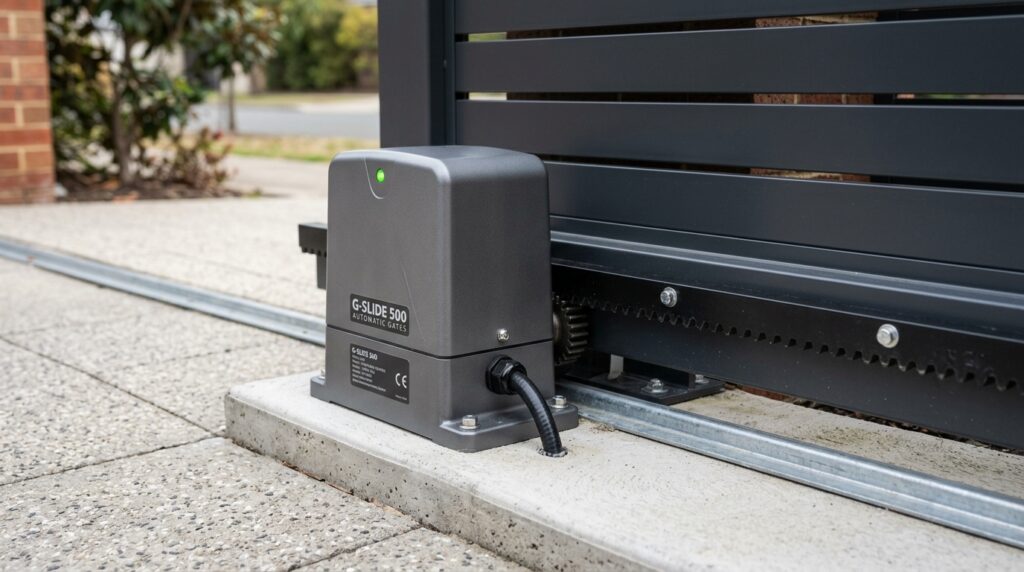
- In my experience: Traditional alternating current (AC) gate motors are loud, start with a violent jerk, and lack sensitive anti-crush detection. Shifting to an intelligent 24-volt DC brushless variable-speed motor delivers an exceptionally quiet operation that gently slows down right before reaching the stop clips, dramatically reducing structural wear and tear on your gate frame.
- What I would add here: An integrated dual-battery backup power kit housed safely inside the weatherproof motor enclosure, ensuring your security perimeter remains fully operational even during a sudden neighborhood power blackout.
Idea #8 Dual-Height Safety Photoelectric Infrared Beam Arrays
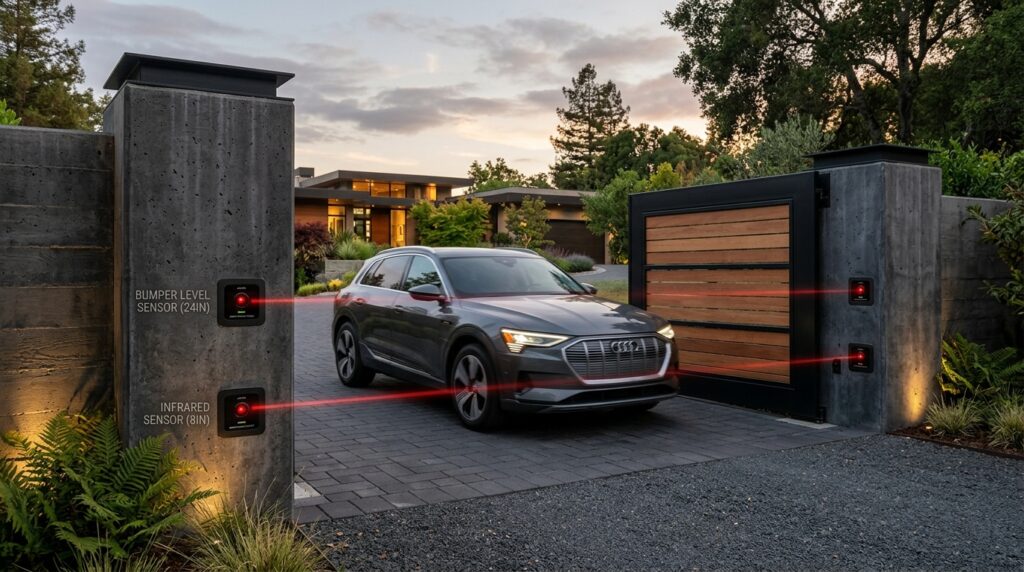
- My Opinion: In my opinion, installing a single safety beam is a dangerous shortcut. A low-profile sensor might catch a car wheel but completely miss the high bed of a lifted pickup truck or a small pet trailing behind a guest; running dual-height safety beam arrays provides an impenetrable digital safety curtain that stops the gate instantly before any physical contact occurs.
- What I would add here: Incorporating flexible, rubberized safety edge profiling buffers along the primary vertical leading stile of the gate frame to act as a physical fail-safe pressure switch.
Low-Voltage Ambience & Integrated Night Lighting Networks
Your automated space-saving sliding gate should transform into a magnificent, welcoming architectural landmark after dark. Integrating hidden low-voltage lighting paths highlights your premium finishes while providing optimal security visibility.
Idea #9 Linear LED Edge Grazers Hidden Inside the Track Guide Channels
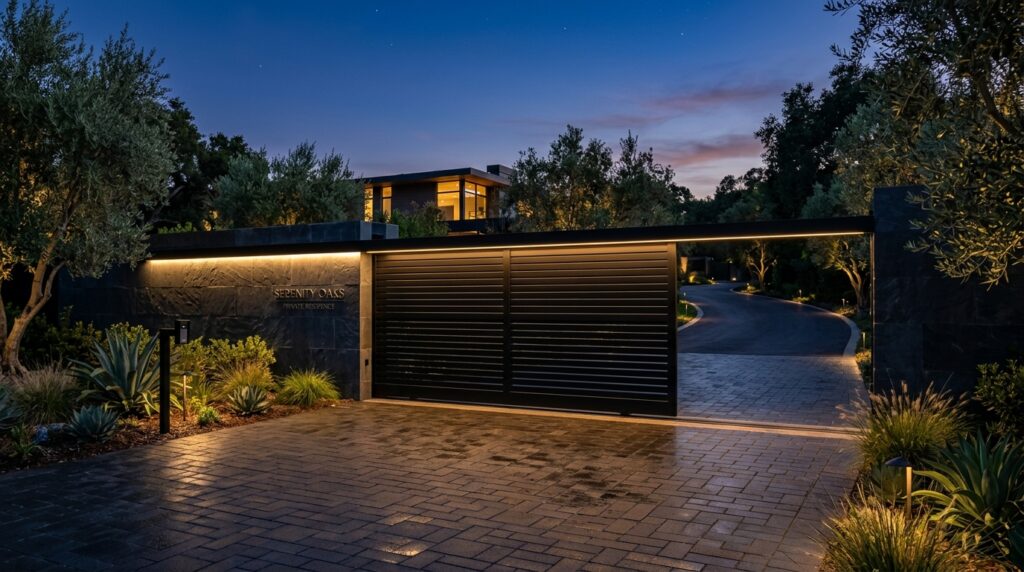
- In my opinion: High-angle downward grazing looks absolutely spectacular on clean modern gate textures like horizontal wood slats or laser-cut steel. The linear light highlights the subtle depth variations of the panel while providing plenty of ambient illumination across the driveway apron for arriving drivers.
- What I would add here: Utilizing a low-voltage 24-volt DC driver system rather than a standard 12-volt line to completely eliminate any annoying light dimming (voltage drop) across long property runs.
Idea #10 Low-Profile Recessed In-Ground Waypoint Marker Lights
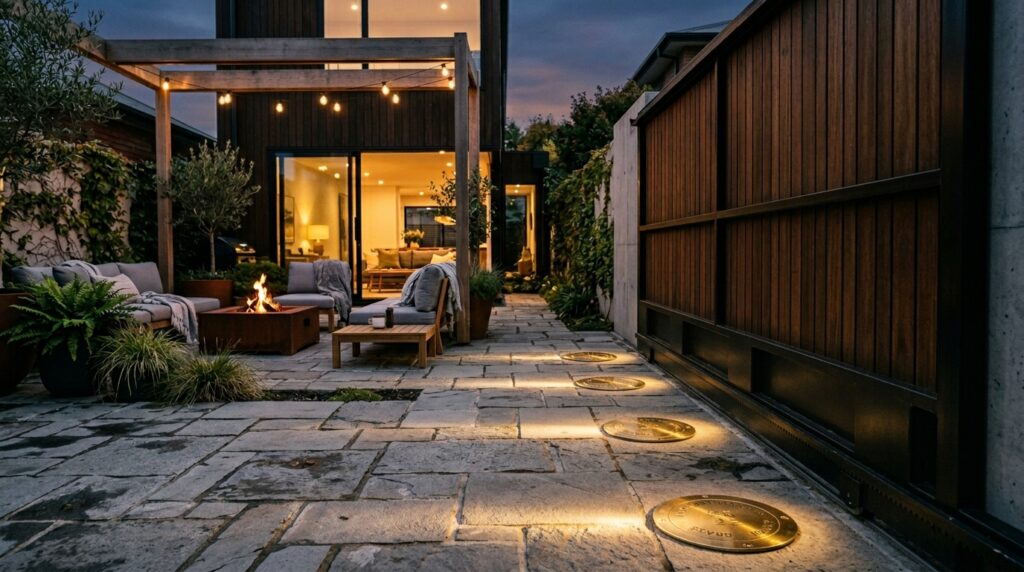
- From my perspective: Upward well lighting or waypoint disks along the gate path deliver an undeniably dramatic, resort-style ambiance that expands the perceived evening space of your entrance area. It clearly charts the gate’s mechanical travel zone for walking guests, combining high-end luxury with practical nighttime safety.
- What I would add here: Choosing frosted glass diffuser lenses with integrated glare shields to completely eliminate upward eye strain for drivers navigating into the garage bay.