Are you looking for a timeless, sprawling boundary solution that cleanly defines your massive acreage or country estate without blocking the breathtaking rolling views of your pastures? Wondering how to choose and install a traditional, rough-hewn timber fence that delivers rugged, old-growth charm while completely minimizing long-term maintenance costs? In this master rural landscaping guide, we will explore the structural engineering and styling dynamics of Split-Rail Rustic Timber Fencing for Wide Country Estate Borders. We will break down how heavy-duty post-and-rail mortise joinery, proper subgrade drainage basements, and smart chemical barriers work together to create an iconic, ranch-style perimeter built to endure decades of harsh seasonal exposure.
Hand-Hewn Geometries & Traditional Boundary Layouts
The physical profile and wood species of your rustic rails dictate the overall architectural character of your estate. Traditional split-rail designs rely on thick, irregular timber textures that mimic the natural contours of the countryside.
Idea #1 The Traditional 3-Rail Western Red Cedar Mortised Perimeter
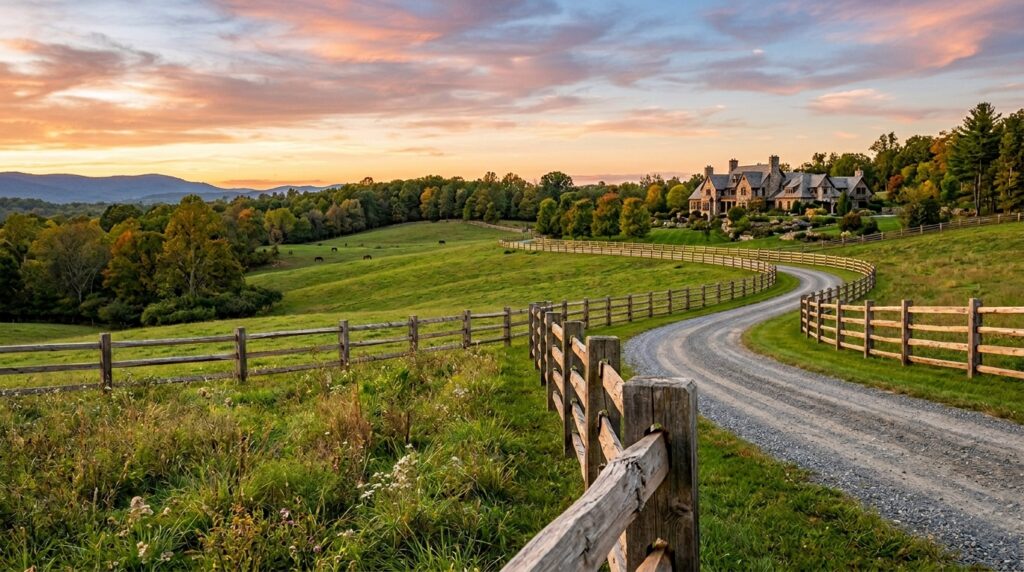
- My Opinion: Personally, I believe Western Red Cedar is the golden standard for wide country perimeters. Its natural oils and tannins offer incredible built-in resistance to rot and wood-boring insects, while its fibrous, rough-split texture naturally silver-greys over time, blending perfectly into rural mountain or meadow backdrops.
- What I would add here: A 1-inch manual over-travel allowance inside the post mortise slots during assembly, giving the long cedar rails plenty of room to expand and shift naturally during freezing winter storms without cracking the posts.
Idea #2 The Stacked-Snake Virginia Rail Zig-Zag Fence
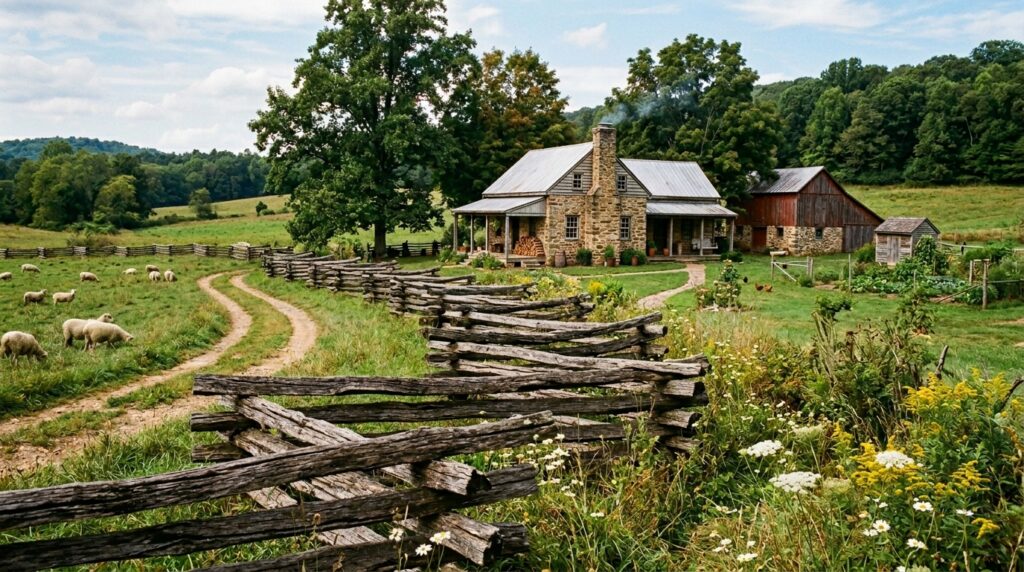
- From my perspective: If your country property sits on incredibly rocky, hard-packed limestone terrain where digging deep post holes is a nightmare, the historical stacked-snake layout is an absolute lifesaver. Because the fence relies entirely on its interlocking triangular weight footprint, it remains highly stable against high winds with zero digging required.
- What I would add here: Flat, thick natural flagstone pads placed directly underneath each interlocking timber ground junction to isolate the base logs from direct, wet soil contact, doubling their operational lifespan.
Idea #3 Heavy-Duty Rough-Sawn Black Locust 4-Rail Stockades
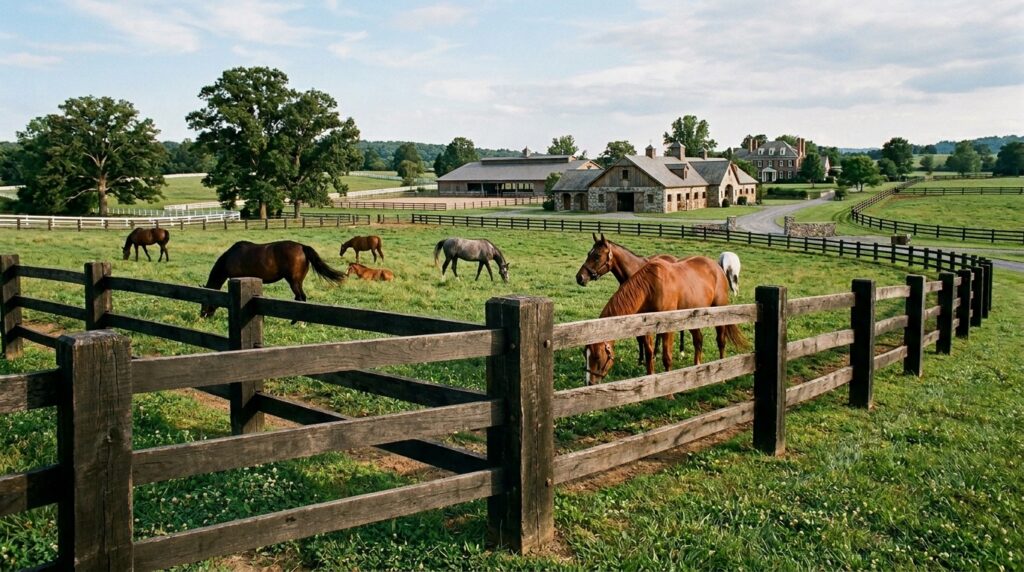
- In my experience: For properties containing livestock or large horses, standard lightweight cedar rails can buckle or break under pressure. Shifting to Black Locust provides an practically bulletproof solution—it is one of the hardest, most rot-resistant hardwoods in North America, delivering incredible structural shear strength that can stop a bolting animal without splintering.
- What I would add here: Chamfering (beveling) the sharp upper corners of every horizontal rail to prevent horses from cribbing or getting scratched if they rub against the fence line.
Structural Stability & Ground-Line Decay Engineering
Because rural fences span massive distances over untamed soil, the subgrade infrastructure handles incredible moisture loads. Implementing heavy-duty foundations prevents your long boundaries from sagging or leaning after wet spring thaws.
Idea #4 Pressure-Treated Southern Yellow Pine Ground-Contact Post Sleeves
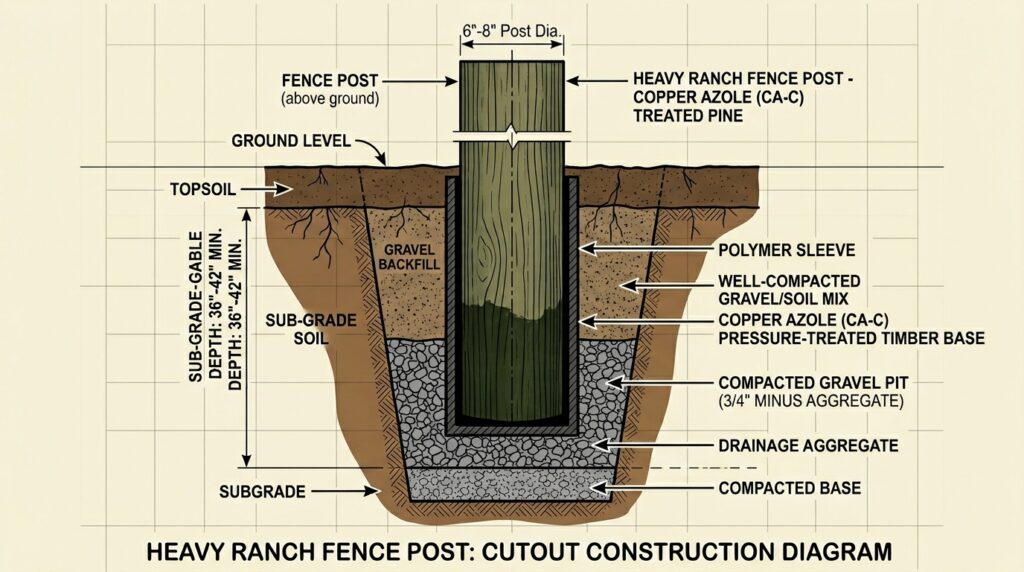
- My Opinion: In my opinion, the absolute number-one killer of split-rail fencing is ground-line rot wicking moisture straight into the heartwood at the exact point where soil meets air. Encasing your subgrade post bases in protective polymer sleeves completely isolates the wood fibers from soil bacteria, keeping your posts rock-solid for decades.
- What I would add here: Backfilling the post holes exclusively with tightly tamped crushed angular stone chips rather than raw dirt or wet concrete, allowing heavy rainwater to drain away from the timber instantly.
Idea #5 Monolithic Driveway Gate Anchors with Embedded Steel C-Channels
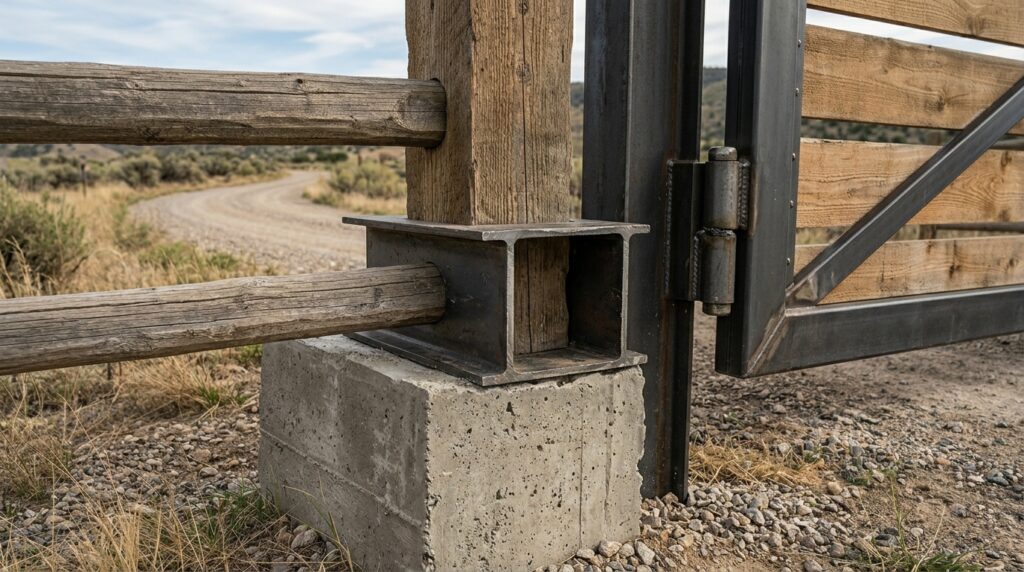
- From my perspective: The ending terminal posts of a split-rail fence take massive lateral tension, especially when swinging heavy wooden estate gates. Bolting your end timbers to an internal structural steel anchor prevents the gate line from sagging out of alignment over years of daily usage.
- What I would add here: Installing heavy-duty, grease-packed adjustable J-bolt hinges onto the steel core to allow manual leveling micro-adjustments as the driveway ground naturally settles over the seasons.
Idea #6 Subsurface Swale Drainage Wraps for Low-Lying Acreage
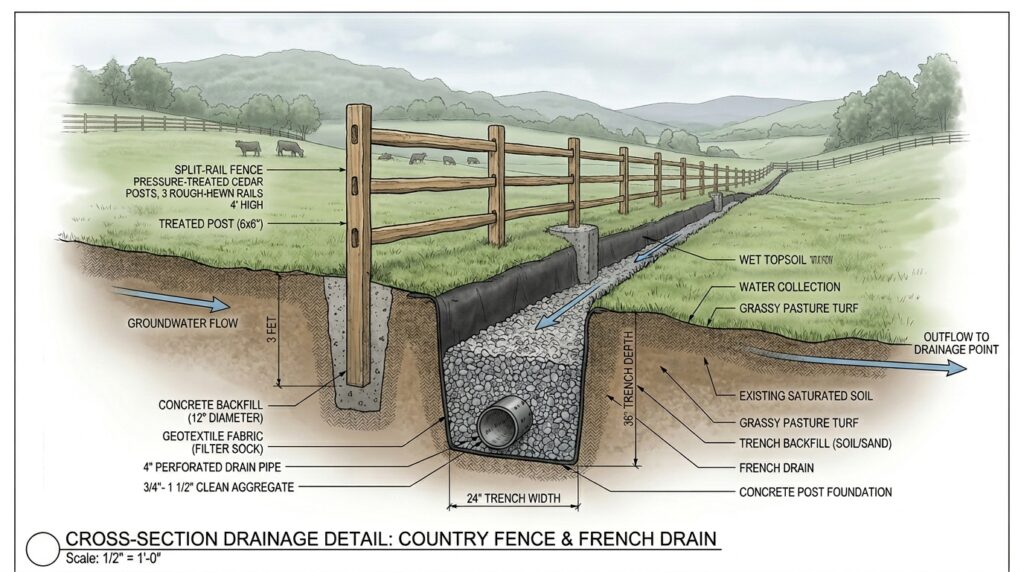
- Personally, I find that: Fences crossing low-lying valley zones often sit in standing water for weeks after heavy rain, rotting out timbers prematurely. Running a hidden subsurface drainage swale directly beneath the post line funnels valley water away, guaranteeing your low-lying boundary stays bone-dry.
- What I would add here: A 4-inch perforated PVC drain pipe nestled inside the gravel trench to speed up water relocation toward your estate’s primary drainage ponds or creeks.
Security Integration & Livestock Barrier Matrices
Traditional split-rail fencing features large horizontal gaps that cannot safely contain small pets or exclude wild predators. Integrating discrete wire systems solves this issue without compromising the classic rustic aesthetic.
Idea #7 Hidden Black Vinyl-Coated Welded Wire Mesh Underlays
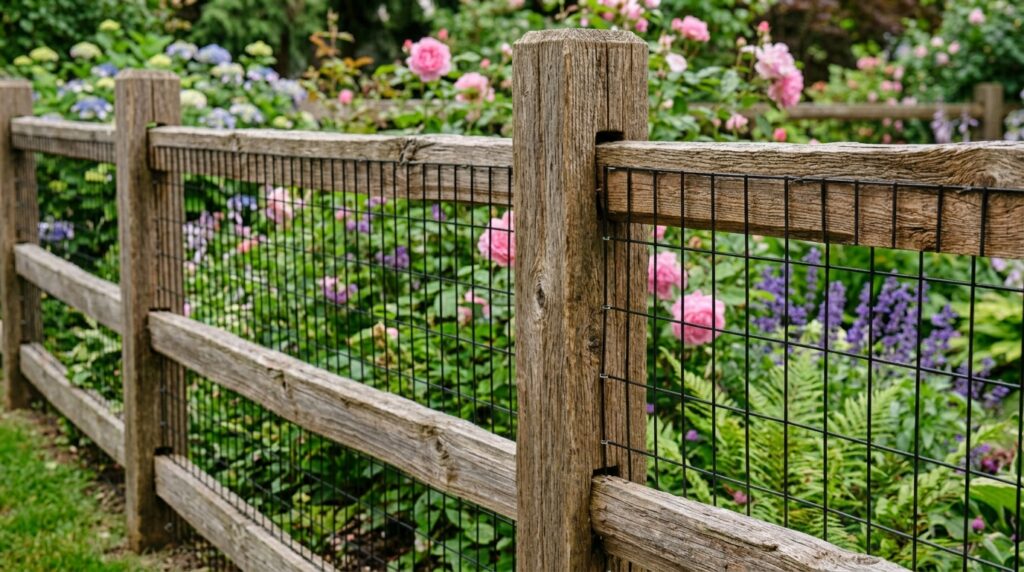
- In my experience: Slapping cheap, silver hexagonal chicken wire across a premium timber fence instantly ruins its luxury country appeal. Utilizing a high-tensile, matte-black vinyl-coated mesh completely preserves your view—the black wire vanishes entirely into the background shadows while safely keeping your dogs in and coyotes out.
- What I would add here: Anchoring the wire mesh to the inside face of the cedar timbers using non-corrosive, hot-dipped galvanized fencing staples spaced every 8 inches along the rails to prevent any sagging.
Idea #8 Low-Profile High-Tensile Electric Top-Rail Hot Wires
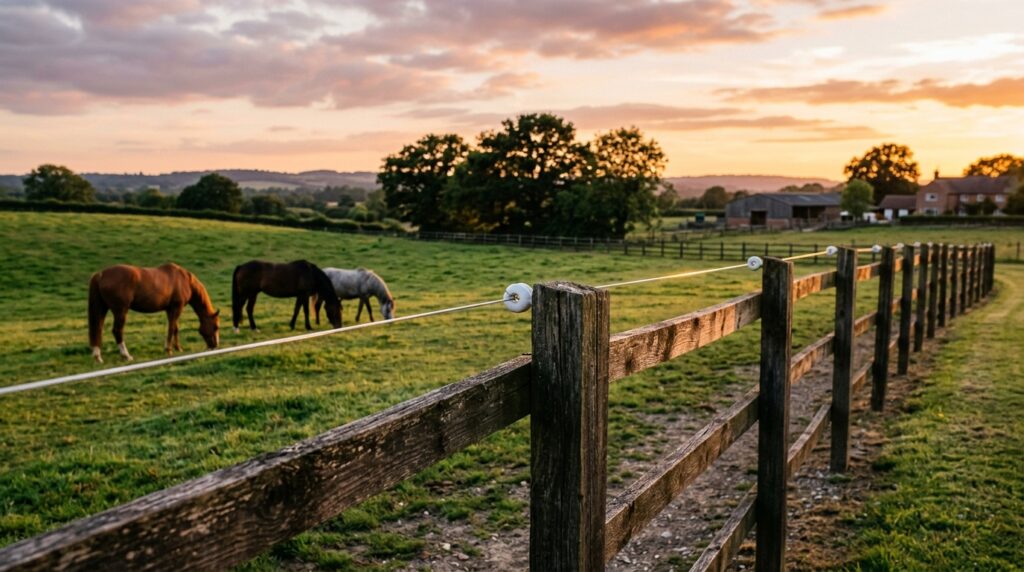
- In my opinion: If you are keeping large livestock, animals love to rub their heavy bodies against wood rails to scratch themselves, which eventually loosens post mortises over time. Running a low-profile, solar-powered electric hot wire along the top rail teaches livestock to respect the perimeter boundary, preserving your woodwork indefinitely.
- What I would add here: Connecting a high-efficiency solar-powered fence energizer unit with dual lightning-protection diverters to keep the security grid fully self-sufficient across massive, remote acreage lines.
Low-Voltage Ambience & Rural Night Lighting Networks
Sprawling country estate fences can feel dangerously dark and uninviting at night. Integrating low-profile solar or low-voltage lighting accentuates the organic wood textures while safely charting your driveway paths.
Idea #9 Flush-Mounted Copper Post-Cap Solar Downlanterns
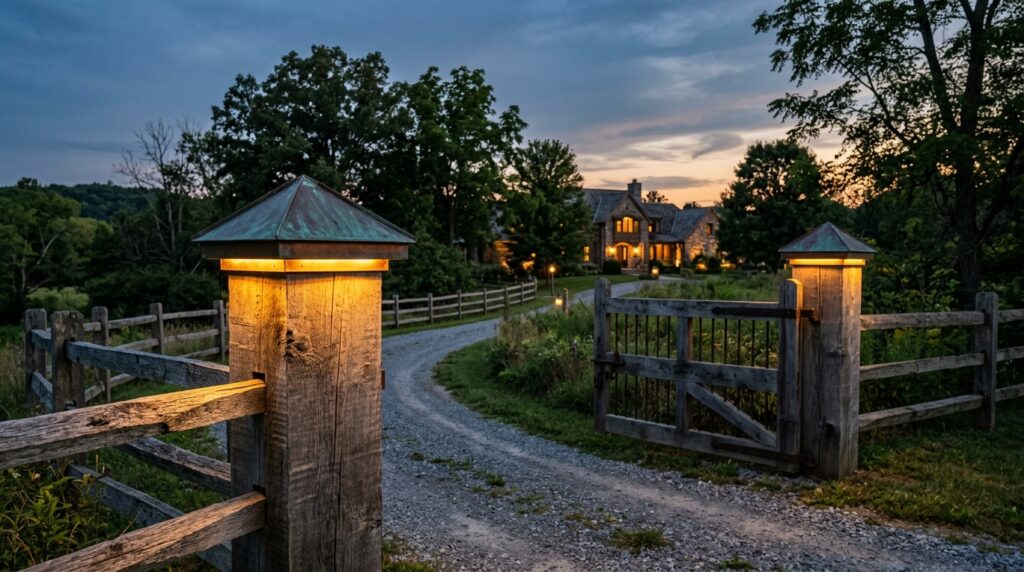
- My Opinion: In my opinion, high-glare floodlights completely ruin the peaceful, starry night ambiance of a country estate. Utilizing low-profile copper cap downlanterns provides just enough warm ambient path illumination to safely guide vehicles, while the real copper patinas beautifully over time alongside the rustic wood.
- What I would add here: Choosing an ultra-warm 2200K color temperature LED module to perfectly match the soft, cozy glow of traditional flame lanterns.
Idea #10 Low-Voltage In-Ground Well Spotlights for Old-Growth Feature Posts
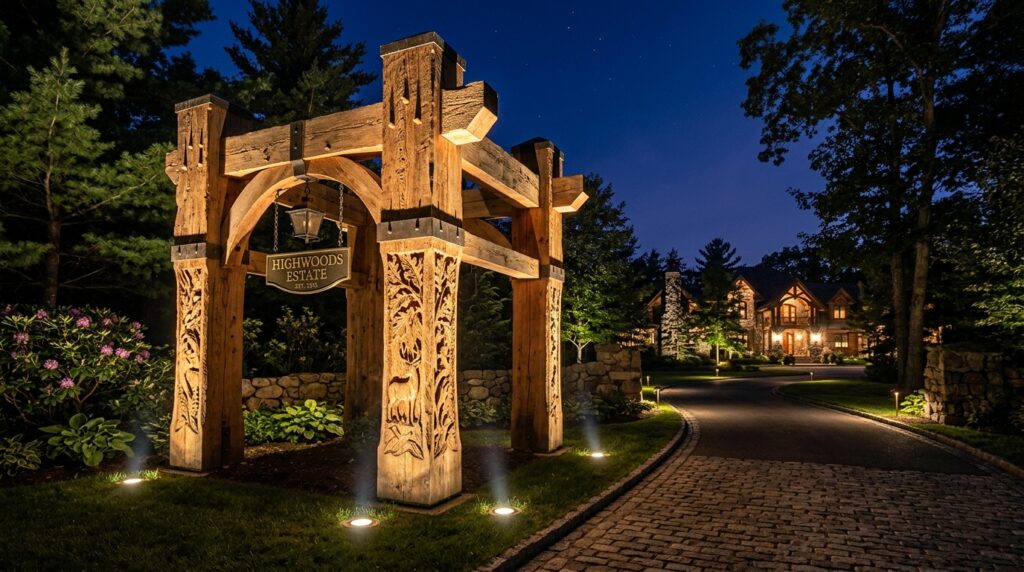
- From my perspective: Highlighting the key structural corner turns or main entrance nodes of your split-rail fence with upward well lighting adds an undeniable sense of high-end estate luxury after dark. It turns a simple boundary fence into a dramatic architectural landmark that welcomes arriving guests.
- What I would add here: Hexagonal honeycomb louver shields snapped directly over the spotlight lenses to completely eliminate side-glare for passing drivers, keeping the light strictly focused on the wood textures.