Are you trying to figure out how to illuminate a massive, mature specimen tree—like a grand multi-trunk oak, a weeping willow, or a stately maple—without creating a flat, blinding glare that washes out its natural structural beauty? Wondering how to position low-voltage landscape fixtures to capture both the intricate bark textures near the trunk and the delicate leaves dancing in the high canopy? In this professional landscape illumination guide, we will explore the visual impact of Low-Voltage LED Uplighting Layouts for Grand Specimen Trees. We will break down beam angles, luminaire placement matrices, and advanced lighting techniques that transform your estate’s crowning horticultural assets into breathtaking nocturnal sculptures.
Multi-Directional Formations & Structural Depth
Grand specimen trees possess complex, three-dimensional structures that cannot be properly illuminated by a single light source. Utilizing multi-directional layouts adds rich visual depth and prevents flat, unnatural shadows.
Idea #1 The Triangulated Canopy Cross-Fire Matrix
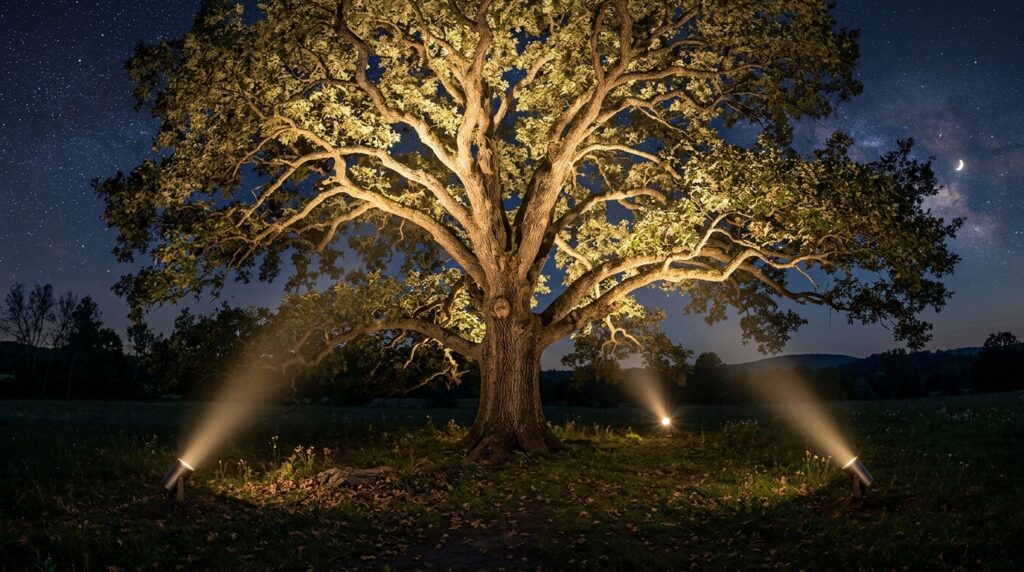
- My Opinion: Personally, I believe the triangulated cross-fire layout is the gold standard for large, mature trees. By placing three light sources around the tree, you completely eliminate dark blind spots, ensuring that no matter which angle your guests view the tree from on the patio or driveway, it looks balanced, volumetric, and majestic.
- What I would add here: Utilizing fixtures with deeply recessed LED chips to completely conceal the raw light source from view, ensuring guests only see the beautifully lit canopy and never the raw bulb glare.
Idea #2 The Internal Trunk-Hugging Canopy Burst
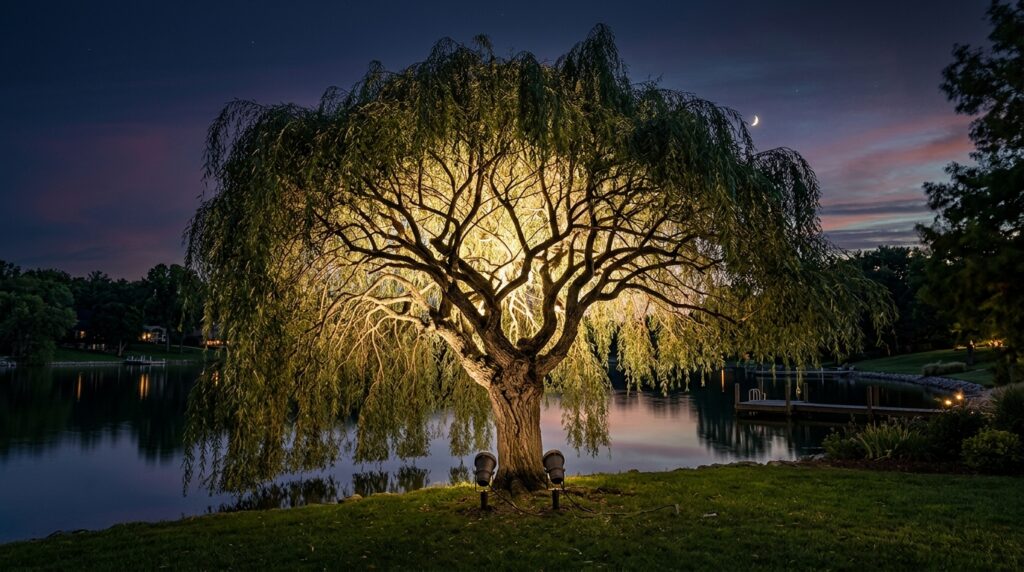
- My Opinion: From my perspective, an internal canopy burst layout creates an incredibly magical, organic lantern effect. It is especially effective for trees with dense, weeping foliage because lighting the inner trunk structure structure allows the light to filter gently through the outer leaves, creating a soft, romantic ambient glow.
- What I would add here: A highly durable, flexible rubberized tree strap loop to mount a fixture directly on a secondary low fork branch if ground-level roots block a clean upward vertical pathway.
Idea #3 Dual-Flanking Wide-Angle Grazing Layers
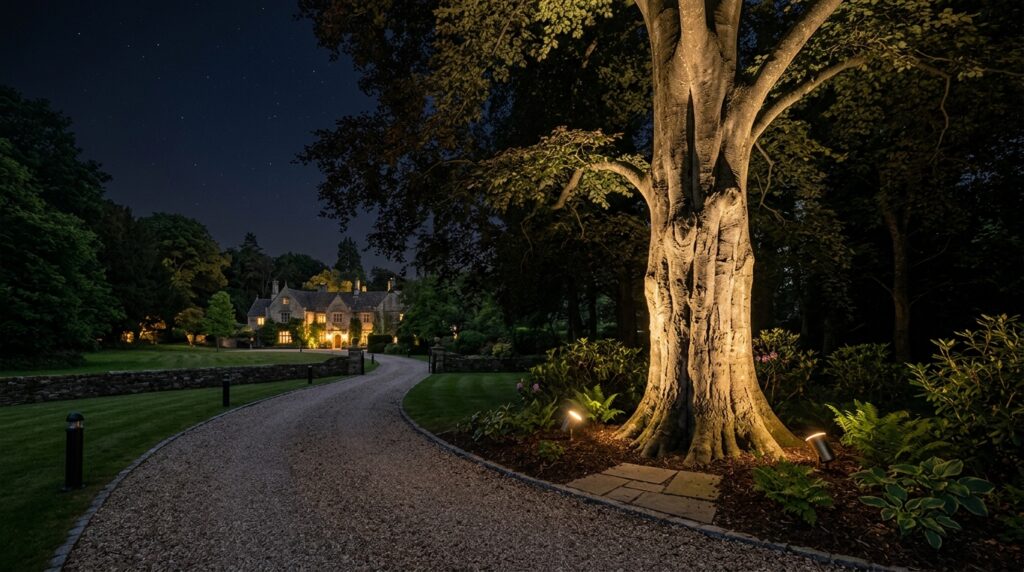
- My Opinion: In my experience, wide-angle grazing is an excellent trick for trees that have distinctive, highly textured bark. By keeping the fixtures relatively close to the trunk base and using a wide 60∘ beam spread, you highlight the deep ridges and physical character of the wood skin, making the trunk look like a powerful architectural column.
- What I would add here: A premium, variable-beam-angle fixture that allows you to manually adjust the light spread from a tight 15∘ spot to a wide 60∘ flood as the tree grows over the years.
Specialized Beam Optics & Scaling the Canopy
Matching the correct light beam angle and wattage to your tree’s specific height and canopy shape is critical to ensuring light reaches the highest branches without wasting energy or causing light pollution.
Idea #4 Tight-Angle Pinpoint Spotlighting for Ultra-Tall Canopies
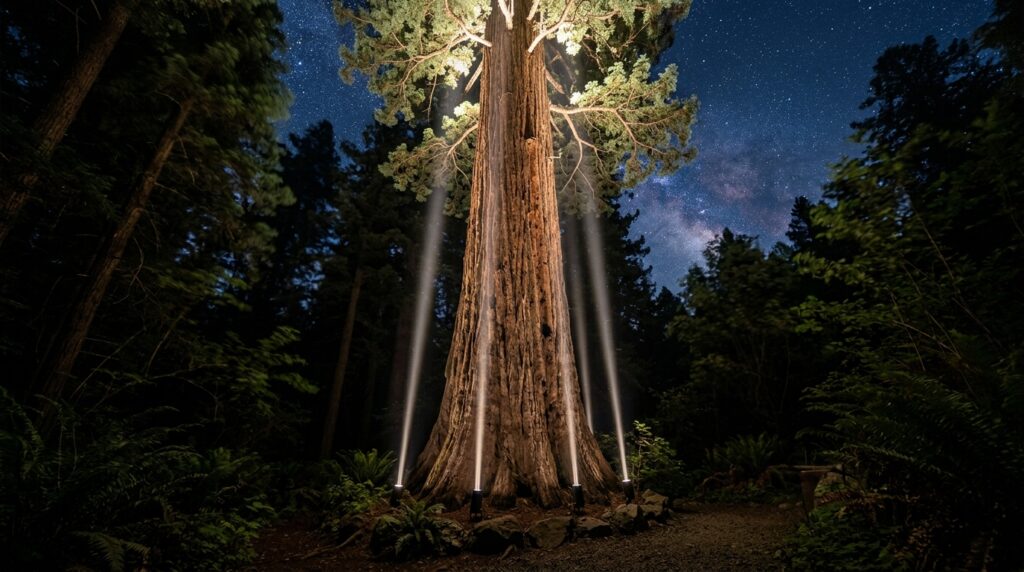
- My Opinion: In my opinion, attempting to light a very tall tree with standard hardware results in light dissolving into nothingness before it reaches the top. You absolutely must use tight, specialized 15∘ optics to concentrate the light energy into a tight beam that punches through the lower shadows to wake up the highest leaves.
- What I would add here: High-output 12-watt to 15-watt LED modules paired with a crisp 3000K temperature color to give the high foliage a clean, energetic daytime appearance.
Idea #5 Asymmetric Elliptical Uniform Canopy Washes
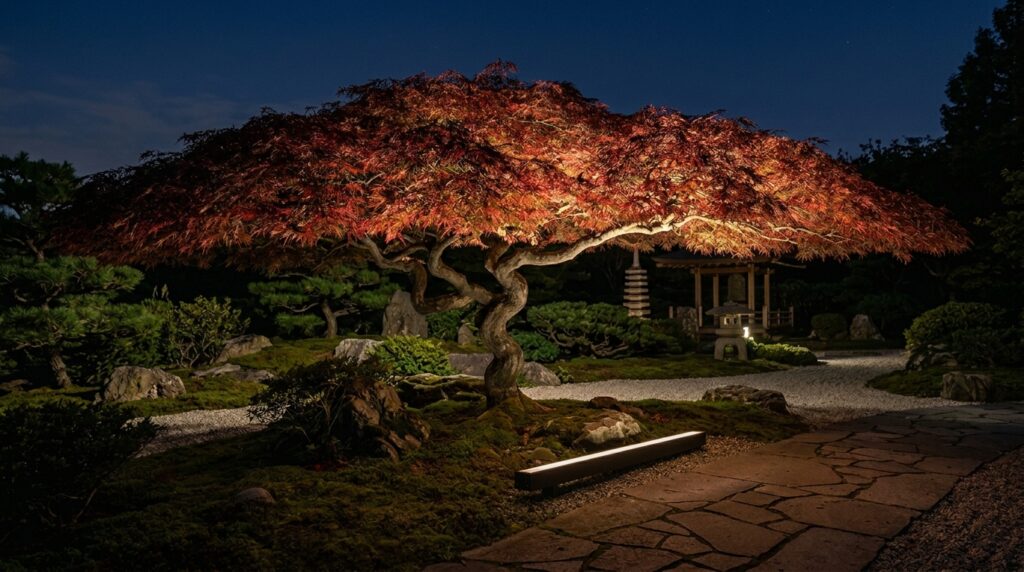
- My Opinion: Personally, I find that horizontally spreading specimen trees look terrible when hit by circular spotlights, which create harsh, uneven hot spots. Utilizing specialized linear or elliptical lenses spreads the light smoothly across the entire horizontal branch plane, respecting the natural architectural form of the tree.
- What I would add here: An advanced frosted linear spread lens attachment snapped directly over the light housing to perfectly blend the light edges into the surrounding garden foliage.
Artistic Shadows & Secondary Canvas Techniques
Tree lighting doesn’t stop at the branches. Strategic placement can project the dramatic silhouettes of your specimen trees onto nearby architectural backdrops, doubling the visual value of your lighting system.
Idea #6 Frontal Mirror-Image Shadow Wall Projection
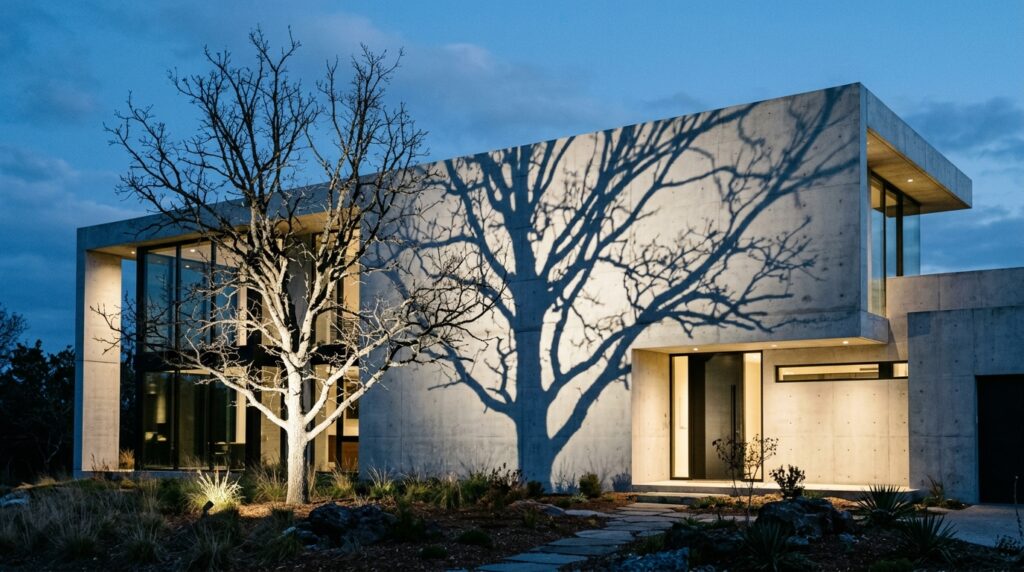
- My Opinion: From my perspective, wall shadow projection (or silhouetting) is one of the most underutilized luxury techniques in landscape lighting. It turns a plain house wall into a living, moving piece of art that changes dynamically every time a gentle evening breeze sways the tree branches.
- What I would add here: Positioning the fixture exactly level with the root flare and pulling it back several feet to maximize the crisp sharpness and scale of the projected shadow artwork.
Idea #7 Sunken Well Lights Flush with Manicured Turf
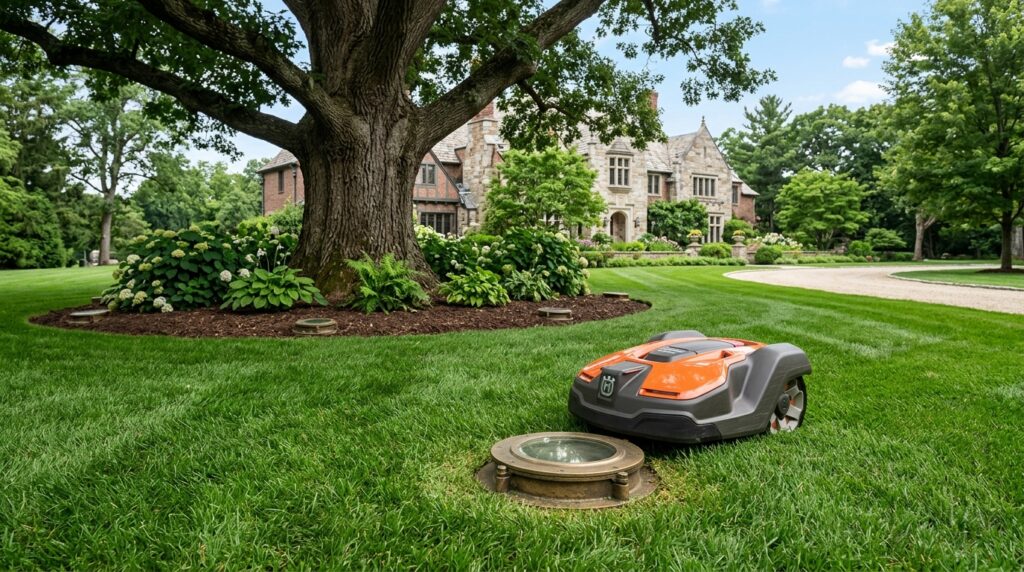
- My Opinion: In my opinion, if a specimen tree sits inside a high-visibility, finely manicured lawn zone, standard stake-mounted bullet lights look messy and interrupt clean sightlines. Flush-mounted in-ground well lights maintain a completely clean daytime landscape profile while delivering powerful upward nighttime illumination.
- What I would add here: A thick subsurface bed of coarse drainage pea gravel directly beneath each well light canister to instantly drain away heavy downpours and protect the internal electrical seals.
Low-Voltage Infrastructure & Intelligent Power Protection
An elite specimen tree lighting network requires a robust, heavy-duty electrical backbone paired with advanced smart-home automation to ensure maximum energy efficiency and effortless daily control.
Idea #8 Multi-Tap Low-Voltage Voltage-Drop Isolation Loops
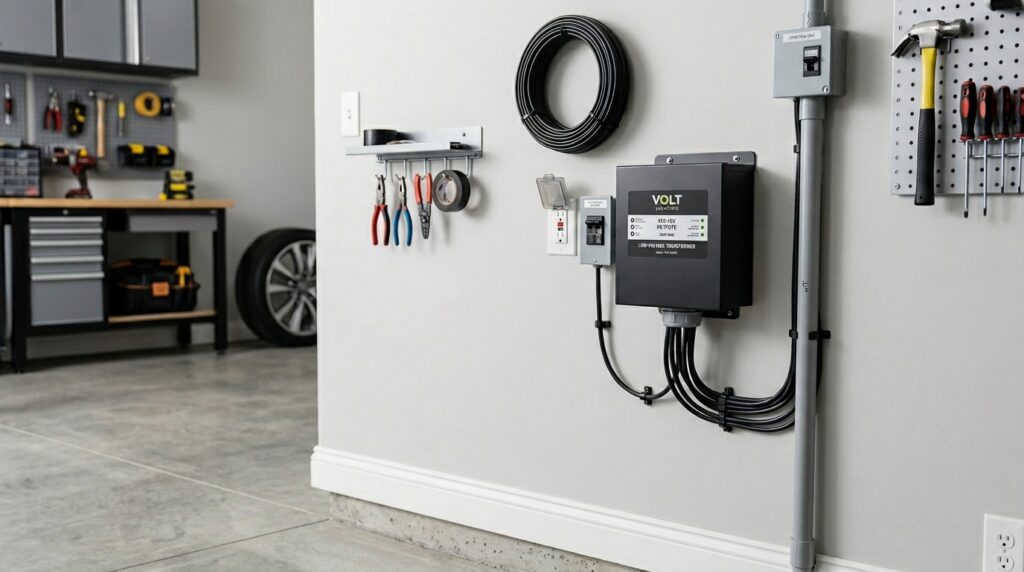
- My Opinion: In my experience, trying to run a massive 100-foot wire line out to a distant specimen tree on a standard 12-volt circuit causes severe voltage drop, leaving your lights looking dim and yellowish. Utilizing a high-end multi-tap transformer allows you to utilize 13-volt or 14-volt output terminals to perfectly offset resistance drop over long distances.
- What I would add here: Utilizing heavy-duty 10-gauge or 12-gauge direct-burial low-voltage wire lines to minimize internal copper resistance across long lawn runs.
Idea #9 Hex-Louver Glare Shield Matrix Screens

- My Opinion: From my perspective, nothing ruins a luxury backyard mood faster than walking onto a patio and looking directly down into a blinding, raw light bulb filament. Installing honeycomb hex-louvers cuts off side-spill glare entirely, ensuring that you only see the light’s effect on the tree leaves while keeping the light source completely invisible.
- What I would add here: A highly durable, marine-grade solid brass shroud casing that extends at least two inches past the lens to provide extra mechanical light-cutoff protection.
Idea #10 Smart App Dimming Loops for Seasonal Foliage Changes
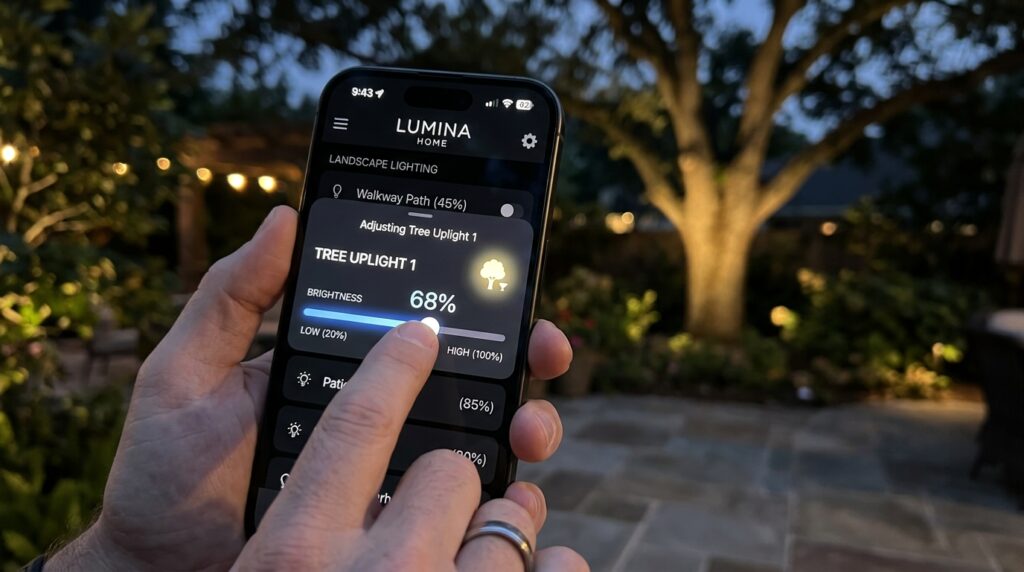
- My Opinion: Personally, I believe locking your tree lights at 100% full brightness all year long is a mistake. A tree that looks perfectly lit during lush summer months will look wildly over-bright and spooky in the dead of winter when its leaves fall; smart dimming allows you to adjust power output seasonally to match changing branch density.
- What I would add here: Pre-programmed software lighting macro buttons labeled “Summer Lush” (100% power) and “Winter Skeleton” (35% power) for instant, one-touch seasonal balance.
Idea #11 Photovoltaic Dawn-to-Dusk Smart Sensor Link
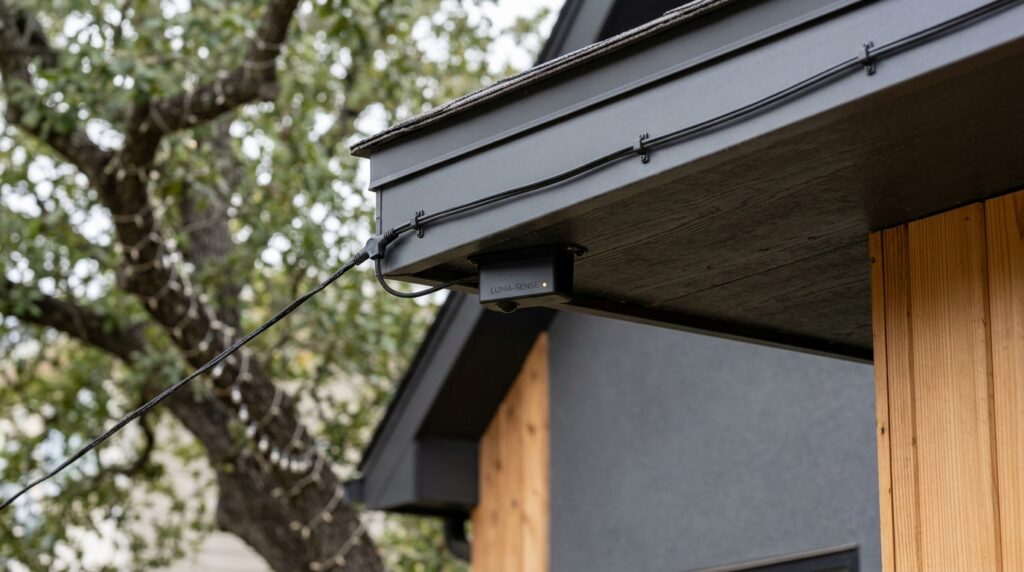
- My Opinion: From my perspective, a premium luxury home should operate completely effortlessly without any manual work. Integrating a high-precision dawn-to-dusk sensor means your grand specimen tree array calculates changing daily twilight hours automatically, activating the moment the sun dips below the horizon.
- What I would add here: A smart digital time-delay buffer circuit inside the sensor programming to prevent the tree lights from flashing off temporarily if they are struck by the bright headlights of an arriving vehicle.