Why hide your engineering masterpieces in a standard drywall garage when you can bury them inside a museum-grade subterranean fortress? For the elite collector, automotive storage is not about utility—it is about architectural drama, structural permanence, and raw material honesty. In this 2026 design masterclass, we dive deep into the earth to engineer 25 revolutionary subterranean carports. From hydraulic heavy-duty lift platforms to board-formed concrete retaining vaults and flush-mount linear laser tracks, these concepts treat your vehicles like pure kinetic art.
Hydraulic Lifts & Vanishing Ground Platforms
The ultimate entrance is one that is completely invisible. Utilizing heavy industrial hydraulics allows you to drop multi-ton vehicles beneath the earth, leaving your surface landscape clean, scannable, and entirely unobstructed.
Idea #1: Flush-Mount Hydraulic Stone-Clad Roof Lifts
Install a heavy-duty, dual-scissor hydraulic vehicle lift where the top roof platform is clad in the exact same large-format stone pavers as your main driveway, sitting 100% flush when lowered.

- My Perspective: Traditional garage doors ruin the clean, continuous lines of modern residential architecture. A vanishing stone-clad lift keeps your courtyard completely minimalist, transforming a simple parking routine into a dramatic structural performance.
- What I would add: A high-capacity, automated pneumatic perimeter rubber seal that expands the exact second the lift docks flush at ground level, making the ceiling 100% watertight against heavy rain storms.
Idea #2: Raw Board-Formed Concrete Ramp Bunkers
Design a deep subterranean driving ramp flanked on both sides by massive, single-cast retaining walls textured with rough-sawn pine timber board impressions.
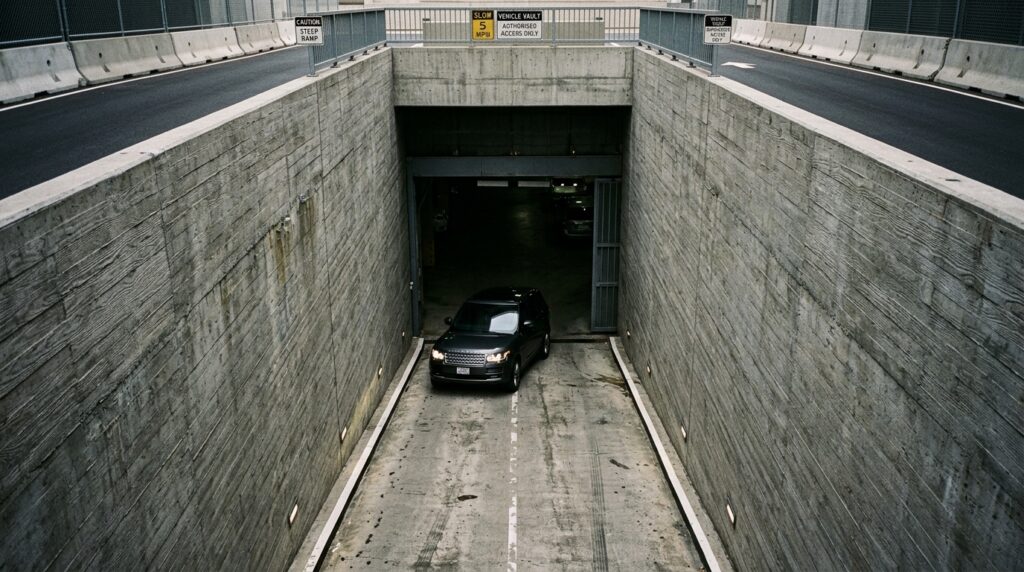
- My Perspective: Smooth plaster walls look fragile and require constant maintenance due to exhaust stains. Board-formed raw concrete embraces the heavy, tectonic nature of underground engineering, hiding tire scuffs easily while looking like a contemporary museum gallery.
- What I would add: Embedding high-intensity, low-glare warm LED spotlights directly into the base of the ramp walls, spacing them exactly 2 feet apart to form a crisp, geometric tracking light path down the slope.
Idea #3: Asymmetrical Tectonic Concrete Entrance Shields
Frame the open portal of your subterranean parking entrance with massive, vertically oriented raw concrete plates that overlap each other at staggered angles to block external wind shear.
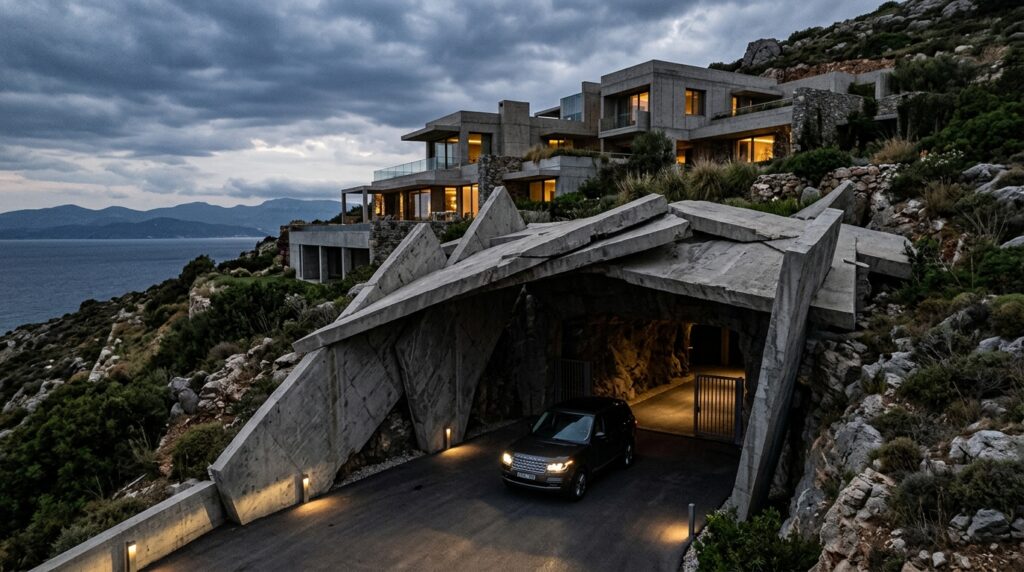
- My Perspective: Standard square garage openings look uninspired and commercial. Overlapping structural plates mimic natural tectonic rock formations, immediately announcing that your estate values heavy, secure, and unapologetic brutalist architecture.
- What I would add: Applying a premium hydrophobic crystalline penetrating sealer to the entire concrete shield surface to prevent water tracking and freeze-thaw surface cracking.
Once inside the vault, the spatial experience is defined by the honesty of the structural envelope. Eliminating unnecessary cladding allows the raw weight of the earth and concrete to take center stage.
Idea #4: Single-Pour Column-Free Post-Tensioned Vault Shells
Engineer a massive, open-concept underground showroom utilizing high-strength post-tensioned concrete ceiling slabs that span up to 60 feet without a single interior support column.

- My Perspective: Support columns restrict vehicle maneuverability and clutter your sightlines. A column-free post-tensioned shell maximizes your spatial flexibility, allowing your car collection to be viewed as a single, uninterrupted matrix of design.
- What I would add: A 2-inch wide recessed perimeter shadow gap along the ceiling joint to entirely hide the connection lines, making the massive concrete roof appear to float weightlessly over the walls.
Idea #5: Seamless Polished Graphite Micro-Cement Floors
Surface the entire underground vault floor footprint with a multi-layered, diamond-honed polished micro-cement mixed with deep graphite-black color pigments.

- My Perspective: Standard garage epoxy floor coatings look cheap and peel under hot tire compounds. Polished graphite micro-cement provides a seamless, industrial-grade floor matrix that handles immense weight while creating a striking, high-gloss reflection pool effect.
- What I would add: Incorporating a specialized lithium-silicate densifier during the final polishing stage to permanently lock the cement pores, making the floor 100% resistant to chemical oil drops or tire marking.
Idea #6: Chevron Pattern Large-Format Basalt Paver Tracks
Lay out the primary driving tire lanes inside your subterranean vault using extra-large format, textured black basalt stone slabs arranged in a tight herringbone or chevron layout.
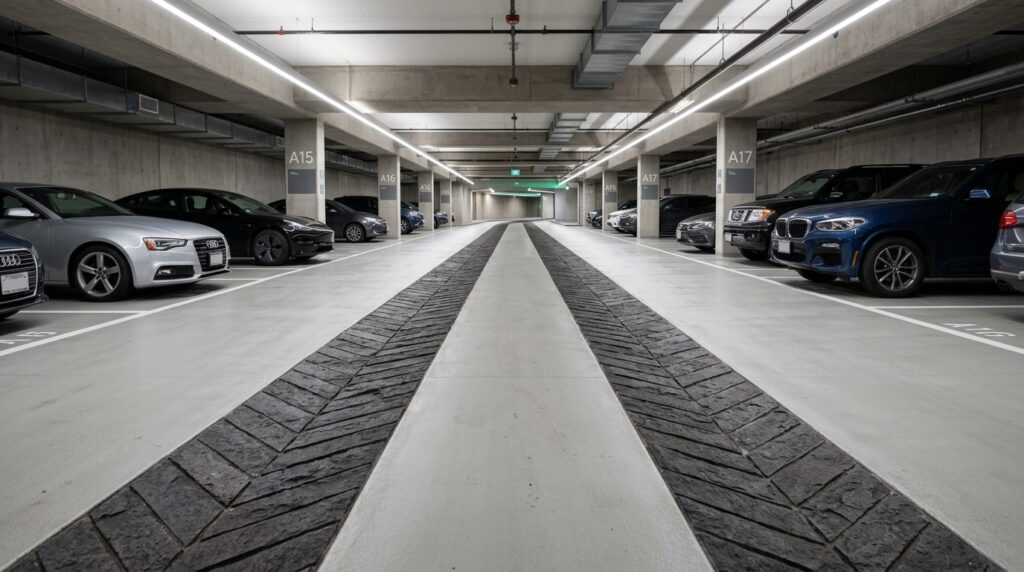
- My Perspective: Bringing high-end interior flooring patterns into an underground automotive vault creates a magnificent sense of luxury. Basalt is an incredible material because it handles extreme tire heat effortlessly and provides exceptional wet traction.
- What I would add: Sealing the basalt stone tracks with a premium matte penetrating sealer to completely prevent tire grease or braking dust from altering the rich, charcoal color tone.
Subterranean environments naturally collect heavy carbon monoxide fumes, humidity, and tire dust. Advanced climate control and artistic lighting are mandatory to preserve both your vehicles and your health.
Idea #7: Completely Silent Sub-Floor Extraction Slot Vents
Install a high-volume, commercial-grade air evacuation network that pulls vehicle exhaust fumes down through a thin, 1-inch wide linear slot drain cut directly into the concrete floor baseboards.
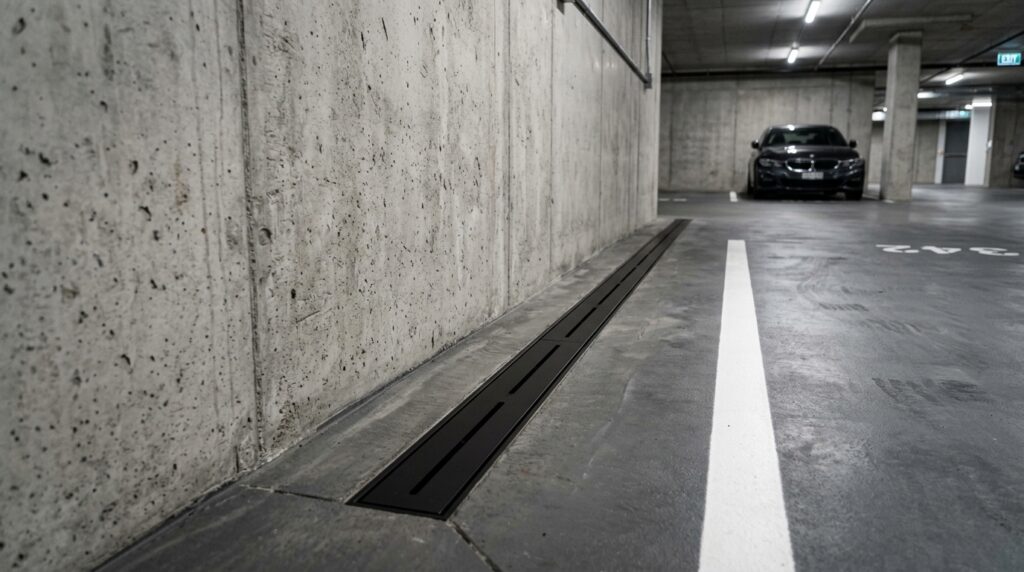
- My Perspective: Loud, exposed overhead exhaust pipes look cluttered and sound like a factory. Sinking your extraction network into sub-floor linear slots pulls heavy carbon monoxide particles down naturally and silently, keeping the vault air completely crisp and odorless.
- What I would add: Linking the silent extraction fans to automated carbon monoxide and humidity smart sensors that crank up the air recycling loops the exact second a vehicle engine is ignited.
Idea #8: Flush-Mount Matrix Laser Tracking Lanes
Replace traditional painted yellow parking lines with high-intensity linear LED or laser light tracks embedded completely flush inside the micro-cement floor matrix.
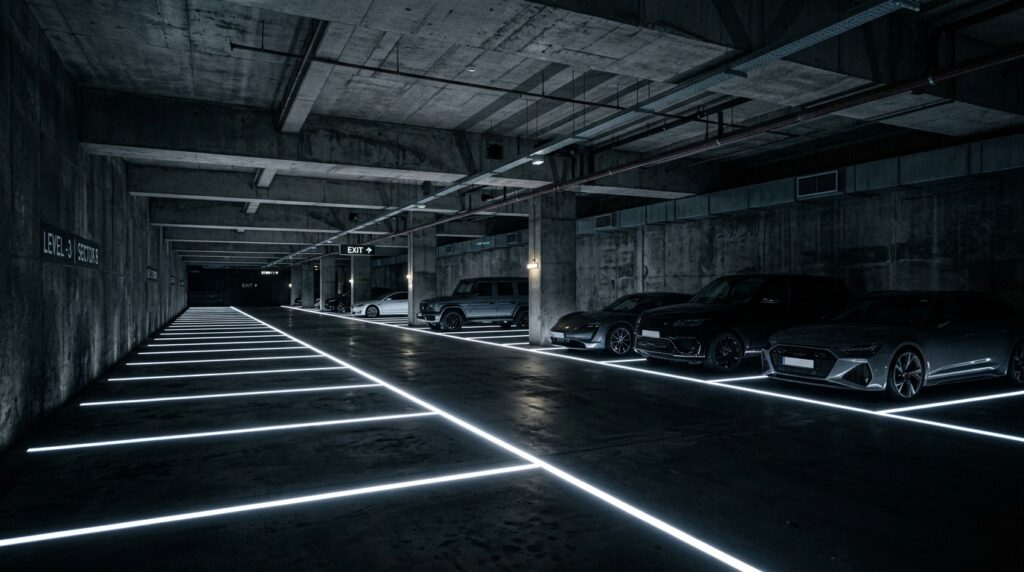
- My Perspective: Painted lines fade, stain, and look incredibly basic. Flush-mount laser tracks maintain an absolutely clean, museum-grade layout when the bay is empty, providing a sharp geometric rhythm that honors the lines of your architecture.
- What I would add: Connecting the light tracks to your smart home automation network so the floor lanes glow red when a bay is occupied and shift to calm gold when empty.
Idea #9: The Hanging Monolithic Linear Task Chandelier
Suspend a single, massive 12-foot long minimalist linear pendant light bar crafted from black anodized titanium directly over your primary detailing or vehicle display bay.

- My Perspective: Scattered, direct spotlights cast harsh, distracting glares across curved car panels. A single, powerful linear task chandelier focuses a uniform, crisp curtain of light down, highlighting the organic curves and design lines of your vehicle perfectly.
- What I would add: Housing micro-fiber optic downward spotlights inside the fixture core that point directly down, focusing light exclusively onto the car body without spilling harsh glare into your eyes as you walk through the room.
Idea #10: Aged Belgian Cobblestone Turning Radiuses
Line the central circular turning rotary of your underground carport with hand-set grey Belgian cobblestone blocks, contrasting with the smooth micro-cement parking bays.
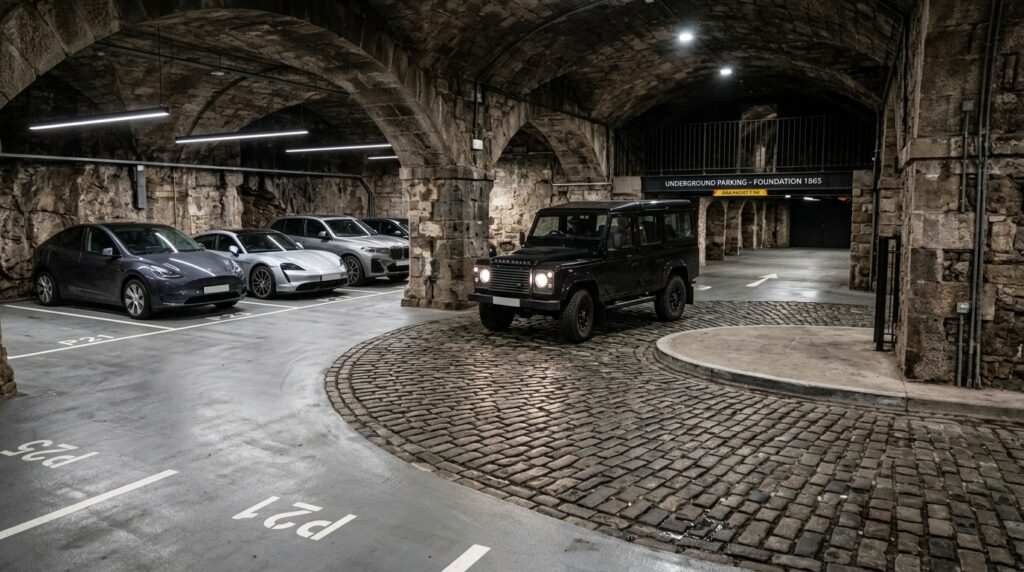
- My Perspective: The high contrast between rugged, old-world stone textures and the razor-sharp, smooth lines of modern concrete looks incredibly rich and custom-tailored. It breaks up the visual monotony of massive flat floors.
- What I would add: Setting the cobblestones into a highly stabilized, polymer-modified waterproof grout bed to guarantee stones can never loosen or shift under heavy vehicle tire torque.
Idea #11: Monolithic Poured Concrete Landscape Borders
Frame the surface approach tracks and structural entry portals of your underground carport with thick, solid borders of architectural poured raw concrete.
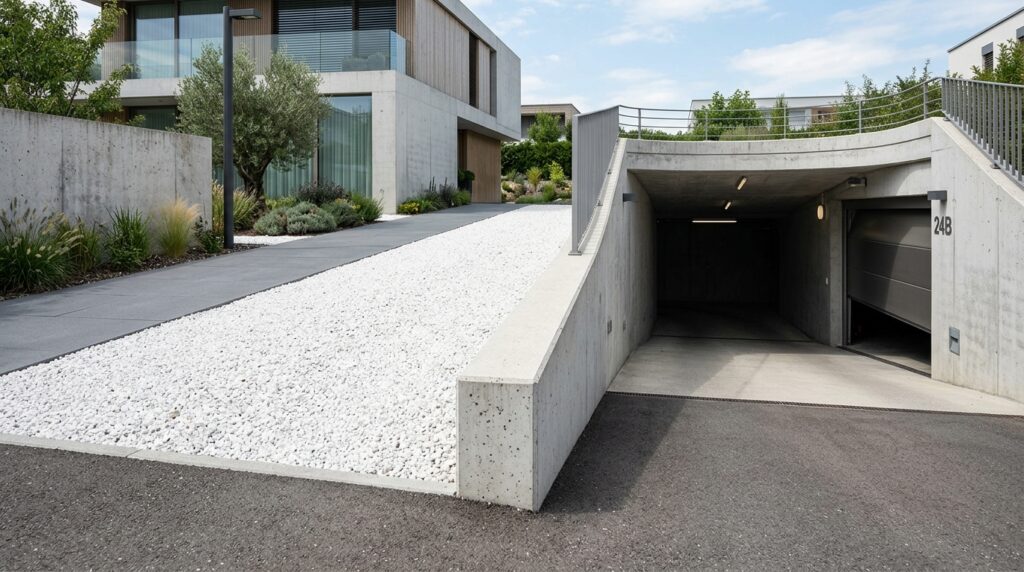
- My Perspective: Raw concrete borders look incredibly structural, clean, and timeless. They hold your decorative aggregate beds firmly in place, ensuring loose exterior gravel never washes down your ramp during heavy rainstorms.
- What I would add: Treating the raw concrete borders with a premium hydrophobic sealer to prevent them from absorbing moisture and developing white salt stains (efflorescence).
Idea #12: Textured Split-Face Quartzite Accent Walls
Clad the vertical core elevator shaft and structural retaining walls facing your vehicle vault with hand-split, dry-stacked white quartzite stone tiles with highly varied block depths.

- My Perspective: Mixing rough, raw stone textures directly next to smooth, flat sheets of architectural polished steel or carbon fiber car panels creates a stunning physical tension that defines high-end modern design.
- What I would add: Installing high-intensity narrow-beam LED downlights at the upper roof header to cast sharp, dramatic grazing shadows down across the rugged quartzite stone ridges at night.
Idea #13: The Seamless Linear Micro-Gravel Drainage Trench
Run a thin, 6-inch wide decorative perimeter tracking lane of loose, matching grey micro-gravel pebbles along the base seam where your vault floor meets the concrete retaining walls.
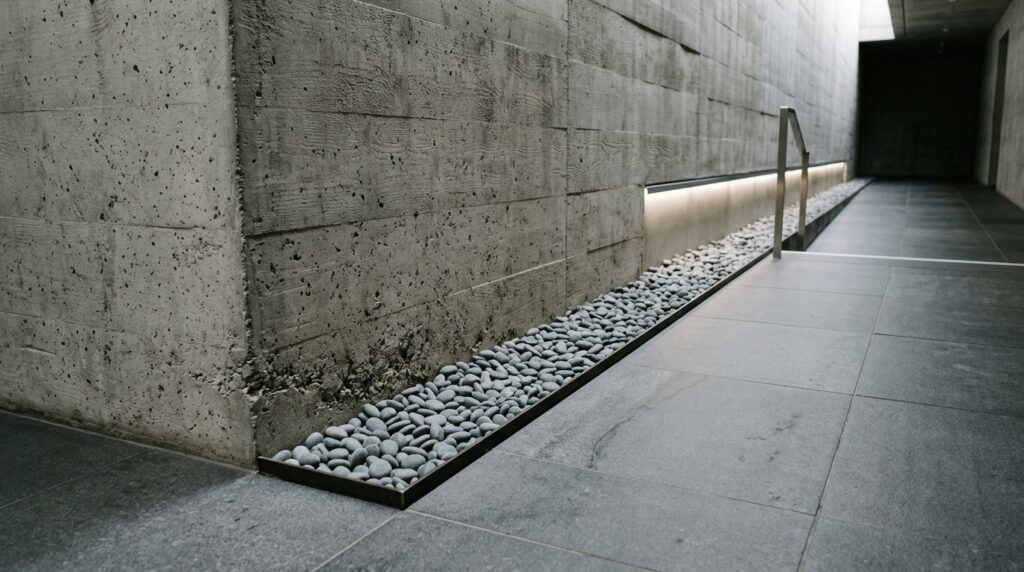
- My Perspective: It’s all about the micro-details. A perimeter gravel lane serves as an architectural breathing zone, neatly catching vehicle water runoff and wet tire drips while hiding sub-floor drainage tracks safely out of sight.
- What I would add: Mixing the pebbles with a specialized, transparent flexible binding polymer glue to lock the small stones permanently in place so they can never be displaced by car tires.